Short course
Adventures in Medieval Art

Course status:
Course ended

Location:
Online

Dates:
15/04/2026 - 24/06/2026

Study format:
Online - live

Fees:
£360.00
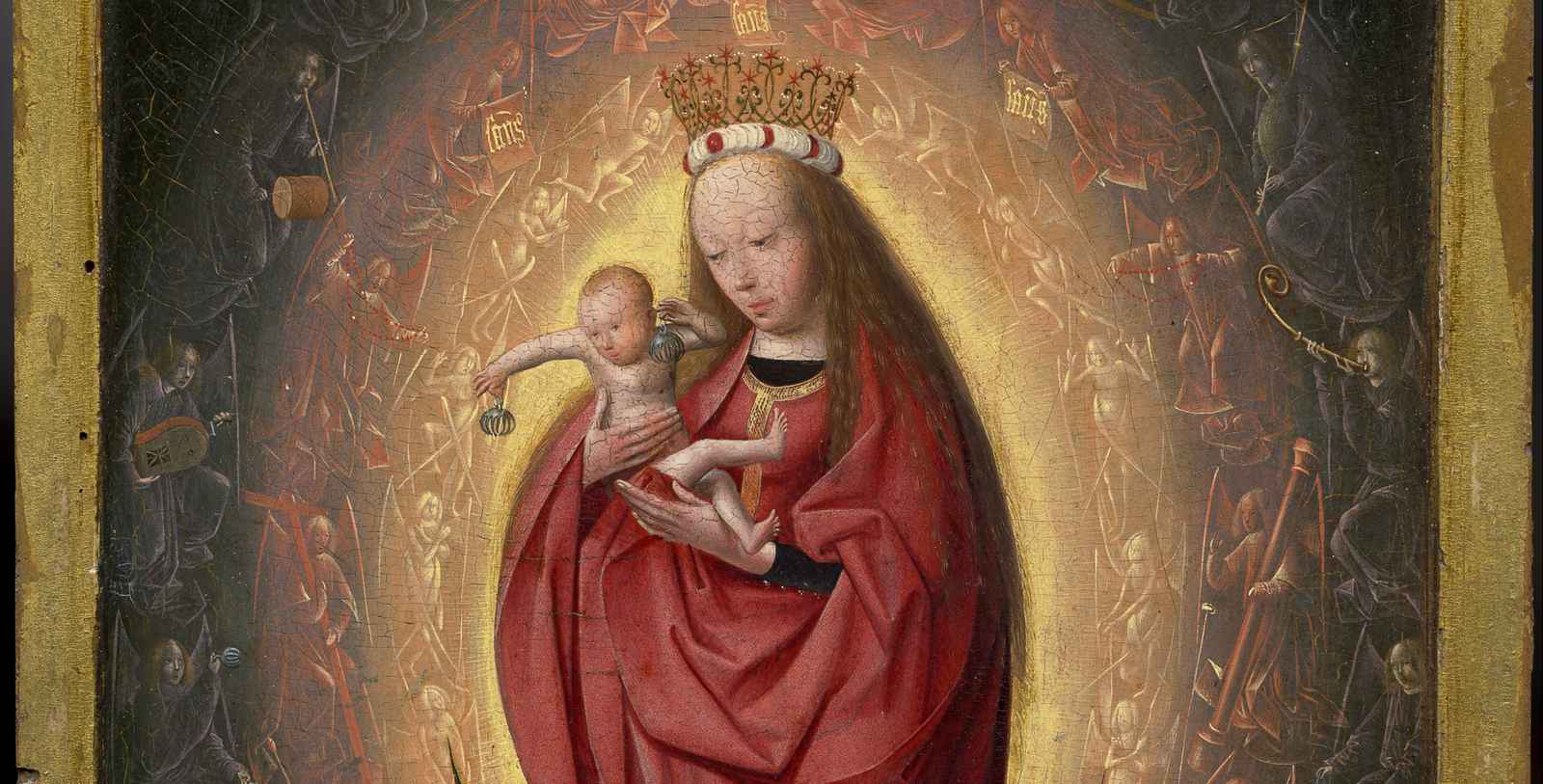
The purpose of this introductory course is to give you an overview of Medieval art and architecture and to build your confidence when analysing Medieval works of art for yourself.
Each week we will look at a different aspect of art, architecture or urbanism from the Middle Ages. We will ask, how was it made? What is the historical context? How did the original audience understand and respond to it? Crucially, we will also consider current scholarly approaches to the Middle Ages, seeking to leave behind the old-fashioned view that this period was a ‘dark age’ sandwiched between the classical and the Renaissance eras. Instead, we will look at the Middle Ages as a ‘bright age’ of innovation, complexity and sophistication.
Apply for this course
Apply using the button below.
Programme details
This course begins on the 15 Apr 2026 which is when course materials are made available to students. Students should study these materials in advance of the first live meeting which will be held on 22 Apr 2026, 3:00-4:00pm (UK time).
Week 1: Introduction to Medieval art
Week 2: Cities
Week 3: Religious buildings
Week 4: Castles and secular buildings
Week 5: Christian devotional art
Week 6: Metalwork
Week 7: Silk and other textiles
Week 8: Identity
Week 9: Gender
Week 10: Subversion and humour
Level and demands
This course is open to all and no prior knowledge is required.
This course is offered at FHEQ Level 4 (i.e. first year undergraduate level), and you will be expected to engage in independent study in preparation for your assignments and for the weekly webinar. This may take the form, for instance, of reading and analysing set texts, responding to questions or tasks, or preparing work to present in class. Our 10-week Short Online Courses come with an expected total commitment of 100 study hours, including those spent in live webinars.
English Language Requirements
We do not insist that applicants hold an English language certification, but warn that they may be at a disadvantage if their language skills are not of a comparable level to those qualifications listed on our website. If you are confident in your proficiency, please feel free to enrol. For more information regarding English language requirements please follow this link: https://www.conted.ox.ac.uk/about/english-language-requirements
Course aims
- To introduce students to the character and breadth of Medieval art and the scholarship surrounding it.
- To provide an overview of Medieval art and architecture.
- To develop students’ critical understanding of the methods and debates of Medieval art history.
- To practice analysis of Medieval objects, buildings and images.
IT requirements
Any standard web browser can be used to access course materials on our virtual learning environment, but we recommend Google Chrome. We also recommend that students join the live webinars on Microsoft Teams using a laptop or desktop computer rather than a phone or tablet due to the limited functionality of the app on these devices.
Programme details
This course begins on the 15 Apr 2026 which is when course materials are made available to students. Students should study these materials in advance of the first live meeting which will be held on 22 Apr 2026, 3:00-4:00pm (UK time).
Week 1: Introduction to Medieval art
Week 2: Cities
Week 3: Religious buildings
Week 4: Castles and secular buildings
Week 5: Christian devotional art
Week 6: Metalwork
Week 7: Silk and other textiles
Week 8: Identity
Week 9: Gender
Week 10: Subversion and humour
Teaching methods
This course takes place over 10 weeks, with a weekly learning schedule and weekly live webinar held on Microsoft Teams. Shortly before a course commences, students are provided with access to an online virtual learning environment, which houses the course content, including video lectures, complemented by readings or other study materials. Any standard web browser can be used to access these materials, but we recommend Google Chrome. Working through these materials over the course of the week will prepare students for a weekly 1-hour live webinar you will share with your expert tutor and fellow students. All courses are structured to amount to 100 study hours, so that on average, you should set aside 10 hours a week for study. Although the course finishes after 10 weeks, all learning materials remain available to all students for 12 months after the course has finished.
All courses are led by an expert tutor. Tutors guide students through the course materials as part of the live interactions during the weekly webinars. Tutors will also provide individualised feedback on your assignments. All online courses are taught in small student cohorts so that you and your peers will form a mutually supportive and vibrant learning community for the duration of the course. You will learn from your fellow students as well as from your tutor, and they will learn from you.
Learning outcomes
By the end of the course students will be expected to:
- feel confident looking at Medieval art and architecture;
- be familiar with the scope of Medieval art and architecture;
- understand how Medieval works of art were made and perceived.
Assessment methods
You will be set a portfolio of up to five pieces of work to complete over the duration of the course, one or more of which might be submitted for the purposes of feedback only and will not count towards your final outcome. The other pieces will be submitted for formal assessment at the end of the course. The assessed work is marked pass or fail.
Dr Clare Vernon
Clare Vernon is a specialist in the Mediterranean world in the central Middle Ages. She has a PhD from the University of Cambridge and has taught at Birkbeck, University of London and the universities of Manchester and Southampton. Her publications focus on the art of southern Italy in the eleventh and twelfth centuries, including a book, From Byzantine to Norman Italy: Mediterranean Art and Architecture in Medieval Bari.
Assessment methods
You will be set a portfolio of up to five pieces of work to complete over the duration of the course, one or more of which might be submitted for the purposes of feedback only and will not count towards your final outcome. The other pieces will be submitted for formal assessment at the end of the course. The assessed work is marked pass or fail.
Level and demands
This course is open to all and no prior knowledge is required.
This course is offered at FHEQ Level 4 (i.e. first year undergraduate level), and you will be expected to engage in independent study in preparation for your assignments and for the weekly webinar. This may take the form, for instance, of reading and analysing set texts, responding to questions or tasks, or preparing work to present in class. Our 10-week Short Online Courses come with an expected total commitment of 100 study hours, including those spent in live webinars.
English Language Requirements
We do not insist that applicants hold an English language certification, but warn that they may be at a disadvantage if their language skills are not of a comparable level to those qualifications listed on our website. If you are confident in your proficiency, please feel free to enrol. For more information regarding English language requirements please follow this link: https://www.conted.ox.ac.uk/about/english-language-requirements
Fees
| Description | Costs |
|---|---|
| Course Fee | £360.00 |
Module code: O25P756ARZ
Please use the ‘Book now’ button on this page.