Short course
Inventing Modern Science, 1400-1700

Course status:
Applications being accepted


Dates and time:
19/05/2027 - 16/06/202714:00 - 16:00

Study format:
In-person weekly

Fees:
£190.00
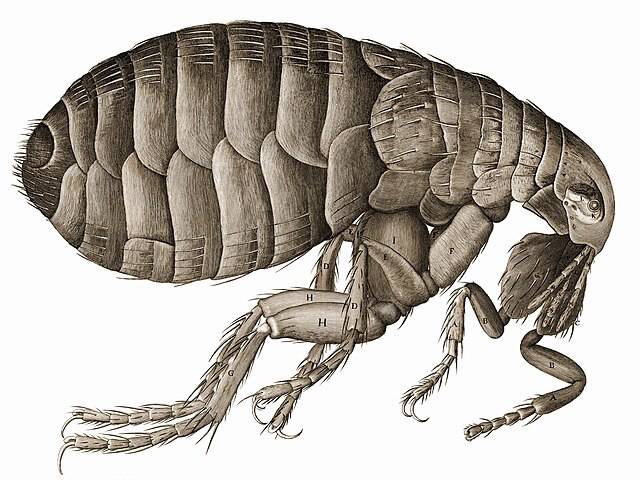
In this course we examine some of the most influential and important ideas and discoveries (and the people behind them) from the years 1400 to 1700, encompassing what is commonly referred to as the Scientific Revolution. Topics include the shift from a geocentric to a heliocentric universe, and from a divinely managed universe to a mechanical one, as well as alchemy and the development of chemistry, and the new worlds opened up by early microscopes. The impact of these ideas spread far beyond the laboratory or library, so we will look at the wider cultural and social changes brought about. We will also examine the people behind the discoveries, such as Nicolaus Copernicus, Galileo Galilei, and Isaac Newton, and see how scientific discovery may be influenced by scientists’ lives and personalities. The final class will take place in Oxford’s History of Science Museum, where we will be able to examine some of the instruments and objects discussed in the course.
Book this course
Book your place online using the button below.
Contact the team
Phone: +44 (0)1865 280900
Course starts Wednesday 19 May 2027
This is an in-person course which requires your attendance at the weekly meetings in Oxford on Wednesdays, 2.00-4.00pm.
Week 1: And Yet it Moves: Galileo’s Heliocentric Universe
Week 2: From Alchemy to Chemistry
Week 3: A Clockwork Universe
Week 4: New Worlds Under the Microscope
Week 5: Visit to the History of Science Museum
Please note: students will have to arrange their own transport for the field trip, and cover the cost of any entry fees.
Course aims
Course aim: To provide students with knowledge of some of the most important and influential scientific ideas and discoveries of the period 1400-1700, and the people behind them.
Course objectives:
1. To gain knowledge of the discoveries and ideas covered, their importance, and the individuals involved.
2. To gain an understanding of the ways in which science and scientists are a part of, influence, and are influenced by, the wider cultural, social, and intellectual environment.
3. To develop skills in analysing primary sources and assessing their value as historical evidence; develop skills in reading secondary sources and evaluating the authors’ arguments.
Learning outcomes
1. Demonstrate a knowledge of the discoveries and ideas covered, their importance, and the individuals involved.
2. Gain an understanding of the ways in which science and scientists are a part of, influence, and are influenced by, the wider cultural, social, and intellectual environment.
3. Develop skills in analysing primary sources and assessing their value as historical evidence; develop skills in reading secondary sources and evaluating the authors’ arguments.
Level and demands
The Department’s Weekly Classes are taught at first year undergraduate level.
Teaching methods
The course will be taught through informal lectures, small-group work, and class discussions. Students will be provided with excerpts from primary source material that will form the basis of group work and discussions, as well as supplementary material to aid in source analysis.
Assessment methods
This course is not accredited, so there are no assessments or coursework.
Dr Trish Stewart
Patricia Stewart completed her PhD in Mediaeval History at the University of St Andrews and works as a Science Editor for the Oxford English Dictionary. She specialises in manuscript studies and the history of science and magic.
Digital badge
Upon successful completion of this course, you will be issued with an official digital badge from the Department for Continuing Education, University of Oxford. In order to be issued with your badge, you will need to have attended at least 80% of the course.
After the course, you will receive an email with a link and instructions on how to download your digital badge. You will be able to add this badge to your email signature and share it on social media if you choose to do so.
Fees
| Description | Costs |
|---|---|
| Course fee | £190.00 |
Funding
If you are in receipt of a UK state benefit, or are a care-leaver in the UK, you may be eligible for a reduction of 50% of tuition fees. Please see the below link for full details:
Concessionary fees for short courses
Recommended reading
Recommended reading is optional and you are not required to purchase these books to study this course.
Library facilities
All weekly class students may become borrowing members of the Rewley House Library, part of the Bodleian Libraries, for the duration of their course. Prospective students whose courses have not yet started are also welcome to use the Library for reference.
- More information about the Library can be found on the Bodleian Libraries website.
- This guide for Weekly Class students also provides further information.
Preparatory reading
- Science and religion: some historical perspectives. / Brooke, John Hedley
- Man and nature in the Renaissance. / Debus, Allan G.
- The Copernican revolution. / Kuhn, Thomas S.
- The scientific revolution: a very short introduction. / Principe, Lawrence
Module code: O26P414HIW
How to enrol
Please use the ‘Book now’ button on this page.