Short course
Imperial Austria – The Habsburg Empire, 1780-1918

Course status:
Applications being accepted


Dates and time:
13/04/2027 - 15/06/202714:00 - 16:00

Study format:
In-person weekly

Fees:
£315.00
The Habsburg Empire was the most powerful state in Central Europe for centuries. The Austrian ruler became the Holy Roman Emperor in a world of political fragmentation in eighteenth century German Europe. The nineteenth century presented a challenge for the dynasty because nationalism became more important in European politics and the shadow of revolution and Napoleon's legacy was a potent threat. The empire was diverse and many citizens spoke different languages in different circumstances. Individual national groups did start to make their voice heard. At this time Vienna, Prague and Budapest became centres of remarkable cultural developments. Imperial Austria was built on ancient loyalty to the dynasty and was not a nation state. The First World War finally destroyed the empire and the old traditions. After the war in 1918 Austria became a small European republic.
Book this course
Book your place online using the button below.
Contact the team
Phone: +44 (0)1865 280900
Course starts Tuesday 13 April 2027
This is an in-person course which requires your attendance at the weekly meetings in Oxford on Tuesdays, 2.00-4.00pm.
Week 1: The Habsburg Inheritance
Week 2: Imperial Austria and the French Revolution
Week 3: Napoleon and War
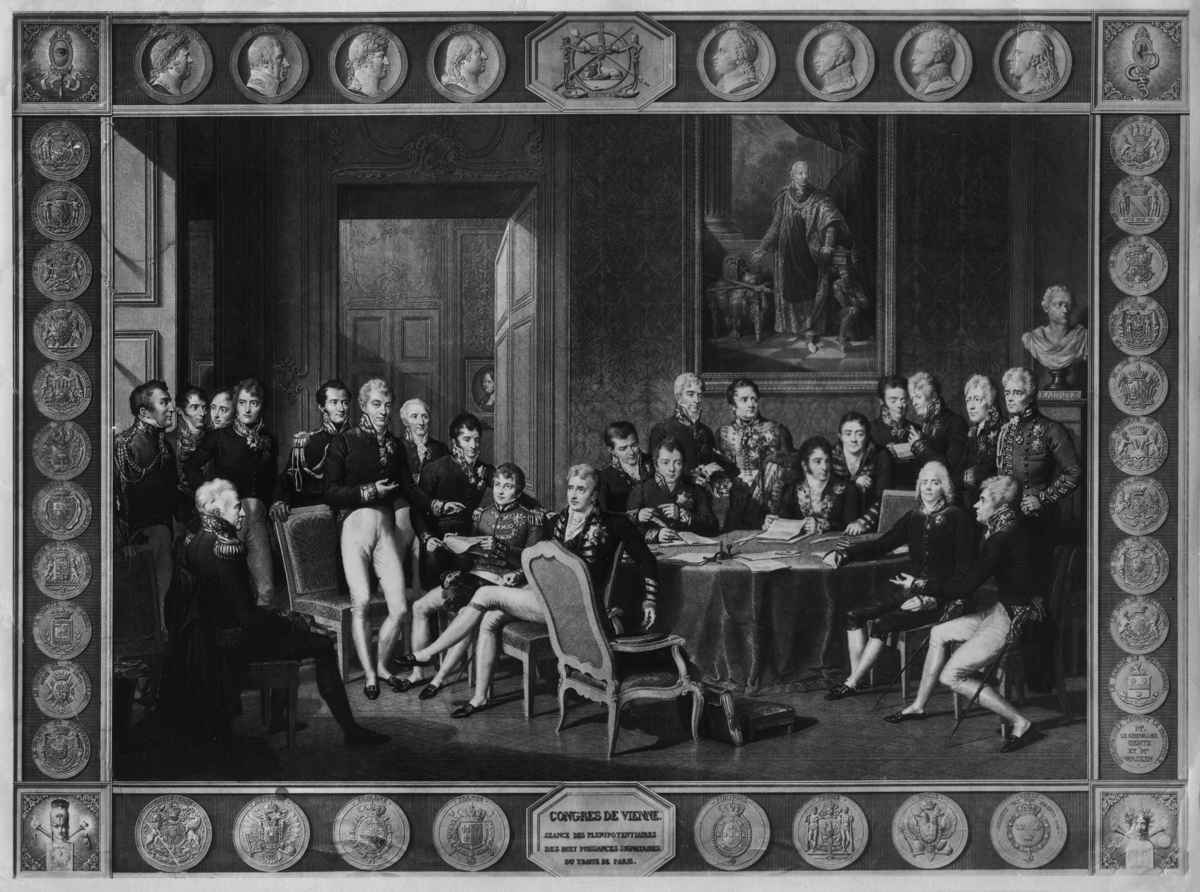
Week 4: The Congress of Vienna
Week 5: Metternich, Restoration and the Concert of Europe
Week 6: The Revolutions of 1848
Week 7: Prussia and Austria
Week 8: Austria-Hungary
Week 9: Balkan Complications and the First World War
Week 10: The End of Empire and a New Era
Course aims
This course aims to enable participants to develop an understanding of the history of Imperial Austria from its position as a major European power in 1780 to its collapse in 1918.
Course objectives
By the end of the course, participants will have been given the opportunity to:
- explore the ways in which the Habsburg Empire survived the turbulent political challenges of the nineteenth century
- examine the factors that contributed to the decline and eventual collapse of the empire in 1918
- engage with a range of original visual and documentary sources and develop skills in interpretation and critical evaluation in relation to the key developments and debates of the period
Learning outcomes
By the end of this course, students will be expected to understand:
- The complex and diverse range of nationalities and cultures which existed alongside each other in the Habsburg Empire.
- The role of the Habsburg Empire in the development of the modern German state in the nineteenth century.
- How Austria’s direct and indirect involvement in the politics of the Balkans was partially associated with the outbreak of the First World War.
Level and demands
The Department’s Weekly Classes are taught at FHEQ Level 4, ie first year undergraduate level, and you will be expected to engage in a significant amount of private study in preparation for the classes. This may take the form, for instance, of reading and analysing set texts, responding to questions or tasks, or preparing work to present in class.
Teaching methods
Teaching will involve verbal presentations and introductions to the topics as well as Power Point delivered illustrations. Particular emphasis will be put on student input and interaction verbally. Contemporary written and visual sources will be used as a regular focus for discussion. At the end of each week students will be handed some written material and illustrations to introduce them to the topics and themes of the following week, and provide guidance for further relevant reading in their own time. They will be encouraged to utilise the department’s library resources to find relevant materials themselves, so that self-study can be pursued to the maximum possible degree.
Assessment methods
Only those students who have registered for assessment and accreditation, in advance of the course start date, can submit coursework/assignments for assessment.
Assessment
You will be set two pieces of work for the course. The first of 500 words is due halfway through your course. This does not count towards your final outcome but preparing for it, and the feedback you are given, will help you prepare for your assessed piece of work of 1,500 words due at the end of the course. The assessed work is marked pass or fail.
Mr Carl Wade
Carl Wade originally studied history at Jesus College, Cambridge. He is a Departmental Tutor in history for Oxford Lifelong Learning at the Department for Continuing Education and since 2004 has written and taught courses in modern European and British history from the late eighteenth to the early twentieth century. He has taught on summer school programmes for Oxford University and the Open University. He has also taught at the Continuing Education Department in Reading University and for the WEA.
Academic credit
Credit Accumulation Transfer Scheme (CATS Points)
Please note, students who do not register for assessment and accreditation during the enrolment process will not be able to do so after the course has begun. If you wish to gain credit from completing this course you must register to do so before the course starts.
Only those who have registered for assessment and accreditation will be awarded CATS points for completing work to the required standard. Please note that assignments are not graded but are marked either pass or fail.
Learn more about the Credit Accumulation Transfer Scheme.
If you are enrolled on the Certificate of Higher Education at the Department you need to indicate this on the enrolment form but there is no additional registration fee for assessment and accreditation.
Digital certificate of completion
Students who are registered for assessment and accreditation and pass their final assignment will also be eligible for a digital Certificate of Completion. Information on how to access the digital certificate will be emailed to you after the end of the course. The certificate will show your name, the course title and the dates of the course attended. You will be able to download the certificate and share it on social media if you choose to do so.
Fees
| Description | Costs |
|---|---|
| Course fee (with no assessment) | £315.00 |
| Assessment and Accreditation fee | £60.00 |
Funding
If you are in receipt of a UK state benefit, or are a care-leaver in the UK, you may be eligible for a reduction of 50% of tuition fees. Please see the below link for full details:
Concessionary fees for short courses
Recommended reading
Recommended reading is optional and you are not required to purchase these books to study this course.
Library facilities
All weekly class students may become borrowing members of the Rewley House Library, part of the Bodleian Libraries, for the duration of their course. Prospective students whose courses have not yet started are also welcome to use the Library for reference.
- More information about the Library can be found on the Bodleian Libraries website.
- This guide for Weekly Class students also provides further information.
Preparatory reading
- The Habsburg Empire: A New History / Judson, Pieter, M.
- The Habsburgs: The Rise and Fall of a World Power / Rady, Martyn
Module code: O26P415HIW
How to enrol
Please use the ‘Book now’ button on this page.
How to register for accreditation and assessment
To be able to submit coursework and to earn credit (CATS points) for this course, if you wish to do so, you will need to register and pay an additional £60 fee. You can do this by ticking the relevant box at the bottom of the enrolment form or when enrolling online.
Students who do not register for CATS points during the enrolment process will not be able to do so after the course has begun.
If you are enrolled on the Certificate of Higher Education at the Department you need to indicate this on the enrolment form but there is no additional registration fee.