
 https://www.ox.ac.uk/news/find-an-expert/dr-manya-pagiavla-fhea
Dr Manya Pagiavla, BA (Distinction), MA (Distinction), PhD, FHEA, is a Departmental Lecturer in the History of Art. Manya holds a PhD in the history of art and architecture of the Renaissance (University of Essex, 2006). She joined the Department for Continuing Education in 2015. Previously, she taught at the Victoria and Albert Museum, Christie’s Education, and the University of Cambridge (within the Department of Architecture and the Institute of Continuing Education). Dr Pagiavla was also a Postdoctoral Associate at Clare Hall, University of Cambridge (2012–2013).
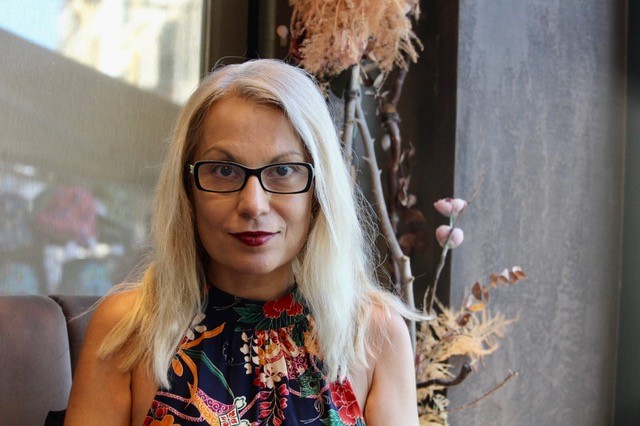
Dr Manya Pagiavla
Departmental Lecturer in History of Art
Manya’s teaching portfolio spans from the Early Renaissance to the Nineteenth century, focusing on the Classical Revival in art, architecture, and philosophy (specifically Neo-Aristotelianism and Neo-Platonism) during the High Renaissance and Baroque periods in Italy and Spain.
Further teaching interests encompass Seventeenth-century Spanish, Dutch, and Flemish art, as well as Nineteenth-century art and architecture in Britain and France.
In addition to higher education teaching, she has contributed extensively to widening participation initiatives, including sixth-form and further education (FE) art history tutoring and mentoring.
She is a Staff and Educational Development Association (SEDA) Recognised Teacher and a Fellow of the Higher Education Academy (FHEA).
As a Renaissance expert, Manya’s research focuses on artists’ readings (via library inventories) and writings (such as marginalia). Her doctorate, titled ‘Domenicus Scepticus’, concentrated on the library inventories of El Greco, his marginal annotations on Vasari, the architectural treatises of Serlio, and Daniele Barbaro’s Vitruvius. Her PhD thesis is cited by major institutions, including the Prado, the Thyssen-Bornemisza, and the Louvre.
Dr Pagiavla co-authored an article on Leonardo da Vinci’s library inventories with Martin Kemp, Emeritus Professor at the University of Oxford. In 2017, she was awarded a grant by the A.G. Leventis Foundation to continue her research on the library inventories of Leonardo and El Greco.
Her broader research interests include cultural exchanges and their impact on the formation of artistic styles during the Renaissance and Baroque periods, such as Greco-Byzantine or Northern European influences in Italy and Spain.
More recently, her focus has shifted toward digital education, exploring artificial intelligence applications in teaching and learning.