
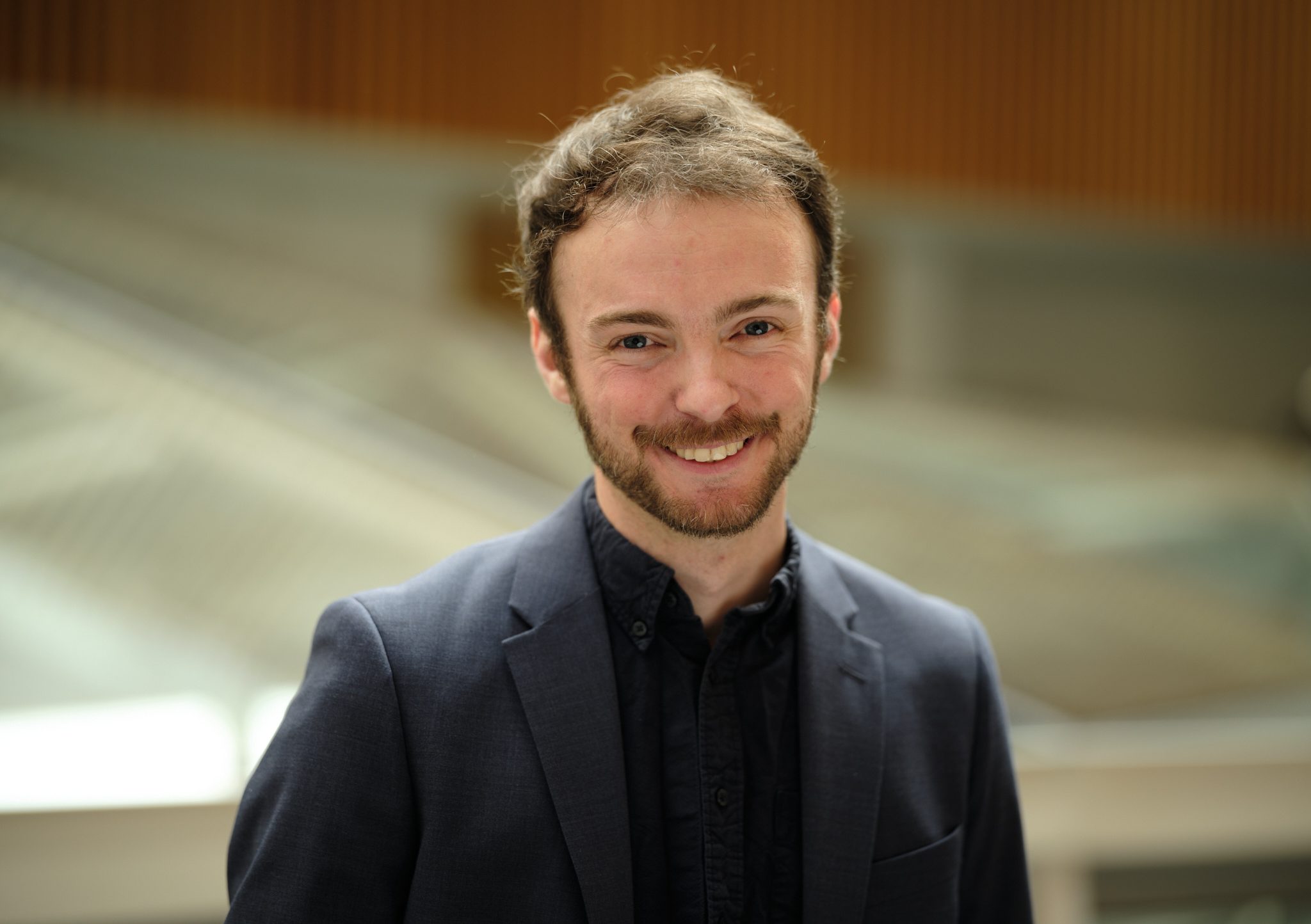
Professional headshot of Samuel Recht, Director of Studies in Natural Sciences, wearing a dark suit, looking at the camera against a blurred background.

Dr Samuel Recht

Departmental Lecturer in Biological Sciences

Director of Studies in Natural Sciences

Dr Samuel Recht is a cognitive scientist whose research focuses on how people think about their own thinking. His work investigates how attention, memory, and confidence interact to shape curiosity about the world and influence learning.

He holds a PhD in Cognitive Psychology and Neuroscience (2019) and joined the University of Oxford in 2020 as a Fyssen Research Fellow within the Department of Experimental Psychology and at University College. Since 2022, he has been a Lecturer at Pembroke College, and in January 2026 he joined Oxford Lifelong Learning as a Departmental Lecturer in Biological Sciences.
Sam studies higher-order cognition, examining how individuals evaluate and regulate their own mental states and behaviour. His work explores how people assess the quality of their decisions and how these metacognitive evaluations guide learning and adaptive behaviour. To investigate these processes, he employs a range of methods, including behavioural experiments (both online and in-lab computer-based tasks), eye-tracking, and neuroimaging.

As Director of Studies in Natural Sciences, Sam oversees the strategic development and coordination of the curriculum for accredited courses across the physical and biological sciences.

Sam has an inclusive approach to teaching. He has been a tutor for Oxford undergraduate students since 2021, teaching a variety of courses and supervising multiple postgraduate students. He also has experience in curriculum development and is the course convenor for the Lady Margaret Hall Summer Programme in Cognitive Psychology. He has served on multiple committees, including the Teaching Policy Committee in the Department of Experimental Psychology. Sam is an Associate Fellow of the Higher Education Academy.

Sam’s research group studies how metacognition operates across perceptual, social, and technological contexts, and how attention and working memory support these processes.
His research areas include:

  • The dynamics of curiosity and its role in learning
  • The role of metacognition and trust in adaptive decision-making
  • The behavioural and neural bases of attention and memory in humans

He welcomes enquiries from prospective DPhil (PhD) applicants interested in these areas and is also available to discuss project supervision with undergraduate and master’s students, including those from other departments.

  • Recht, S., & Yeung, N. (2026). Knowability predicts curiosity and learning. Cognition, 275, 106626.
  • Recht, S., Li, C., Yang, Y., & Chiu, K. (2025). Adaptive curiosity about metacognitive ability. Journal of Experimental Psychology: General, 154(3), 852.
  • Recht, S., Jovanovic, L., Mamassian, P., & Balsdon, T. (2022). Confidence at the limits of human nested cognition. Neuroscience of consciousness, 2022(1), niac014.
  • Recht, S., de Gardelle, V., & Mamassian, P. (2021). Metacognitive blindness in temporal selection during the deployment of spatial attention. Cognition, 216, 104864.
  • Recht, S., Mamassian, P., & De Gardelle, V. (2019). Temporal attention causes systematic biases in visual confidence. Scientific reports, 9(1), 11622.
Back to top