A University of Oxford project is helping to develop new ways of experiencing and interpreting art by placing the perspectives of blind and partially sighted people at the heart of curatorial practice.
Led by Dr Leah Clark, Associate Professor and Director of Studies in the History of Art at Oxford Lifelong Learning, the project Sensory Knowledge, Art, and Curatorial Practice: Learning from and with the Blind and Partially Sighted Community was supported by the University’s Public and Community Engagement with Research (PCER) Fund. It brought together academic expertise in the senses and art history with museum and community engagement practice.
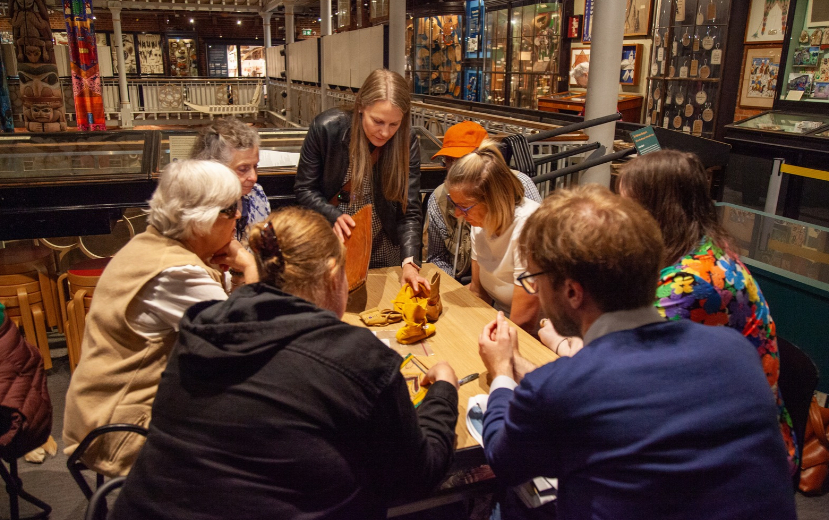
Working with Oxford University’s Gardens, Libraries and Museums (GLAM), the team collaborated with blind and partially sighted participants through monthly touch tours and a series of dedicated focus groups. Key to the success of this project was GLAM’s community engagement officer Susan Griffith’s longstanding relationship with the blind and partially sighted groups.
The sessions explored how museum collections can be encountered through touch, smell and sound as well as sight. Participants also shared their experiences of visiting museums and helped evaluate approaches including tactile maps, interactives, audio description, lighting, exhibition layout and visitor information.
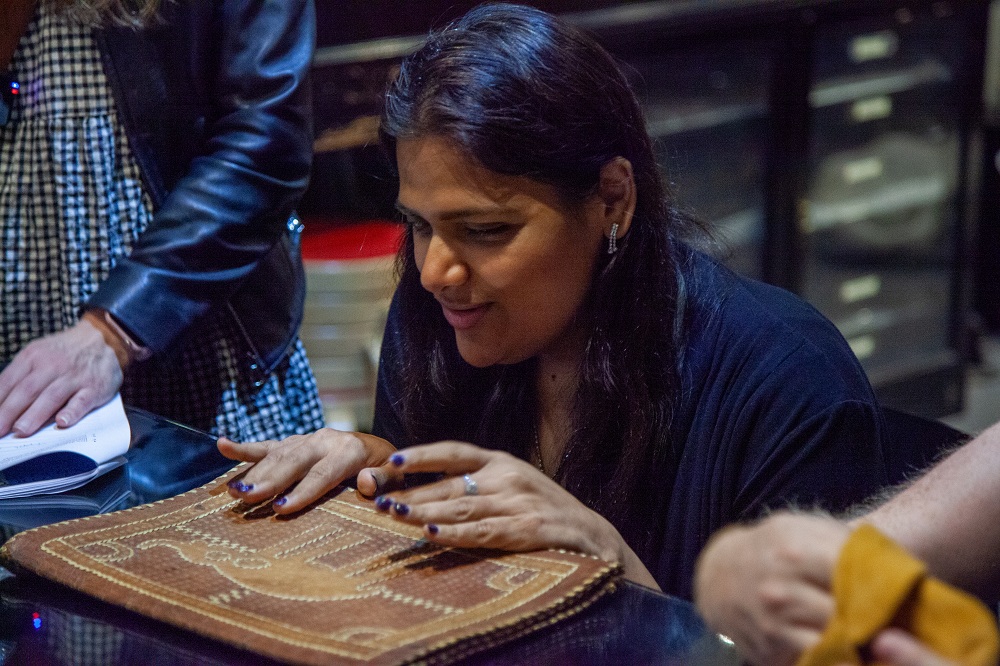
Their contributions are directly informing Renaissance Worlds: Art and the Senses, a major exhibition opening at the Ashmolean in June 2027. Feedback has already shaped decisions about the exhibition layout, lighting, and interactives, as well as plans for a tactile map and accessible information to help visitors prepare for their visit.
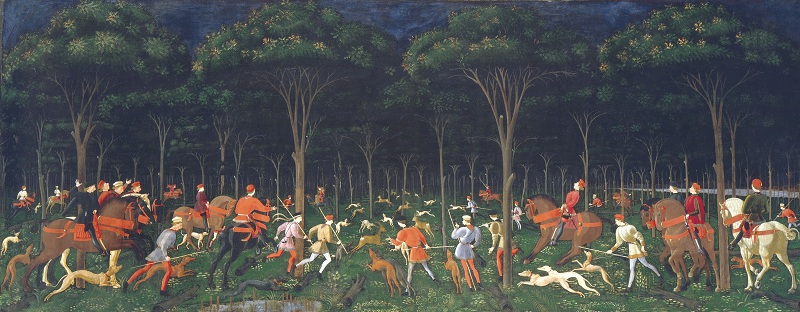
Dr Clark comments: ‘I learned an extraordinary amount from the blind and partially sighted group, when we discussed Paolo Uccello’s The Hunt. While some of the participants had sight memory – they were born with sight but consequently went blind or some were only partially blind – others have been blind since birth. To explain perspective to someone who has never seen made me pause and think about the term and the concept. And a significant question emerged from our focus group about The Hunt: how do you convey simultaneously the utter chaos of the scene as well as the carefully orchestrated perspective in it, to someone who cannot see?
‘One solution was to think about how sound might replicate this and could convey the chaos of the scene – barking dogs, horses neighing, hunting horns, horse’s hooves pounding on the ground, and men shouting. Equally, making some sounds louder than others might also express distance and nearness, in the ways that perspective might allow the eye to imagine we are seeing distance in a scene. A tactile raised image of the perspective lines also helped everyone (sighted, partially sighted, and blind) in the group to understand Uccello’s process.’
The collaboration has also led to the development of multisensory object loan boxes, co-funded by the Van Houten Fund. Designed to extend engagement beyond the museum, the boxes will combine objects with sensory materials and short films and will be available for order from the exhibition’s website. For example, the object loan boxes include a replica incense burner, which will allow users to touch and open in order to see the gimbal mechanism inside, while frankincense and myrrh will be provided to smell. (Scroll down to the bottom of the page to see the contents of an object loan box.)
The boxes will be accompanied by films that include audio descriptions, an object-handling session of the original artefacts in the museum, and curatorial explanation of historical context. The boxes are intended for use by schools, care homes and community groups and will remain available through GLAM beyond the exhibition. Films and other resources developed through the project are also planned for longer-term use in learning and engagement.
The project has influenced Dr Clark’s research and teaching as well as the exhibition itself, prompting new questions about how people experienced objects in the past and how art history can move beyond predominantly visual ways of interpreting works of art.
Dr Clark notes: ‘Thinking about accessibility can often happen towards the end of a curatorial project, once critical decisions have already been made. By working with the blind and partially sighted alongside the development of the exhibition meant that I had their needs and experiences at the forefront of my mind when we were making curatorial decisions. This ranged from thinking about the interactives in the space itself to how certain lighting conditions – or changes to lighting – might disorient certain visitors.
‘But it also fundamentally shifted my own thinking of these objects – I constantly recalled remarks made by the participants of our focus groups on what surprised them about an object, which has often prompted me to think about other considerations of an artwork, beyond sight. How does something feel? Is it cold or hot? Soft or hard? Can you trace motifs by touching rather than seeing? How does an artefact smell?’
The work demonstrates how collaboration between researchers, museums and communities can make accessibility part of the research and curatorial process from the outset – while opening new ways of thinking about art for all visitors.
Oxford Lifelong Learning will be running a short course and half-day event in connection with the exhibition in spring 2027.
- ‘Sensory Wonders: Art of the Renaissance’ short course (starts 19 May 2027)
- ‘Sensory Wonders: Art in the Renaissance World’ half-day event (12 June 2027)
Learn more:
- Dr Leah Clark
- ‘Renaissance Worlds: Art and the Senses’ exhibition
- History of art and design courses
- Research at Oxford Lifelong Learning
Top image: Handling session/touch tour at the Pitt Rivers Museum, Oxford. Photo credit: Morgan Phillips, Morphology Media.


