
Award courses
Undergraduate Certificate in English Literature

Course status:
Open

Duration:
2 years part-time

Study format:
Online with 1 week in Oxford

Level:
Undergraduate
Study the classics. Question the canon. Engage with English literature at Oxford.
The Undergraduate Certificate in English Literature offers a unique and enriching opportunity for literature enthusiasts worldwide, with flexible study options to suit your needs. Taught by members of Oxford’s English faculty who are specialists in teaching adult learners, you will explore the works of iconic authors such as Shakespeare, Woolf, and the Brontës.
This part-time programme allows you to study either online or in person, with live teaching sessions, collaborative discussions, and access to recorded resources. Over two years, you will engage deeply with literature across a range of periods and genres, gaining critical insights into their socio-political and intellectual contexts. The programme also includes a one-week non-residential Shakespeare Summer School in Oxford, offering an immersive academic experience in the city that inspires generations of authors.
Whether you aim to continue your studies or pursue a career in publishing, journalism, education, or beyond, this flexible and internationally respected qualification will equip you with the critical thinking and analytical skills to succeed, all while connecting you with a supportive and vibrant global community of fellow literature lovers.
KEY INFORMATION
Upcoming application deadline: Thursday 11 February 2027, 12:00 GMT

The course covers a range of English literature from the Early Modern period to the early twentieth century. Among the authors you study will be Shakespeare, Marlowe, Donne, Dickens, Tennyson, the Brontës, Seacole, Mansfield, Joyce and Woolf. Close analysis of works by these and other authors, reinforced by general discussion of modern critical theory and practice, and canonicity, will provide the basis for an enhanced appreciation of the pleasures and problems associated with the serious reading of literature.
This course is designed for anyone with a keen interest in literature and the motivation to study at degree level. Our students come from a wide range of backgrounds: those seeking new opportunities in education, publishing, or the cultural sector; lifelong readers who want to engage more deeply with the texts they love; aspiring academics or teachers looking for a strong foundation; and those returning to study or balancing learning with other commitments.
You do not need recent qualifications to apply – what matters most is your enthusiasm, curiosity, and a good command of written English. If you have not formally studied literature before, you may find our short Critical Reading course a useful starting point.
Many of our graduates go on to further study: some progress directly to the second year of an English Literature degree, while others have secured places at Oxford and other leading universities across the UK. Whether you are aiming to continue your studies, enrich your professional life, or simply pursue your passion for literature, this course offers a stimulating and supportive environment in which to do so.
What will you gain?
- Immerse yourself in diverse literary works. Explore English literature spanning from the Early Modern period to the early twentieth century, studying iconic authors like Shakespeare, Marlowe, Donne, Dickens, the Brontës, Seacole, Mansfield, Joyce, and Woolf. Each section of the programme is carefully designed to enhance your analytical and critical thinking skills, encouraging deep engagement with texts from different periods and genres.
- Study with Oxford’s renowned faculty. Learn from tutors who are members of Oxford’s English Faculty and specialists in teaching adult learners, combining academic depth with a passion for lifelong learning.
- Develop essential practical and transferable skills. Build key skills in close reading, constructing persuasive arguments, and interpreting complex literary texts. These competencies will prepare you for further academic study and a wide range of careers, including education, publishing, journalism, communications, and beyond.
- Live the Oxford University experience. Take part in an immersive one-week residential Shakespeare summer school held at one of Oxford’s historic colleges. Study two comedies, two tragedies, and two history plays, combining detailed textual analysis with an exploration of Shakespeare’s wider historical and cultural contexts, all while experiencing the academic life of Oxford.
- Join a vibrant literary community. Connect with fellow students from diverse backgrounds, engaging in stimulating discussions that challenge perspectives and deepen your understanding of literature. The course provides a supportive, intellectually vibrant environment that fosters collaboration and connection.
- Build confidence and creativity. Engage with literature from a variety of periods and genres to improve your confidence in expressing ideas, foster creativity, and approach challenges with a critical mindset. These experiences not only enrich your academic life but also make you a more effective communicator and thinker, enhancing both personal growth and professional aspirations.
This course is taught mainly online. A variety of online resources, including recorded presentations, will be provided, and you will engage in collaborative group work exercises with other students on the course. On four Saturdays of each term, you will take part in live teaching sessions, usually from 1.00–4.00pm (UK time). These will be delivered remotely using Microsoft Teams. In the six teaching weeks per term where there is no live session, you will be encouraged to attend a group tutorial, usually on Thursdays from 7.00–8.00pm (UK time). These will also be delivered remotely using Microsoft Teams.
You will also attend a one-week, non-residential Shakespeare Summer School, usually held in September between Year 1 and Year 2.
There are also six weekend day schools over the two years, usually one per term. These will either be hybrid (in-person and online) or fully online, so you do not have to attend in person if you are unable to.
Each term you will have two one-hour tutorials, in person or online. There are usually no more than two students in each tutorial group.
Year 1
Section 1: Approaches to Language and Literature I
In this section of the course, we will consider fundamental questions of why and how we should study literature. There will be an emphasis on techniques of close reading, through detailed analysis of poetry, drama, and fiction. Students will also be introduced to some important frameworks and wider contexts for thinking about literature, such as the literary canon, gender, and imperialism.
Section 2: Victorian Literature
In this section of the course, students will have the opportunity to study works by a diverse range of authors from the British canon such as the Brontës, Charles Dickens, and Gerard Manley Hopkins, BAME authors including Mary Prince and Mary Seacole, and voices of colonialism. Both fiction and poetry will be related to their social and intellectual contexts.
Section 3: Early Modern Poetry
The third section will be largely devoted to the study of Early Modern poetry and to the contemporary critical debate about its form and purpose. We will examine a selection of poems by writers such as Edmund Spenser, Sir Philip Sidney, John Donne and George Herbert. In this term, a special day school will be devoted to preparation for the first-year examinations.
Year 2
Shakespeare Summer School
A favourite part of the course for many students, this one-week summer school gives a flavour of life as a full-time student at Oxford. It focuses centrally on two comedies, two tragedies and two history plays, combining close textual analysis with an exploration of the wider contexts of Shakespeare’s work. The central texts are likely to be: A Midsummer Night’s Dream, The Winter’s Tale, Hamlet, King Lear, Richard III, Henry IV Part I.
Section 4: Approaches to Language and Literature II
In this section we will spend five weeks on critical theory, considering the ways in which structuralist, post-structuralist, gender, Marxist, and other theories raise questions about and challenge concepts such as the production of meaning, reading, literature, and literary value.
During the next five weeks of term students are introduced to the concepts and methodologies of the history and varieties of the English language.
Section 5: Modernist Literature
In the fifth section we will explore the rise of Modernism in Britain and Ireland, looking at writing by literary modernists, including Mansfield, Eliot, Woolf, Joyce and Yeats.
Section 6: Early Modern Drama
The sixth section explores Early Modern drama through the contemporaries of Shakespeare. In this term, a special day school will be devoted to preparation for the second-year examinations. Many of these are now available online, and students have access to these too.
Lectures
As well as the lectures arranged specifically for the Undergraduate Certificate, you will be entitled, for no extra payment, to attend the wide range of lectures organised by the University’s Faculty of English.
Award and credit transfer
An Undergraduate Certificate will be awarded on completion of the course. You will be invited to celebrate at the annual Awards Ceremony, held at Oxford’s Sheldonian Theatre.
The syllabus and teaching of the course are aimed at first-year undergraduate level (FHEQ Level 4). Students who successfully complete this two-year course will be awarded an Oxford University Undergraduate Certificate in English Literature, equivalent to 120 CATS points at first-year undergraduate level (FHEQ Level 4) in the Department’s Qualifications and Credit Framework. Outstanding performance will qualify for a Distinction.
Opportunities vary for the transfer of credit, so students who are considering taking this course in order to transfer credit are advised to discuss the possibilities with the Course Administrator at undergraduate@conted.ox.ac.uk.
Learn more about the Credit Accumulation and Transfer Scheme (CATS points).
Year one
- Michaelmas term (Autumn): Section 1, Approaches to Language and Literature I
- Hilary term (Winter): Section 2, Victorian Literature
- Trinity term (Spring): Section 3, Early Modern Poetry
Our Shakespeare Summer School runs for a week in September before the start of Year 2.
Year two
- Michaelmas term (Autumn): Section 4, Approaches to Language and Literature II
- Hilary term (Winter): Section 5, Modernist Literature
- Trinity term (Spring): Section 6, Early Modern Drama (excluding Shakespeare)
You will also attend six weekend day schools, usually one per term. Some of the day schools will be part of the Public Programme, while others will be designed specifically for Undergraduate Certificate students. Each day school will be linked to the syllabus, usually by its subject matter, though the third will focus on preparation for examinations.
Examinations will be held at the end of each year of the course.
Assessment
Assessment will be based both on coursework (usually two 2,000-word essays submitted each term) and on written examinations, usually held in June of each year. The exceptions are the Approaches to Language and Literature I and II sections, both of which are examined by a portfolio of written work.
The Shakespeare Summer School, between Years 1 and 2, also has a coursework requirement. One essay, written immediately after the Summer School, will count towards the final total of 11 assessed essays.
Examinations: you will have to write four papers, two on each of the topics below:
- Early Modern Literature
- Victorian and Modern Literature
Your two portfolios of written work will demonstrate practice, use and knowledge of comparative criticism. The first will be up to 3,000 words, and the second up to 5,000 words.
Teaching staff
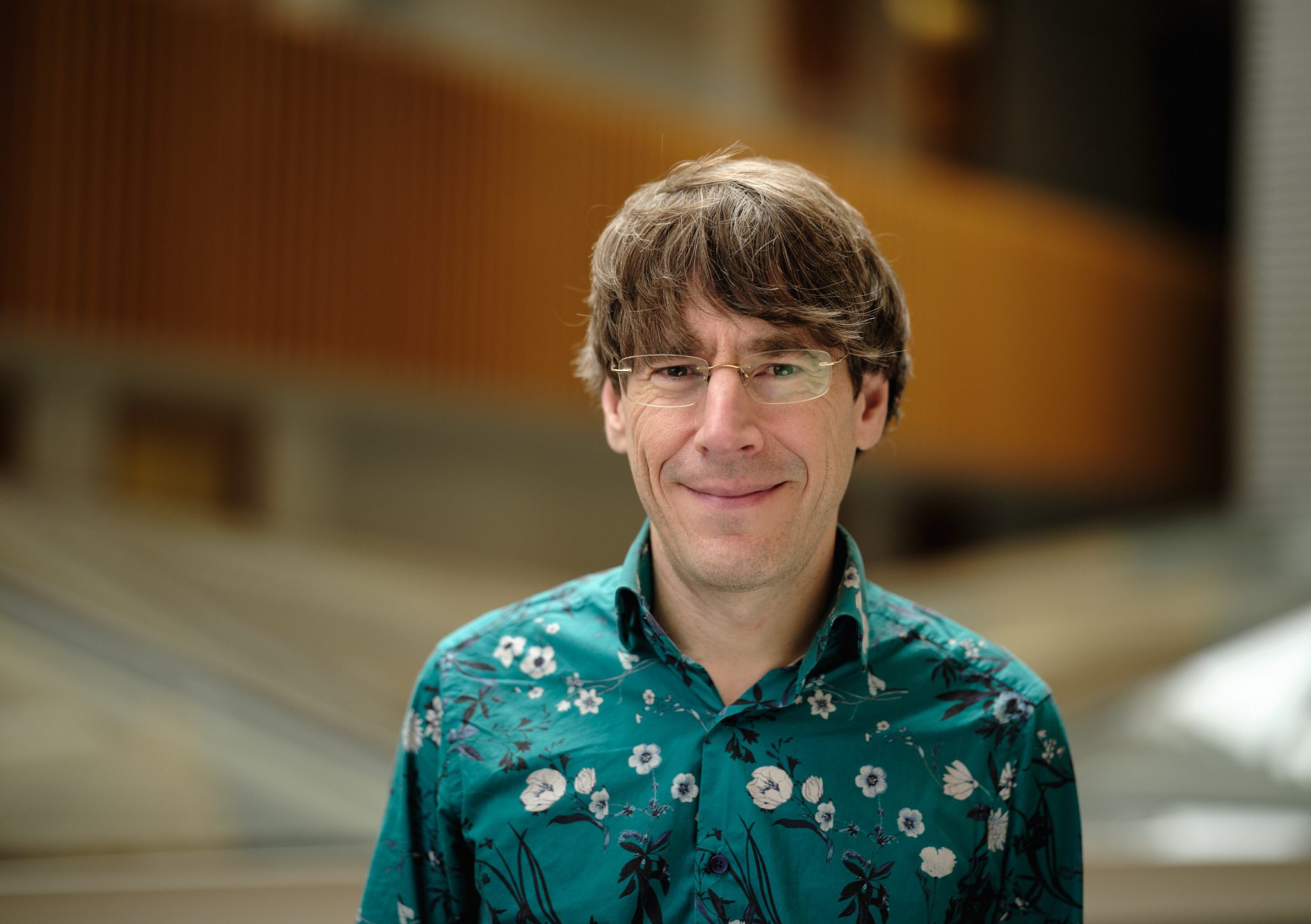
The Course Director is Professor Tara Stubbs.
Professor Tara Stubbs is Associate Professor in English Literature and Creative Writing at Oxford Lifelong Learning. She has published widely on Irish and American modernism and is the author of American Literature and Irish Culture, 1910–1955 (MUP, 2013) and The Modern Irish Sonnet: Revision and Rebellion (Palgrave Macmillan, 2020).
Dr Ben Grant is Departmental Lecturer in English Literature at Oxford Lifelong Learning. His research interests include colonial and postcolonial literature, literary brevity, and life writing. He is the author of Postcolonialism, Psychoanalysis, and Burton: Power Play of Empire (2009) and The Aphorism and Other Short Forms (2016). He is currently writing a book on the contemporary British-Jewish writer Jenny Diski.
Most other tutors on the course are drawn from the English Faculty at Oxford University.
As well as being experts in their subjects, teaching staff are experienced in teaching adult students. They understand the learning needs of students returning to education and will be able to advise you on subject-based study skills throughout the course.
In addition, there are academic literacy and academic English courses available to help you develop and improve the academic skills needed for effective study.
There are no formal entry requirements for this course. In your application and interview, we will look for evidence of a keen interest in literature and the motivation to study at degree level.
English language requirements
Please check the information on the specific English language requirements for this course. Applicants are required to have the higher-level scores.
IT requirements
Students are expected to have some IT skills and access to a computer and the internet. You will engage with the Virtual Learning Environment for course materials and use our online assignment submission system. The computer you use should meet our recommended minimum computer specification.
Fees for 2027-28 will be £4,340 (Home, Islands, and Republic of Ireland students) or £7,445 (Overseas students).
Please be aware that fees will usually increase annually.
Information for applicants from the EU, EEA and Switzerland
On 11 May 2021 the UK Council for International Student Affairs (UKCISA) published new regulations and guidance to be used in assessing the fee status of students commencing courses in August 2021 and later. We will be using this guidance to carry out fee status assessments for students commencing courses in 2027/28, including students from the EU, EEA and Switzerland. If you are an EU national and do not live in the UK then you are likely to be charged Overseas fees. Students with settled and pre-settled status in the UK and some other categories of students who work in the UK can qualify for Home fee status as long as they meet the residence criteria.
Information on financial support can be found on our website here.
Financial Declaration
All undergraduate offer-holders are required to complete a Financial Declaration Form (FDF) to demonstrate how they will meet the financial conditions of admission. If you are offered a place on this course, you will be asked to complete this form. It demonstrates that you can, or are likely to be able to, afford the course, and must be accepted before you can be considered to have met the conditions of your offer.
Click the ‘Apply’ button to automatically receive details on how to submit your application, including further guidance.
You should allow plenty of time to complete the application form and upload any supporting documents required. You should also allow sufficient time for your referee(s) to submit their reference by the application deadline.
You will need to upload the following documents as part of your application:
- A statement of approximately 300-400 words outlining your previous experience of the subject (if any) and your reasons for wishing to enrol on the course.
- An outline of your literary interests, detailing books you would be willing to discuss in some depth during the interview and explaining your choices.
- Contact details for one referee; who must not be a family member.
- Proof of English language ability, if English is your second language. Further information on English language requirements can be found here. Please note that candidates are required to have the higher-level score.
Application deadlines
-
Thursday 11 February 2027, 12:00 GMT
-
Thursday 03 June 2027, 12:00 BST
Early application is advised. The sooner you submit your application, the sooner your place will be considered.
Referees
If possible, your referee should be able to comment on your academic ability and background. Where this is not appropriate, please choose a referee who can vouch for your motivation, commitment and potential. References from friends or family members cannot be accepted.
Admissions decisions will be based on an assessment of knowledge, relevant experience, academic ability, potential and suitability for a course of study. We welcome applicants who may not hold traditional qualifications but can demonstrate relevant career experience or life skills.
Selection criteria
Even where a course has no specific academic entry requirements:
- Assessment of an applicant’s academic ability and suitability for the course of study will still take place.
- As applications for many courses significantly exceed the number of places available, each application is considered against the full field of applicants for that course in the relevant year.
The University is committed to promoting diversity, equality, inclusion and widening access throughout the admissions process. We fully endorse the Equality Policy, and our admissions procedures are kept under regular review to ensure compliance.
- Shortlisted applicants will be invited to interview.
- The final decision on admission to the course rests with the Department.
Contact us
If you have unanswered questions or would like an informal discussion on academic matters before applying, you may contact:
- Prof Tara Stubbs: tara.stubbs@conted.ox.ac.uk
- For general guidance, application and admissions advice, course specific information, or credit transfer: undergraduate@conted.ox.ac.uk.
- For information about disability support or sources of funding: student.support@conted.ox.ac.uk, +44 (0)1865 280355.