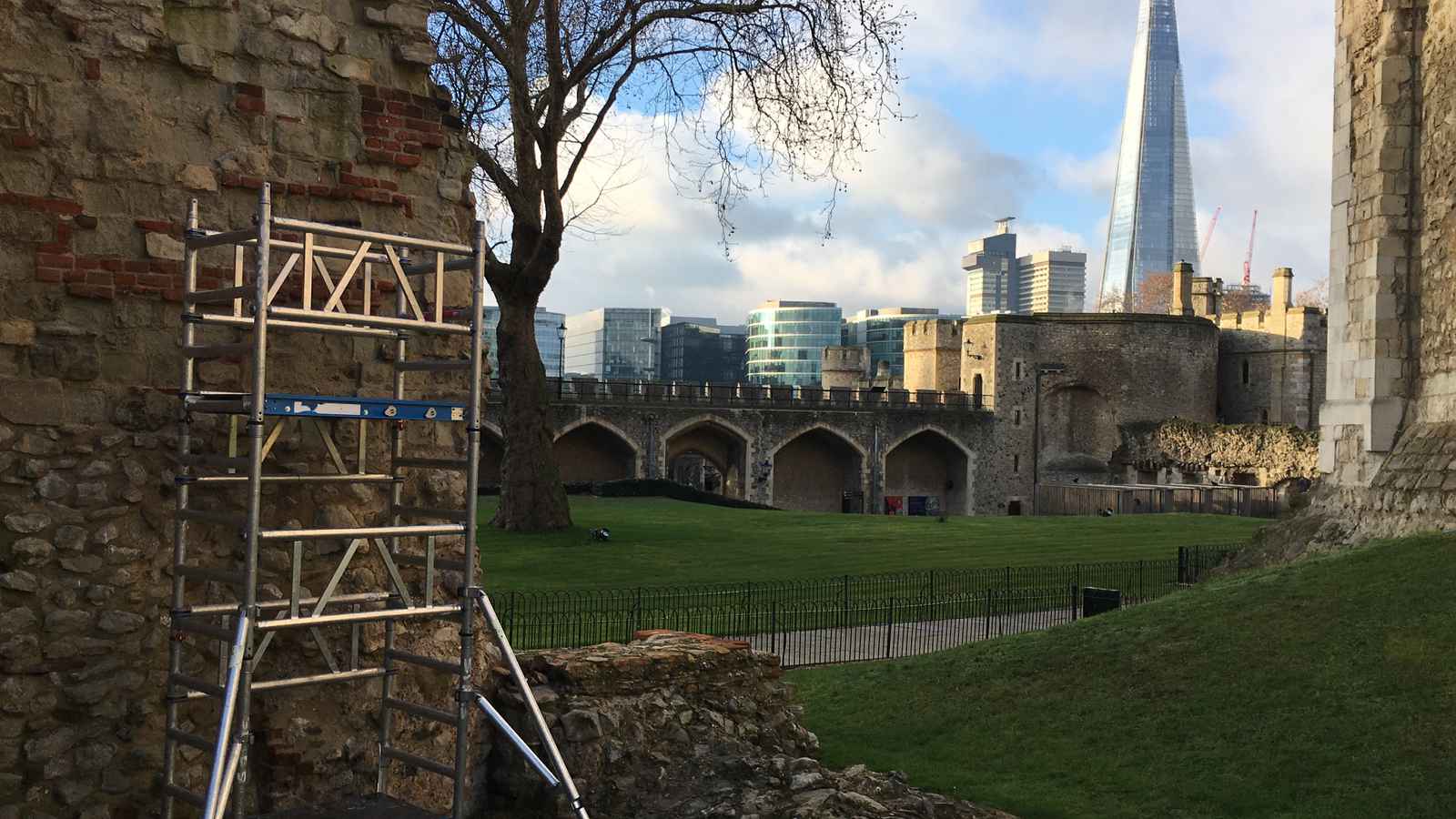
Approaches to managing old buildings change across time and between cultures. This course will give historical and global context to architectural conservation practice, and help students broaden their perspective on change in the historic environment.
Course and event search results
Filter by:
Filters
Start month
Day of the week
Time of day
The tools of calculus are used to understand the universe making it essential for all mathematical modelling. This course introduces the idea of multi-variable functions through partial differentiation and PDEs. Follows from OUDCE's 'Beginning Calculus'.
Why engage with an approach to ethics that is 2,300 years old? Because ethics without Aristotle is inconceivable, and his insights into what is good for humans remain invaluable. Join in to explore and discuss the 'Nicomachean Ethics'.
This course introduces you to the basic principles of Classical Latin. It provides a firm basis of grammar, sentence structure and vocabulary of the language, through which you will be able to read and translate into English Roman drama in adaptation.
Gain insight into the most important programming tools using the Python programming language, for obtaining data, bringing it into a usable form, exploring and modelling it, and for presenting discoveries to a wider audience.
This course will introduce statistics to at a beginner-level, covering measures of central tendency, dispersion, probability theory and inferential statistics.
This course examines the social, economic, religious, and political contexts under which women have always made art, but have largely been marginalised in its formal histories and markets.
If you are new to higher education, or have not studied for some time, you may find it useful to brush up your reading, note-making and essay-writing skills, and to revisit the basic rules of punctuation and grammar.
This course introduces you to the basic principles of Ancient Greek. It provides a firm basis of grammar, sentence structure and vocabulary of the Attic Greek, through which you will be able to read and translate adapted Greek texts into English.
5,000 years ago on the plains of southern Mesopotamia, the Sumerians invented writing, built cities and forged the earliest empires. Using archaeology and textual sources, we will explore a unique civilisation, one that is at the root of our modern world.
Commence your journey into one of the fascinating languages of the Bible. This course provides an initial foundation in grammar and vocabulary for careful and informed reading, exegesis, translation, and analysis of the biblical text.
If you have ever been daunted by terms such as 'modernism', 'magic realism' or 'postmodern', this is the course for you.