UK and European Integration 1945 – 1975
22 January 2027
2:00-3:30pm
Online or Rewley House 1 Wellington Square, Oxford, OX1 2JA

Event status:
Applications being accepted

Location:
Online or Rewley House 1 Wellington Square, Oxford, OX1 2JA

Dates:
22 January 2027 - 26 February 2027

Study Format:
Online - live

Fees:
£75.00 – £90.00
Six-part lecture series by Dr Martin Holmes
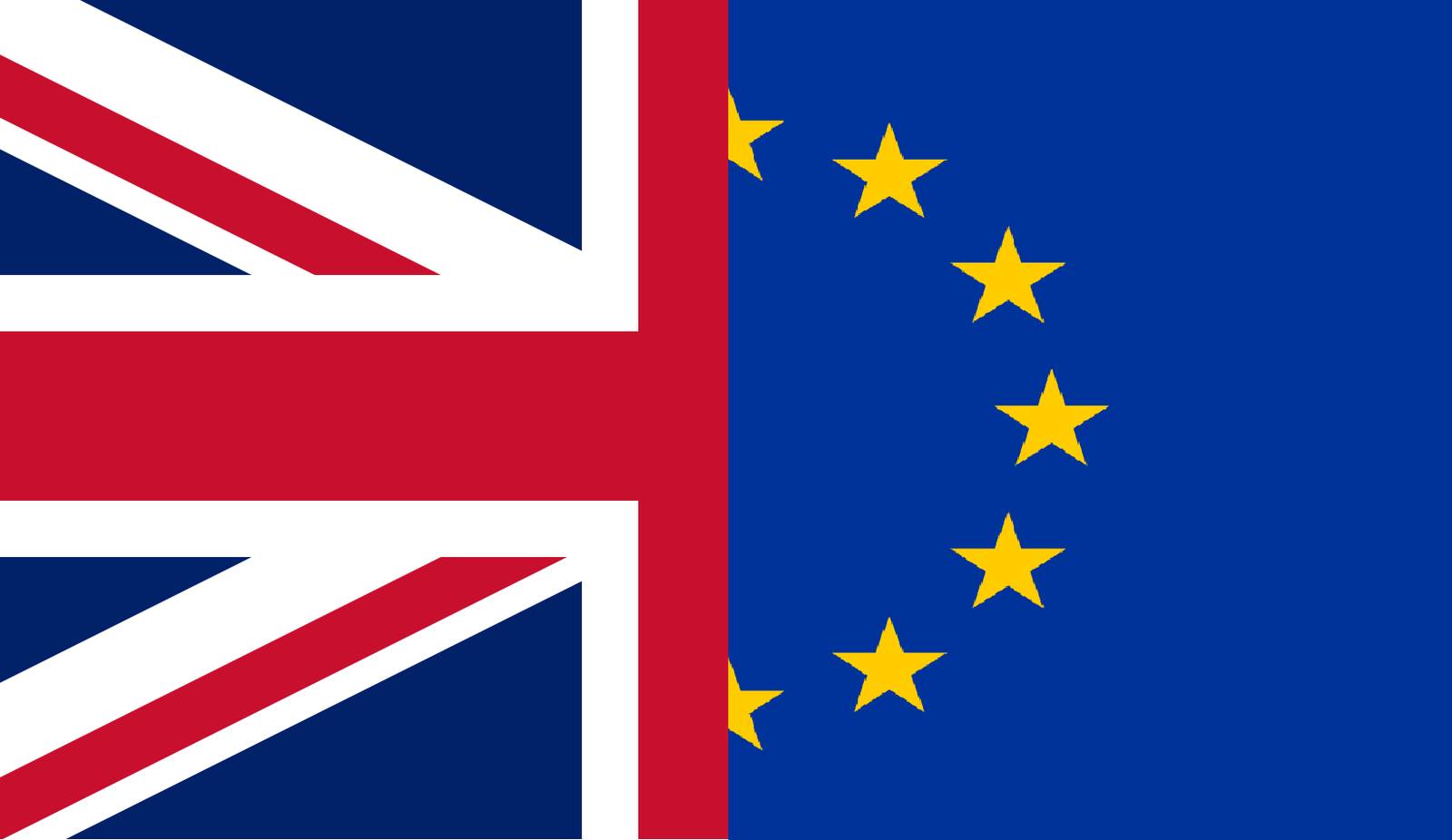
This hybrid lecture series given by Dr Martin Holmes evaluates one of the most controversial issues of 20th century UK politics: the applications to join the EEC.
From Bevin to Eden, government policy was to stay out, acting as an external friend and sponsor rather than an internal participant. But Harold Macmillan changed this stance and made the first application in July 1961. Alas, De Gaulle used the French veto in 1963 and it took another 5 years before the second application under Harold Wilson. Another veto was no deterrent to Ted Heath, who passed the legislation to join with help from Roy Jenkins and his ‘suicide squad’ of backbench Labour rebels.
But it would take Wilson’s renegotiation in 1974/75, followed by the 1975 referendum, before the issue could be decisively solved with the UK as a member.
Register for the whole series or individual lectures
For this lecture series, you can register for the entire series by clicking 'Book Now' on this page or you can register for individual lectures via the links below.
Please note: enrolments for the complete series will close at 23:59 GMT on 19 January 2027. Enrolments for each individual lecture will close two days before each lecture.
Book this course
You can opt to attend this teaching event either online (via a livestream) or in person at Rewley House, Oxford. You will be given the option of how you wish to attend during the enrolment process. You can only pick one option. If your preferred attendance format is fully booked, you can email us to be put on the waiting list. For those who wish to attend online, please read the IT requirements below before enrolling.
Contact the team
Phone: +44 (0)1865 270368
Email: events@conted.ox.ac.uk
Programme details
Lectures take place on Fridays, from 2–3.30pm GMT.
Friday 22 January
From Ernest Bevin to Anthony Eden, 1945-57
When the process of European integration was launched in the early 1950s with the European Coal & Steel Community (ECSC), Herbert Morrison famously said that the ‘Durham Miners won’t wear it’. Foreign Secretary Ernest Bevin agreed. To Labour ministers, the nationalisation of coal and steel had been a manifesto commitment, widely popular with the trade unions and the supra – national ECSC was ideologically unacceptable. Moreover, Bevin was focusing on the issues of NATO and nuclear weapons and had little time, or inclination, for the wider European project. On returning to power, Churchill favoured European integration but saw the UK as an external sponsor rather than an internal participant. Anthony Eden was of the same view, rejecting any notion of joining a European ‘federation’. Was this an era of missed opportunity for the UK to join? Or did UK statesmen have valid reasons for remaining aloof?
Friday 29 January
Harold Macmillan’s Application to Join the EEC
On July 31 1961, Harold Macmillan rose in the House of Commons to announce the UK’s application to join the European Economic Community. Although controversial at the time with both colleagues and backbenchers, Macmillan was convinced that membership would boost the economy and help deliver another Conservative general election victory. Backed by much of manufacturing industry – especially the head of BMC Leonard Lord – and encouraged by the City of London, personified by Siegmund Warburg, Macmillan was confident of success. Moreover, the Americans also favoured UK membership to bolster Western unity in the Cold War. Alas, De Gaulle’s veto in January 1963 scuppered Macmillan’s plans. But Macmillan had successfully injected the concept of EEC membership into the political blood stream, and he lived long enough to see it enacted.
Friday 5 February
Why Harold Wilson Changed His Mind on the EEC
Elected Prime Minister in 1964, Harold Wilson initially followed Hugh Gaitskell’s policy of staying out of the six-member EEC. But, influenced by colleagues such as Roy Jenkins and George Brown, Wilson had changed his mind sufficiently to make an application to join by 1967. To Wilson, the main argument in favour was economic. He envisaged an increase in exports as a result of the UK being inside the tariff walls of the EEC, thus solving the chronic balance of payments problems of the Bretton Woods era. Along with Foreign Secretary George Brown, Wilson toured the European capitals to build up diplomatic support for the application. Cautiously he did not assume success as had Macmillan before him. But once again De Gaulle issued a veto on the familiar grounds that the UK was too close to the United States and the unsuitability of its economy for EEC membership.
Friday 12 February
Ted Heath and Roy Jenkins: Combining to Secure EEC Membership
A long-term supporter of UK membership of the EEC, Ted Heath prioritised this issue above all others. Joining the Community was his life’s work in politics. Convinced of both the economic and diplomatic arguments, Heath saw the UK as playing a leading role in Europe to counter balance the domination of the United States. The problem was that he lacked a majority among Conservatives to pass the necessary legislation. With a majority of about 30, there were almost 40 Conservative rebels who intended to vote against. Riding to the rescue was Roy Jenkins, who brilliantly mobilised the Labour supporters of joining to defy Wilson’s three-line whip. Covertly liaising with the Conservative Whip’s office, Jenkins organised a ‘suicide squad’ of Labour backbenchers. This tactic ensured that the legislation always had a majority, albeit in single figures.
Friday 19 February
Harold Wilson’s Renegotiation on the EEC, 1974-75
To Wilson, the terms of entry into the EEC were always crucial. He rejected the approach taken by Heath that it would be better to join first and then negotiate inside from a position of strength. Having promised a renegotiation in the Labour February 1974 manifesto, Wilson sensibly decided to appoint Foreign Secretary Jim Callaghan to lead the negotiations. As Prime Minister, Wilson would remain aloof from the details of trade, agriculture and budgetary contributions. Callaghan proved a skilful negotiator. He convinced the Germans that it was a political necessity for the UK to stay in Europe. And, he enlisted the backing of Henry Kissinger to add diplomatic clout. After 18 months, the renegotiated terms included imports of Commonwealth lamb, butter, and sugar as well as a modest reduction in budgetary contributions. The stage was now set for the 1975 referendum.
Friday 26 February
EEC Referendum Decision 1975
By a 66% to 34% margin, the 1975 EEC referendum was a decisive outcome. The ‘yes’ campaign was manifestly successful, full of optimism for the future. All three main party leaders backed a ‘yes’ vote. The ‘yes’ campaign was genuinely cross party, and had the backing of the vast majority of the press. Only the Communist Morning Star of the dailies was opposed, and only the Spectator of the weeklies towards the other end of the political spectrum. The ‘yes’ campaign was well financed, spending £13 for every £1 spent by the ‘no’ campaign. Moreover, the ‘yes’ campaign enlisted celebrity endorsements such as Don Revie, Richard Briers, Henry Moore and – for tabloid glamour – Viscount Weymouth. The ‘no’ campaign was too closely associated with the Labour Left and Tory Right, and with controversial politicians such as Tony Benn and Enoch Powell. As scholarly accounts of the campaign have argued, its success depended on mainstream politicians comfortably familiar to the voters.
How and when to watch
Each lecture will last approximately 1 hour, followed by questions.
Please join in good time before each lecture to ensure that you have no connection problems. We recommend joining 10-15 minutes before the start time.
Recommended reading
Holmes, M, From the Treaty of Versailles to the Treaty of Maastricht: Conflict, Carnage and Co-operation in Europe 1918-1993 (Routledge, 2022)
Saunders, R, Yes to Europe: The 1975 Referendum (CUP, 2019)
IT requirements
We will be using Zoom for the livestreaming of this lecture series. If you’re attending online, you’ll be able to see and hear the speakers, and to submit questions via the Zoom interface. Joining instructions will be sent out prior to the start date. We recommend that you join the session at least 10-15 minutes prior to the start time – just as you might arrive a bit early at our lecture theatre for an in-person event.
Please note that this lecture series will not be recorded.
Dr Martin Holmes
Martin Holmes is a Senior Common Room member at St Hugh’s College, Oxford, UK, where he was formerly Lecturer in Politics for over 20 years specialising in European and British history. Previously he was a Senior Visiting Research Fellow at Mansfield College, Oxford. A strong supporter of lifelong learning he has taught several courses for the OUDCE and is a frequent speaker for the University of the Third Age (U3A). He is the author of seven books including The Labour Government 1974-79: Political Aims and Economic Reality (1985), Thatcherism: Scope and Limits (1989) and European Integration: Scope and Limits (2001). His latest book, FROM THE TREATY OF VERSAILLES TO THE TREATY OF MAASTRICHT: Conflict, carnage and co-operation in Europe 1919 – 93 was published by Routledge in 2023.
Fees
| Description | Costs |
|---|---|
| In-person event fee (includes tea/coffee and a pastry) | £90.00 |
| Virtual event fee | £75.00 |
Payment
Please see the terms and conditions for our open-access courses.
Funding
If you are in receipt of a UK state benefit, or are a care-leaver in the UK, you may be eligible for a reduction of 50% of tuition fees. Please see the below link for full details:
Concessionary fees for short courses
Module code: O26P115DSL
Please use the ‘Book’ button on this page. Alternatively, please contact us to obtain an application form.
You can also register for individual lectures if you do not wish to attend the whole series.