
Short course
The Palaeolithic Origins of Bow and Arrow Technology

Course status:
Applications being accepted


Dates and time:
14/04/2027 - 16/06/202710:30 - 12:30

Study format:
In-person weekly

Fees:
£315.00
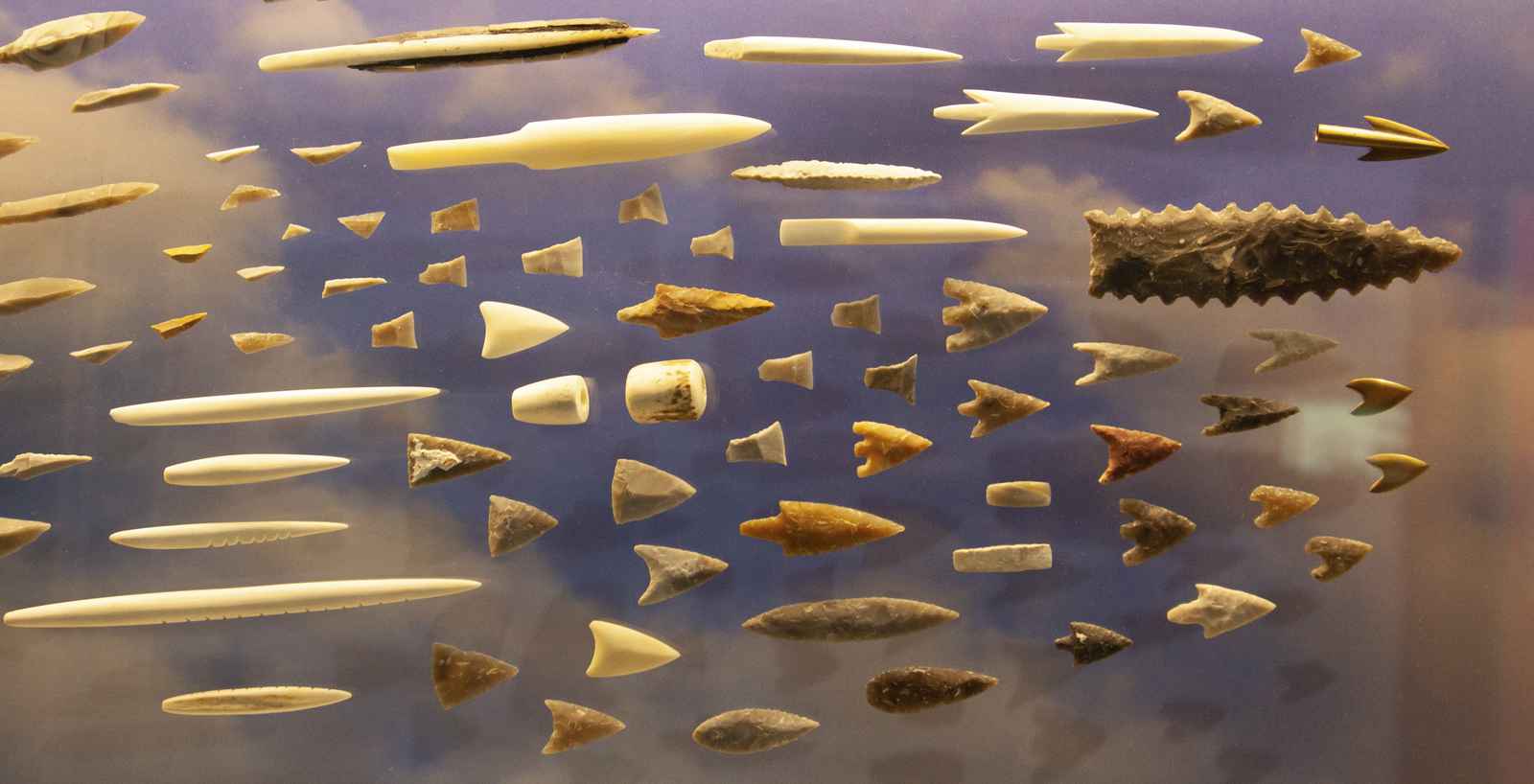
The development of bow and arrow technology appears to be uniquely associated with modern humans (Homo sapiens). The oldest surviving arrow shafts date to around 11,500 years ago at the end of the Palaeolithic and, for many years, the bow and arrow was seen as an Upper Palaeolithic innovation. Bows and arrows are mainly, or even entirely, made of perishable organic materials so it’s rare for such artefacts to be preserved in the archaeological record. Nevertheless, Palaeolithic sites associated with modern humans frequently yield stone or bone points, and research over the past couple of decades has enabled archaeologists to identify artefacts which likely served as arrow tips. It now appears that bow and arrow technology probably dates back to well over 60,000 years ago and likely as much as 80,000 years ago. Most of the earliest evidence comes from Middle Stone Age (MSA) sites in South Africa.
In this course, we’ll explore the origins of the bow and arrow and its use during the Palaeolithic. It represents a relatively complex technology, involving multiple materials (wood, cordage, adhesives, feathers, bone, stone etc.) with significant implications for the evolution of modern human cognition. Bow technology was not universally adopted and was likely invented more than once. We’ll examine the significance of this technology to the populations that used it, and though such weapons would have been primarily used for hunting they could also be used for interpersonal violence, evidence for which was found at a cemetery site along the Nile in northern Sudan dating to at least 13,400 years ago.
The course will include flintknapping demonstrations and a visit to the Pitt Rivers Museum.
Book this course
Book your place online using the button below.
Contact the team
Phone: +44 (0)1865 280900
Course starts Wednesday 14 April 2027
This is an in-person course which requires your attendance at the weekly meetings in Oxford on Wednesdays, 10.30am-12.30pm.
Week 1: The origin of modern humans
Week 2: Behaviour and technology during the African Middle Stone Age (MSA)
Week 3: Developments in hunting weaponry and the complexity of bow and arrow technology
Week 4: Exploring the evidence for bow and arrow use in the MSA of South Africa
Week 5: Hunting with poisoned arrows in stone age South Africa
Week 6: Visit to the Pitt Rivers Museum
Week 7: Evidence for early bow hunting in other parts of Africa
Week 8: The origin of the Upper Palaeolithic and the adoption of new hunting technologies in the Near East
Week 9: Hunting with bows and arrows in Upper Palaeolithic Europe
Week 10: Palaeolithic archery in Asia
Please note: students will have to arrange their own transport for the field trip, and cover the cost of any entry fees.
Course aims
This course aims to enable participants to develop an understanding of the origins and development of bow and arrow technology during the Palaeolithic and to explore its technological, behavioural and cognitive significance through archaeological evidence.
Course objectives
By the end of the course, participants will have been given the opportunity to:
- explore the archaeological evidence for the origins, development and use of bow and arrow technology during the Palaeolithic
- engage with a range of archaeological evidence and analytical approaches used to investigate the technology and its wider significance
- develop skills in the critical evaluation of archaeological evidence and interpretations, and pursue further independent study of the subject
Learning outcomes
- Demonstrate familiarity with the evidence for bow and arrow technology in the Palaeolithic.
- Appreciate the multifaceted research necessary to interpret artefacts as elements of archery equipment and the challenges and limitations of assessing the archaeological evidence.
- Critically evaluate published material in the context of interpreting Palaeolithic weaponry.
Level and demands
This is an introductory course suitable for anyone with an interest in human evolution and early prehistory. No previous knowledge is assumed.
The Department’s Weekly Classes are taught at FHEQ Level 4, ie first year undergraduate level, and you will be expected to engage in a significant amount of private study in preparation for the classes. This may take the form, for instance, of reading and analysing set texts, responding to questions or tasks, or preparing work to present in class.
Teaching methods
Teaching will be mainly in the form of illustrated lectures combined with questions and discussion in class. There will also be practical demonstrations and a museum visit.
Assessment methods
Only those students who have registered for assessment and accreditation, in advance of the course start date, can submit coursework/assignments for assessment.
Assessment
You will be set two pieces of work for the course. The first of 500 words is due halfway through your course. This does not count towards your final outcome but preparing for it, and the feedback you are given, will help you prepare for your assessed piece of work of 1,500 words due at the end of the course. The assessed work is marked pass or fail.
Dr Diane Holmes
Diane Holmes is a Departmental Tutor at Oxford Lifelong Learning where she has been teaching courses on human evolution and Palaeolithic archaeology for many years. Her main interests are Palaeolithic technology and early African prehistory.
Academic credit
Credit Accumulation Transfer Scheme (CATS Points)
Please note, students who do not register for assessment and accreditation during the enrolment process will not be able to do so after the course has begun. If you wish to gain credit from completing this course you must register to do so before the course starts.
Only those who have registered for assessment and accreditation will be awarded CATS points for completing work to the required standard. Please note that assignments are not graded but are marked either pass or fail.
Learn more about the Credit Accumulation Transfer Scheme.
If you are enrolled on the Certificate of Higher Education at the Department you need to indicate this on the enrolment form but there is no additional registration fee for assessment and accreditation.
Digital certificate of completion
Students who are registered for assessment and accreditation and pass their final assignment will also be eligible for a digital Certificate of Completion. Information on how to access the digital certificate will be emailed to you after the end of the course. The certificate will show your name, the course title and the dates of the course attended. You will be able to download the certificate and share it on social media if you choose to do so.
Fees
| Description | Costs |
|---|---|
| Course fee (with no assessment) | £315.00 |
| Assessment and Accreditation fee | £60.00 |
Funding
If you are in receipt of a UK state benefit, or are a care-leaver in the UK, you may be eligible for a reduction of 50% of tuition fees. Please see the below link for full details:
Concessionary fees for short courses
Recommended reading
Recommended reading is optional and you are not required to purchase these books to study this course.
Library facilities
All short course students (online and in-person) may register to borrow from the Oxford Lifelong Learning Library, for the duration of their course.
Further information about the Oxford Lifelong Learning Library can be found on the library website.
Preparatory reading
- The First Africans: African Archaeology from the Earliest Toolmaker to Most Recent Foragers / Barham, L. & Mitchell, P.
- Prehistoric Flintwork / Butler, C.
Module code: O26P437AHW
How to enrol
Please use the ‘Book now’ button on this page.
How to register for accreditation and assessment
To be able to submit coursework and to earn credit (CATS points) for this course, if you wish to do so, you will need to register and pay an additional £60 fee. You can do this by ticking the relevant box at the bottom of the enrolment form or when enrolling online.
Students who do not register for CATS points during the enrolment process will not be able to do so after the course has begun.
If you are enrolled on the Certificate of Higher Education at the Department you need to indicate this on the enrolment form but there is no additional registration fee.