
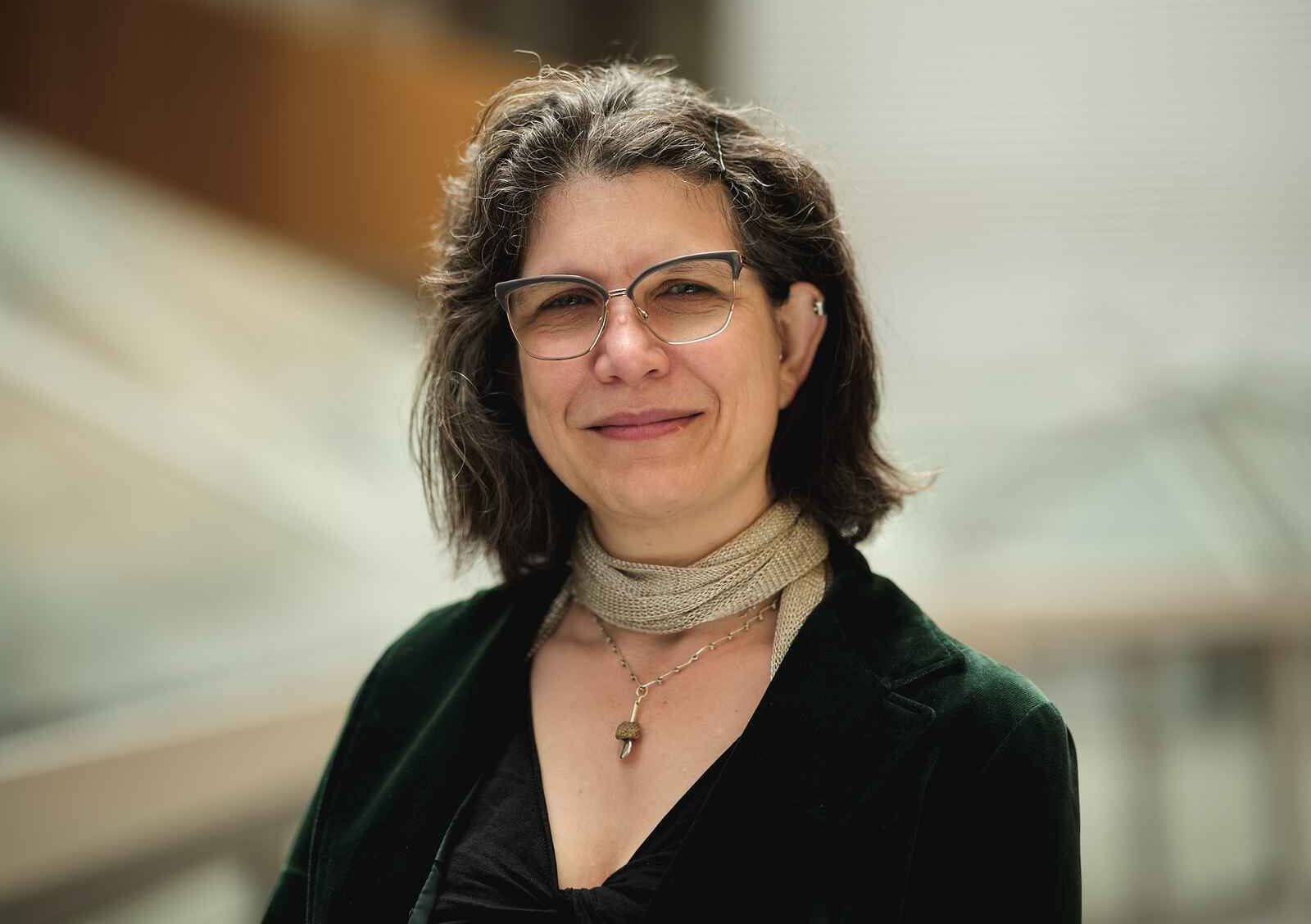
Dr Sarah Frodsham

Co-Director of the Graduate School

Chair of Ethics

Co-convenor of the AI Steering Group

Sarah is the the Co-Director of the Graduate School and Chair of Ethics at Oxford Lifelong Learning, University of Oxford, where she also serves as Co-convenor of the AI Steering Group. Her career is interdisciplinary in nature and spans the sciences, education, and the arts, bringing multiple disciplinary perspectives to debates in Higher Education, ethics, and innovation.

Her academic career began as a biochemist, spending ten years as a scientist and holding an MA in Protein Science. Sarah subsequently completed a PhD in Science Education, with doctoral research exploring the role of creativity in primary school science learning and teaching. Reflecting her continuing interest in creative practice and lifelong interdisciplinary learning, she has subsequently completed an MA in Art Practice.

Her current research focuses on the intersections of creativity, critical inquiry, and ethical practice within educational settings. Current areas of interest include creative and critical thinking, relational ethics, and the ethical implications of artificial intelligence in higher education. Sarah believes in contributing to the reciprocal development of responsible, inclusive, and reflective approaches to teaching, learning, and research.

Her teaching philosophy is grounded in the principles of reciprocity and participatory learning. She views education as a collaborative endeavour in which knowledge is co-created through the contributions of both students and teachers.

The students Sarah teaches come from interdisciplinary backgrounds, representing all academic divisions and a wide range of disciplines. This diversity brings a wealth of perspectives, experiences, and approaches to learning, enriching classroom discussions and creating opportunities for students and Sarah to learn from one another. She encourages participants to draw upon their own disciplinary expertise and professional experiences, fostering an inclusive learning community that values different ways of knowing and understanding.

Recognising both the interdisciplinary and international nature of the Graduate School cohort, The Graduate School employs a hybrid teaching approach that integrates face-to-face and online learning opportunities. This enables accessibility, flexibility, and meaningful participation for all students, regardless of location or disciplinary background.

Since completing her doctorate, Sarah has developed a research programme that examines how creativity is understood, expressed, and cultivated across diverse educational settings and stages of expertise, from primary education to internationally recognised academic researchers. Her recent scholarship has explored transitions across research paradigms, tracing pathways from the natural sciences through the social sciences and into the arts. She has also published on the craft of academic writing and have a growing interest in the critical, ethical, and reflective use of artificial intelligence within higher education and research practice. Within her academic writing she thinks through fiction as a way of illuminating critical moments of transition and change because it provides a space helping to make complex ideas accessible and relatable.

  • Frodsham, S., & Bourguignon, J. (In press) Halfway down the Rabbit Hole: A Collaborative Autoethnographic Critique of AI in Lifelong Learning. European Journal of University Lifelong Learning
  • Walkington, H., Saunders, C., Helmbold, B., Schart, M., Ebid, A., & Frodsham, S. (2026). Salient practices in mentoring teachers as researchers: the Goethe-Institute’s German as a foreign language continuing professional development programme. Zeitschrift Für Bildungsforschung (Internet), 16(1), 231–254. https://doi.org/10.1007/s35834-025-00514-4
  • McGregor, D., & Frodsham, S. (2023). Scientific intelligence: recognising it to nurture it. Journal of Intelligence.
  • McGregor, D., Frodsham, S., & Deller, C. (2023). Participatory Inquiries That Promote Consideration of Socio-Scientific Issues Related to Sustainability within Three Different Contexts: Agriculture, Botany and Palaeontology. Sustainability, 15(8), Article 6895. https://doi.org/10.3390/su15086895
  • McGregor, D., & Frodsham, S. (2022). Capturing the Nature of Teacher and Learner Agency Demonstrating Creativity: Ethical Issues and Resolutions. Education Sciences, 12(6), Article 394. https://doi.org/10.3390/educsci12060394
Back to top