
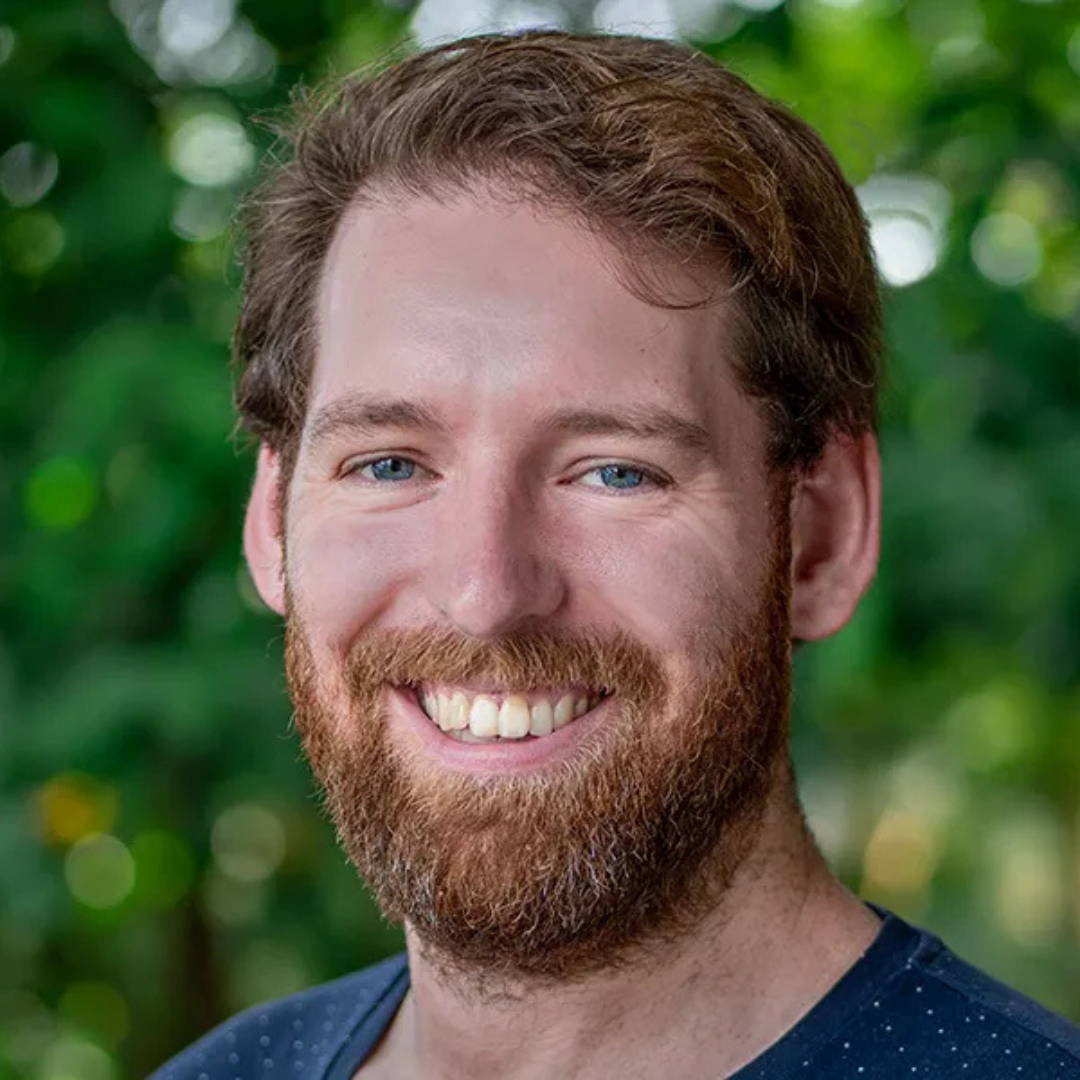
Bastiaan van Dalen
After spending several years studying archaeology, Bastiaan wanted to break away from the discipline’s traditional focus, instead applying lessons from the past to present-day challenges, and decided to apply for the MSc in Applied Landscape Archaeology to gain the skills and experience to be able to do so.
‘From a young age onwards I have always been very excited by the mysteries of the past and stories of the Maya and Aztecs. This led me to study archaeology, starting with a BA at the University of Amsterdam which was followed by an MPhil in theoretical archaeology at the University of Cambridge. But it was only after having been in the field (both in education and practice) for several years, that I realized that archaeology has an amazing largely untapped potential to contribute to sustainability and the environmental challenges we face today. As I became increasingly passionate and eager to find opportunities to realize this potential, I came across the MSc in Applied Landscape Archaeology at Oxford.
‘Although the part-time aspect was an important consideration (since this would allow me to start the MSc with only limited funding), it was the practical approach of the course and the flexibility of being able to tailor the modules to your own specific research interests that really attracted my attention. After a very welcoming visit with one of the then current students of the programme, I was sold and decided to apply.
‘Right from the start the course turned out to be highly versatile with an amazing group of students and lecturers of diverse backgrounds and motivations. The academic freedom to explore your own research interests in each module was very rewarding and made it possible to conduct your own projects for the assignments, while learning to work with exciting modern technology such as remote sensing and a whole range of landscape archaeology tools made the practical and teamwork aspects of the course also very enjoyable. The University of Oxford itself is furthermore absolutely stunning and offers an amazing social life and unrivalled opportunities to really challenge yourself.
‘The academic liberty was very rewarding and together with the relatively few lectures per module this proved to be an attractive aspect of the course. Although, this meant that more complicated topics such as GIS and remote sensing could be very challenging. These challenges, however, fostered a mind-set to think outside the box and caused us to collaborate between students, inspiring each other in the process.
‘For me, the most rewarding part of the MSc was unequivocally the dissertation. As I focused on my specific research interests (environmental sustainability in the pre-Columbian Americas) throughout the course, this was the climax where I could build on all the topics I had specialized in. Excitingly, I was allowed to conduct my own archaeological fieldwork in Nicaragua and work with a supervisor within the School of Archaeology. Thanks to the flexible, diverse and progressive nature of the MSc, I was even able to provide a novel understanding of pre-Columbian human-environment relationships and the potential for sustainable alternatives in lower Central America.
‘My dissertation is only one of many examples of the enormous potential of landscape archaeology to significantly improve our understanding of little researched archaeological landscapes. The MSc offers the perfect blend of theoretical and practical skills to be able to fully utilize this exciting potential.
‘Since completing the MSc, I received an AHRC scholarship for a PhD in Archaeology at the University of Exeter, where I developed novel data-driven methodologies to systematically analyse deep-time sustainability. Alongside this research, I co-founded an archaeological project in São Tomé and Príncipe (often referred to as the ‘Galápagos of Africa’), where I have been investigating long-term human-environment dynamics within one of the world’s most understudied biodiversity hotspots.
‘I currently continue this work in collaboration with the Max Planck Institute of Geoanthropology as a Research Associate at the School of Archaeology, University of Oxford. At the same time, I am also employed as a GIS specialist at Esri in the Netherlands, where I directly apply the practical and technical skills that I gained during the MSc in Applied Landscape Archaeology.
‘The MSc in Applied Landscape Archaeology has functioned as an important bridge that allowed me to go from dreams/passion to reality, by providing me with the practical skills and theoretical knowledge of one of the most promising areas of archaeology. I am very confident that what I have learned here will continue to be highly beneficial to my further career path for years to come!
‘I can strongly recommend this course to anyone interested the bigger picture of archaeology and our past. If you are interested in a specific region or culture, do not get discouraged by the seemingly British focus of the course as you are essentially in charge of what you want to focus on. Finally, if you are fortunate to get a place, do spend more time in Oxford than just for the lectures to make use of the fantastic academic and social facilities provided by the university and its colleges, as this opens up a whole different world of opportunities!’
Learn more: