
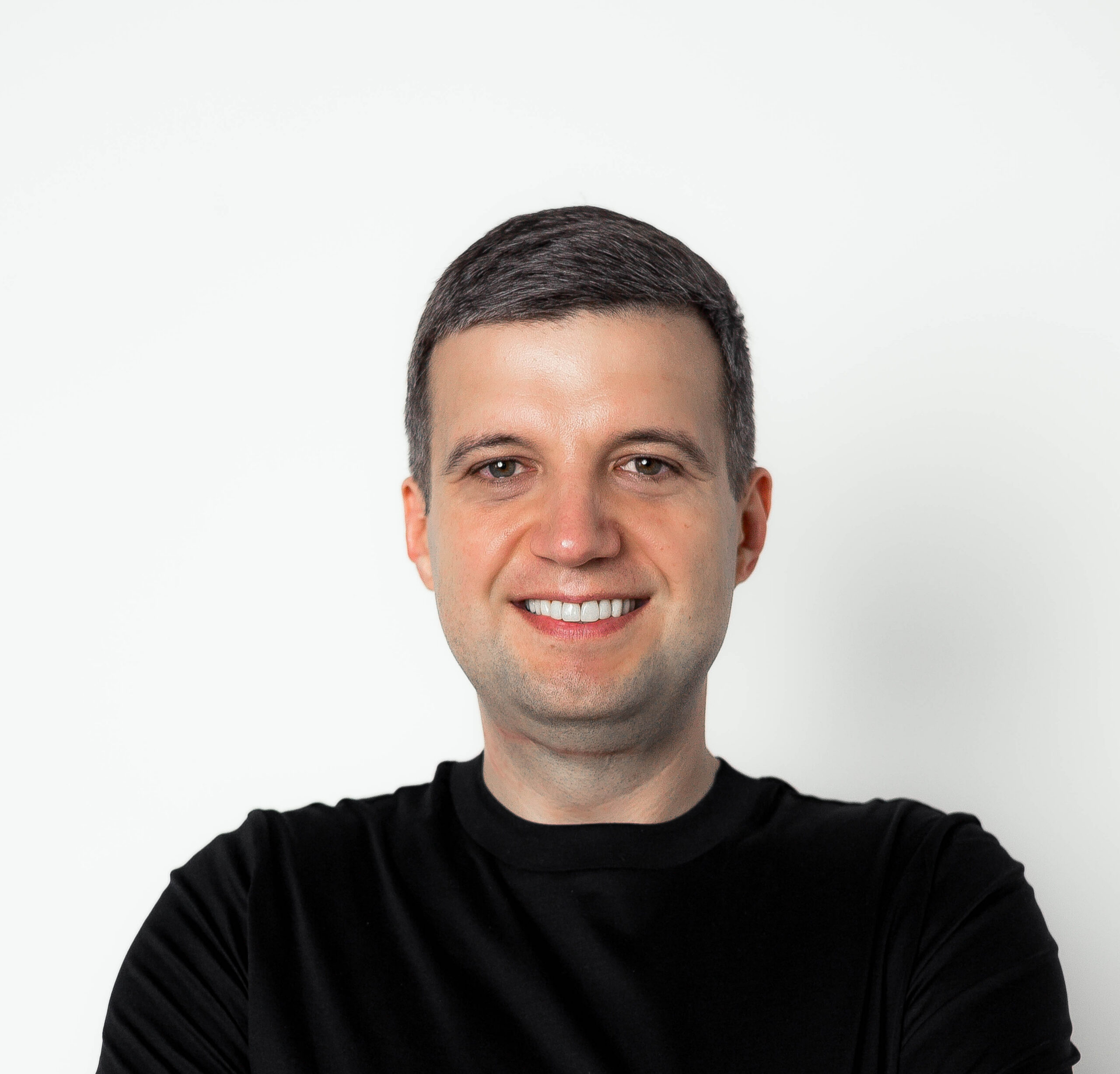
Igor Ivitskiy
Dr Igor Ivitskiy, a Ukrainian academic in mathematical modelling, attended two of our day events with burning questions. Curious to know when quantum computers would become useful and whether one equation could explain all of reality, he shares what he found, from the knowledge he gained to the new connections formed as a result.
‘I’m Igor Ivitskiy, a Ukrainian mathematician based near Manchester. I have a PhD in mathematical modelling and was an associate professor at Kyiv Polytechnic Institute. Today, I’m the founder and Chief Scientist of Doctor Ads, where we build mathematical models for online advertising. I still teach, mostly entrepreneurs now, so I spend a lot of time explaining difficult ideas in simple words. I’ve always been drawn to the way everything seems connected, and physics is where I see that most clearly. Oxford is a four-hour drive from my home, which probably tells you how much I wanted to be there!
‘Two questions brought me to day events at Rewley House. In March, I wanted to know when quantum computers would become useful. In October, it was whether one equation could explain all of reality. One day was about machines, the other about the universe. One Saturday is enough to go a long way into a subject!
‘What made me book was the chance to spend a whole day with people who are working on the answers to these questions, and to hear how they think. Introduction to Quantum and Hybrid Computing was taught by Dr Sepi Chakaveh, a data scientist who trained as an astrophysicist, and Dr Amin Karamlou, who did his doctorate in quantum computing at Oxford. On Quantum Gravity and the Theory of Everything, Dr Andrea Russo, who works on quantum gravity himself, took us from Newton to the edge of what physics knows.
‘The moment that has stayed with me most actually came after the October event was over. Dr Russo and I had got talking, and although the programme said the day would end at 5pm, the conversation didn’t! Less than two weeks later, Dr Russo and I picked it up again in London. Both days left me with people I’d like to keep talking to.
‘The March event changed my sense of when quantum computing will become practical. I came away seeing quantum computers working alongside ordinary ones rather than replacing them, with optimisation among the first problems they could help with. That’s exactly the kind of problem I work on every day – how to spread an advertising budget across many small auctions running at once – so quantum computing no longer feels distant to me.
‘The October event changed how I think about models. Dr Russo described physics as a dialogue with nature, with mathematics as its alphabet. I now see my own models in the same way, as a conversation with the market. It’s also a lovely way to explain them to people who think they’re bad at maths!
‘If the title of an event makes you curious, I’d say book it and bring your questions. Both days were built around them. The March event ended with more than an hour of open Q&A with both tutors, and in October, Dr Russo’s first rule was ”There are no wrong questions.” I think every classroom should have that rule. Use the tea breaks and lunch too, because that’s when the best conversations happen. The days are full, and you may not follow every detail. Don’t worry. You’ll still go home with the big picture.’