
Leah is an award-winning Art Historian specialising in the early modern world. She is Associate Professor in the History of Art and a Fellow of Kellogg College as well as Director of Studies in History of Art at Oxford Lifelong Learning. Previously, she worked at the Open University where her roles included Head of Research and Chair of the MA in Art History. She holds a BA from the University of British Columbia (Vancouver), an MA from the Courtauld Institute of Art (London) and a PhD from McGill University (Montreal).
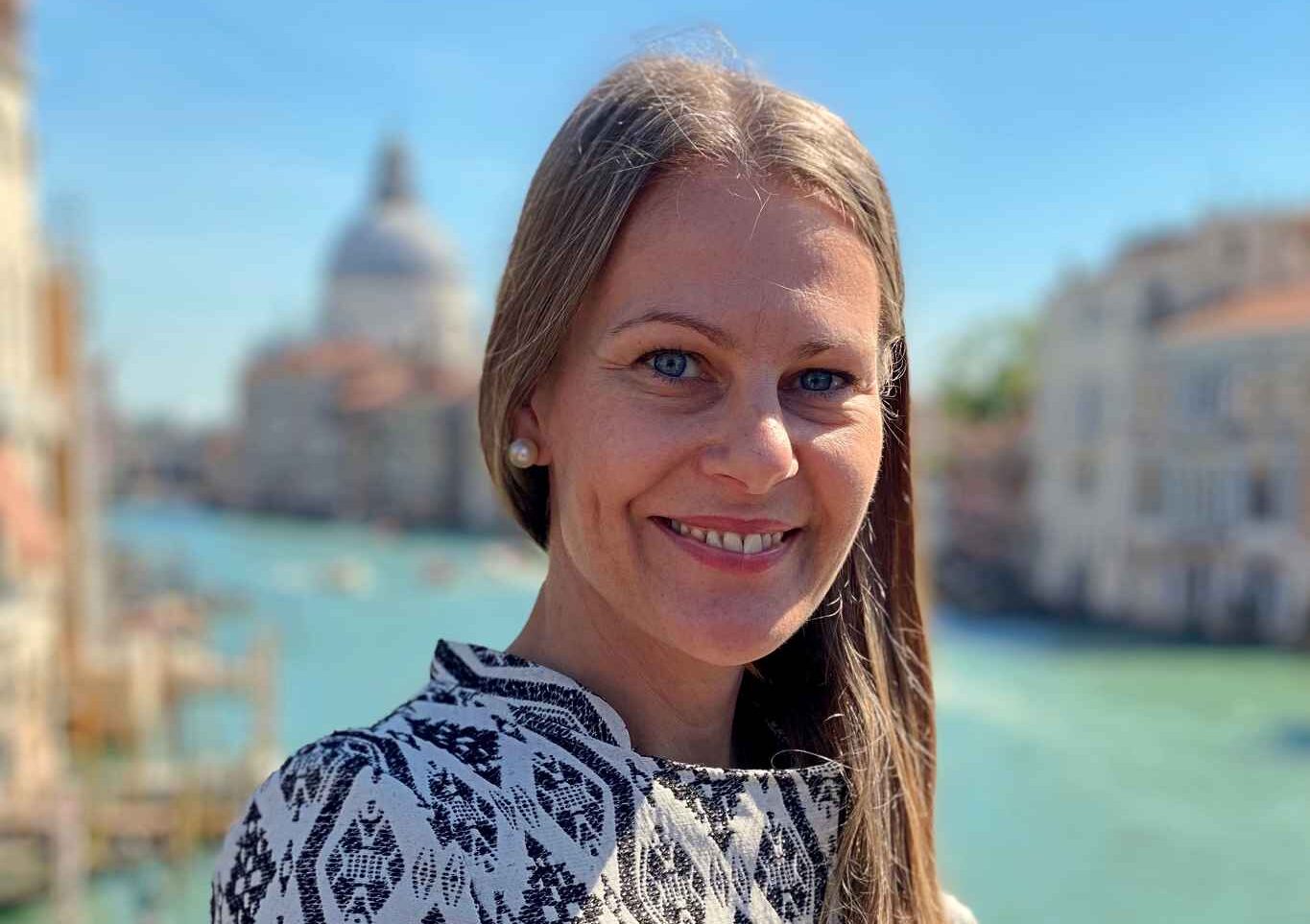
Dr Leah Clark
Associate Professor, History of Art
Director of Studies in History of Art
Leah has taught a wide range of courses in Canada, America, and the UK including Art History courses on the Italian Renaissance, collecting, and transcultural encounters in the early modern world, in addition to cross-disciplinary courses in the Humanities. She is a Fellow of the Higher Education Academy (FHEA) and is dedicated to finding innovative ways to engage students, both in the classroom and online.
Leah oversaw the complete restructuring of the Undergraduate programme in History of Art from 2023-2025, and teaches on the Certificate and Diploma in History of Art. From 2022-2025 she was Course Director for the MLA (MSt in Literature and Arts). She also supervises and examines DPhil students in History and History of Art.
Leah’s research explores the exchange and mobility of art objects in the early modern world. Her latest book, Courtly Mediators: Transcultural Objects Between Renaissance Italy and the Islamic World (Cambridge University Press, 2023) won the inaugural Italian Art Society Book prize in 2025. It investigates the exchange of objects—ceramics, metalwork, textiles, and aromatics—between Italian courts (Ferrara and Naples in particular) and the Mamluk and Ottoman courts in the fifteenth century. Her other publications include Collecting Art in the Italian Renaissance Court: Objects and Exchanges (Cambridge University Press, 2018), European Art and the Wider World 1350-1550 (co-edited with Kathleen Christian, 2017) and Mobility of Objects Across Boundaries 1000-1700 (co-edited with Katherine Wilson, 2022; a result of an AHRC-funded interdisciplinary research network examining the mobility of objects (MOB)). Her Renaissance ‘Element’ on Early Modern Transcultural Objects will be published in 2027 and she is co-curating a major exhibition at the Ashmolean (with Geraldine Johnson) Renaissance Worlds: Art & the Senses (opening in summer 2027).
Leah is currently working on two projects: a monograph on sensory histories of collecting in the early modern world and another book project on the material and sensory cultures of ‘floating worlds’ pursuing the intersections of race, gender, and rank aboard early modern ships. She has received awards and fellowships from a variety of institutions including the Social Sciences and Humanities Research Council of Canada, the Italian Government, the AHRC, the Gulbenkian in Lisbon, and the British Academy. She is a Fellow of the Royal Historical Society.
Leah’s research engages with the sensorial experiences of early modern objects and for many years she co-organised with Helen Coffey (Music, the Open University) an interdisciplinary conference on Early Modern Sensory Experiences (EMSE) at Kellogg College. She is the Principal Investigator on the TORCH funded international engagement project, ’Sensory Subjectivities: Identities and Alterity in the Early Modern World’, a partnership with Anuradha Gobin at the University of Calgary, Canada and Helen Coffey. ‘Sensory Subjectivities’ considers how identities and alterity were constructed in early modernity through sensorial experience and the project runs an online reading group. Check out the website to download a ‘sensory artefact toolkit’ that can be used in research and teaching!
She is co-convenor of the Early Modern Italian World seminar (led by Filippo de Vivo) and a steering committee member for the Centre for Early Modern Studies. She is also co-convenor of the Digital Humanities and Sensory Heritage (DHSH) network, led by Emanuela Vai.
Leah is dedicated to widening participation and has been involved in a number of outreach projects in Art History. In 2016 she founded Open Arts Objects, a project that provides free open access films to support the teaching of Art History in schools (shortlisted for a Times Higher Education Awards 2019). She is currently working with the blind and partially sighted with Susan Griffiths (GLAM) to co-produce interactives to make Art History more accessible to this community, including object loan boxes for her exhibition Renaissance Worlds: Art & the Senses at the Ashmolean in 2027.
Books
- Early Modern Transcultural Objects, Cambridge University Press, forthcoming 2027.
- Courtly Mediators: Transcultural Objects Between Renaissance Italy and the Islamic World. Cambridge University Press, 2023.
- Co-editor with Katherine Wilson, Mobility of Objects Across Boundaries 1000-1700. Liverpool University Press, 2022 (paperback 2024)
- Collecting Art in the Italian Renaissance Court: Objects and Exchanges. Cambridge University Press, 2018.
- Co-editor with Kathleen Christian. European Art and the Wider World 1350-1550 (Book 1, Art and Its Global Histories). Manchester University Press, 2017.
Articles and book chapters
- ‘Making and Sensing: Ceramics, Metalwork and Aromatics in Transcultural Exchanges.’ In Transcultural Histories of Art and Artisanal Epistemologies: Knowledge to Be Made, edited by Claire J. Farago, Susan Lowish and Jens Baumgarten. Abingdon: Routledge, 2025.
- ‘Artifacts.’ In A Cultural History of Color in the Renaissance, edited by Sven Dupré and Amy Buono, 187-203: Bloomsbury, 2021.
- ‘The Peregrinations of Porcelain: The Collections of Duchess Eleonora d’Aragona of Ferrara’, Journal of the History of Collections 32, no. 2 (2020): 275–288.
- ‘Objets croisés: Albarelli as vessels of mediation within and beyond the spezieria.’ Études Épistémè 36, no. 29 (2019): 1-25.
- ‘Chapter 1. Representing the World: Collecting and Display in the Renaissance and Today.’ In Collecting and Museology, edited by Andrea Galdy, 1-22. Cambridge: Cambridge Scholars Publishing, 2019.
- ‘Objects of Exchange: Diplomatic Entanglements in Fifteenth-century Naples,’ Predella 43, no. 44 (2018): 129-54.
- ‘Dispersal, Exchange and the Culture of Things in Fifteenth-century Italy.’ In The Agency of Things in Medieval and Early Modern Art: Materials, Power and Manipulation, edited by Grażyna Jurkowlaniec, Ika Matyjaszkiewicz and Zuzanna Sarnecka, 77-88. London: Routledge, 2017.
- Co-authored/edited with Nancy Um. ‘Introduction. The Art of Embassy: Situating Objects and Images in the Early Modern Diplomatic Encounter,’ Journal of Early Modern History 20, no. 1 (2016), 3-18.
- ‘Collecting and Replicating Antiquities: Casts, Substitutions, and the Culture of the Copy in the Quattrocento,’ Journal of the History of Collections 28.1 (2016): 1-13
- ‘Collecting, Exchange, and Sociability in the Renaissance Studiolo,’ Journal of the History of Collections 25. 2 (2013): 171-84.
- ‘Transient Possessions: Circulation, Replication, and Transmission of Gems and Jewels in Quattrocento Italy,’ Journal of Early Modern History 15. 3 (2011): 185-221.