Award courses
Undergraduate Certificate in the History of Art

Course status:
Closed

Duration:
2 years, part-time

Study format:
In person and online

Level:
Undergraduate
Explore the voices, cultures and experiences behind art’s global tapestry.
The part-time Certificate in the History of Art teaches students about the production and provenance of works of art in museums, as well as key skills such as how to view and describe works of art. Students are introduced to issues of display, value, collections, categories of art and its institutions. You learn about the different approaches to understanding and interpreting works of art, including key theories, methods and concepts.
The Certificate also provides a historical grounding, exploring the history of art from c500 CE to the present, engaging with art in its global contexts. While the overall structure is historically linear, the thematic approach enables students to engage with themes and issues that build on each other and cut across space and time.
Taught through a combination of online digital learning and in-person teaching, this course supports a student-focused and transformative learning environment.
KEY INFORMATION
Applications for 2027 entry will open in autumn 2026.


Course structure
Year 1
- The first term (Michaelmas) covers Seeing Like an Art Historian.
- The second term (Hilary) covers What is Art?.
- The final term (Trinity) covers Art in the World.
The first year of the Certificate will introduce students to the key skills in the History of Art. The first term addresses visual literacy skills, teaching students how to look at works of art, the critical vocabulary they will need to conduct visual analyses, and how works of art are made.
The second term considers what makes a work of art, addressing issues of display, value, collections, and categories of art and its institutions.
The final term considers the interpretive models used to understand and interpret works of art, including key theories, methods and concepts, with case studies drawn from the Italian Renaissance and French Impressionism.
Year 2
- The first term (Michaelmas) covers Classical and Medieval Worlds.
- The second term (Hilary) covers Renaissances.
- The final term (Trinity) covers Modernities.
The second year of the Certificate in History of Art will provide students with a historical survey of the History of Art from c. 500 CE to the present. Although predominantly focused on Western art history, the course also engages with art in its global contexts. Students will begin by studying the late Classical and Medieval worlds, then proceed to study the early modern world and finally conclude the course with the Modern and Contemporary period.
Each term’s title is in the plural, which points to the plurality of experiences of these concepts in different places and times. While the overall structure is historically linear, the thematic approach will enable you to engage with themes and issues that build on each other and cut across space and time.
Do you have an interest in art history and ideas? Do you have an openness towards studying a range of historical art forms and grappling with critical debates about meaning? This course is for anyone with an enthusiasm for art history and a high degree of motivation.
You do not need any formal qualification or previous study of the history of art. However, you will need the necessary language skills, a determination to succeed, and sufficient time available to devote to class time and private study.
What will you gain?
- Get up to speed with the latest debates and methods used to interpret works of art, particularly in the areas of politics, society, gender and identity, material culture, and decolonising practices.
- Gain a global perspective on the History of Art, investigating this rich and dynamic discipline across multiple historical periods, regions, and art forms, from the Italian Renaissance and French Impressionism to the contact zones of India and the Mediterranean.
- Exchange ideas and develop questions with a group of like-minded peers, sharing experience and knowledge across a range of historical art contexts.
- Gain practical knowledge and develop your interpretative skills through museum and gallery visits in Oxford and London, offering a rare opportunity to gain first-hand experience of the visual arts.
In-person elements
Students will meet in person three times per term, on selected Fridays. These days run from 10:00am–5:30pm and usually consist of two classroom sessions and a visit to an art collection or site in Oxford. Teaching takes place at Rewley House, 1 Wellington Square, Oxford, OX1 2JA.
One Saturday per term is dedicated to gallery visits and will take place both in and outside Oxford, including trips to collections in London and visits to heritage houses.
Online elements
There are seven online units per term, along with online tutorials.
Online asynchronous (self-paced) learning includes reading materials provided through the Virtual Learning Environment and set texts from journal articles, textbooks, exhibition catalogues, and books. Students will also engage with videos, forum activities, online exercises, and independent study, including essay preparation and research.
Some online units take the form of case studies, allowing students to explore a particular topic in depth, while others introduce theoretical and methodological approaches that can be applied across different periods and regions.
Students are assigned a personal tutor for the academic year. Each student receives four hours of online synchronous (live) tutorial support across the year, comprising:
- Three hours of small-group tutorials (one hour per term).
- Two 30-minute one-to-one tutorials with their tutor.
Small-group tutorials focus on essay writing, interpreting feedback, following up on online learning units, student presentations, and student-led discussion. In addition, students may arrange Microsoft Teams or in-person office-hour meetings with the Course Director.
You should expect to spend approximately 8–10 hours per week on independent study during term time.
Award and credit transfer
An Undergraduate Certificate will be awarded on completion of the course. You will be invited to celebrate at the annual Awards Ceremony, held at Oxford’s Sheldonian Theatre.
The syllabus and teaching of the course are aimed at first-year undergraduate level (FHEQ Level 4). Students who successfully complete this two-year course will be awarded an Oxford University Undergraduate Certificate in the History of Art, equivalent to 120 CATS points at first-year undergraduate level (FHEQ Level 4) in the Department’s Qualifications and Credit Framework. Outstanding performance will qualify for a Distinction.
Opportunities vary for the transfer of credit, so students who are considering taking this course in order to transfer credit are advised to discuss the possibilities with the Course Administrator on undergraduate@conted.ox.ac.uk.
Learn more about the Credit Accumulation and Transfer Scheme (CATS points).
The Course Director is Dr Sean Willcock.
Along with Dr Willcock, the teaching panel includes a number of experienced tutors – not only in their subject but in teaching adult students. They understand the learning needs of students returning to education and will be able to advise you on subject-based study skills throughout the course.
The Course Director and tutors will be able to help you with academic advice and support. In addition, there are academic literacy and academic English courses available to help you develop and improve the academic skills needed for effective study.
There will be a number of formative assessments. These are designed to help build confidence throughout students’ learning journeys, particularly for those returning to education after a period away from study. Online forums and exercises will also help students test their knowledge without affecting their marks.
Year 1
Formative assessments
- Task 1: Formative Visual Analysis (500 words)
- Task 2: Formative Primary Source Analysis (500 words)
- Task 3: Formative Writing Labels (700 words)
Summative assessments
- Assignment 1: 1,500-word essay
- Assignment 2: 1,500-word essay
- Assignment 3: Object Biographies (1,500 words)
- Assignment 4: 2,500-word essay
Year 2
Formative assessments
- Task 1: Medieval Materiality – critical analysis and presentation (700 words)
- Task 2: Research proforma
Summative assessments
- Assignment 1: Medieval essay (2,500 words)
- Assignment 2: Early Modern essay (2,500 words)
- Assignment 3: Contemporary/Modern reflection (750 words)
- Assignment 4: Research project essay (4,500 words). The title will be selected from a list of questions or agreed with the Course Director.
There is no formal examination at the end of the Certificate course.
There are no formal entry requirements for this course. In your application and interview, we will look for evidence of a keen interest in the history of art and your motivation to study at undergraduate level.
IT requirements
Students are expected to have some IT skills and access to a computer and the internet. You will engage with the Virtual Learning Environment for course materials and use our online assignment submission system.
The computer you use should meet our recommended minimum computer specification.
English language requirements
Please check the information on the specific English language requirements for this course. Applicants are required to have higher-level scores.
Fees for 2027–28 will be available from September 2026.
Please be aware that fees will usually increase annually.
Information for applicants from the EU, EEA and Switzerland
On 11 May 2021, the UK Council for International Student Affairs (UKCISA) published new regulations and guidance to be used in assessing the fee status of students commencing courses in August 2021 and later. We will use this guidance to carry out fee status assessments for students commencing courses in 2026–27 and later, including students from the EU, EEA and Switzerland.
If you are an EU national and do not live in the UK, you are likely to be charged Overseas fees. Students with settled or pre-settled status in the UK, and some other categories of students who work in the UK, may qualify for Home fee status provided they meet the relevant residence criteria.
Students from outside the UK and Republic of Ireland
If you are from outside the UK or Republic of Ireland, you will be classified either as an Overseas or Islands student.
Information on financial support can be found on our funding page.
Financial Declaration
All undergraduate offer-holders are required to complete a Financial Declaration Form (FDF) to demonstrate how they will meet the financial conditions of admission.
If you are offered a place on this course, you will be asked to submit a completed Financial Declaration Form. The form demonstrates that you can, or are likely to be able to, afford the course, and it must be approved before you can be considered to have met the financial conditions of your offer.
Click the ‘Apply’ button to request the online application link. We will email you the application form and guidance, usually by the next working day.
You should allow plenty of time to complete the application form and upload any supporting documents required. You should also allow sufficient time for your referee to submit their reference by the application deadline.
You will need to upload the following documents as part of your application:
- A statement of approximately 300 words outlining your previous experience of the subject (if any) and your reasons for wishing to enrol on the course.
- A 250-word submission task answering the following question: How has a book or an exhibition changed your perspective on the meaning of a work of art?
- Contact details for one referee.
- Proof of English language ability if you are a non-native English speaker.
Application deadlines
- 12 February 2026, 12:00 GMT
- 28 May 2026, 12:00 BST
Early application is advised. The sooner you submit your application, the sooner your place will be considered.
Referees
If possible, your referee should be someone who can comment on your academic ability and background. Where this is not appropriate, please choose a referee who can vouch for your motivation, commitment and potential. References from friends or family members cannot be accepted.
Admissions decisions are based on an assessment of knowledge, relevant experience, academic ability, potential and suitability for the course. We welcome applicants without traditional qualifications, including those who can demonstrate relevant career experience or transferable life skills.
Selection criteria
Even where a course has no specific academic entry requirements:
- Assessment of an applicant’s academic ability and suitability for the course of study will still take place.
- As applications for many courses significantly exceed the number of places available, each application is considered against the full field of applicants for that course in the relevant year.
The University is committed to promoting diversity, equality, inclusion and widening access throughout the admissions process. We fully endorse the Equality Policy, and our admissions procedures are kept under regular review to ensure compliance.
- Shortlisted applicants will be invited to interview.
- The final decision on admission to the course rests with the Department.
Contact us
If you have unanswered questions or would like an informal discussion on academic matters before applying, you may contact:
- Course Director, Dr Sean Willcock: sean.willcock@conted.ox.ac.uk
- For general guidance, application and admissions advice, course-specific information, or credit transfer: undergraduate@conted.ox.ac.uk, +44 (0)1865 270312.
- For information about disability support or sources of funding: student.support@conted.ox.ac.uk, +44 (0)1865 280355
STUDENT SPOTLIGHTS

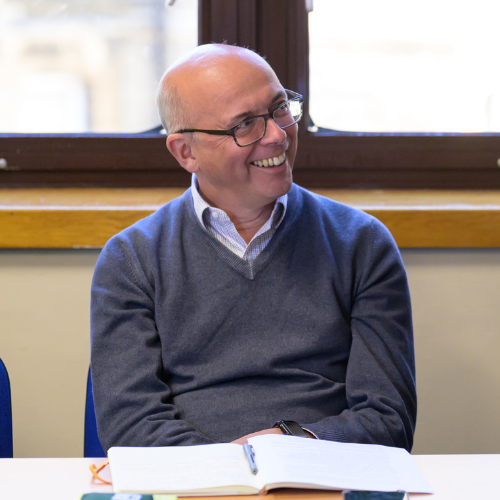






Ashmolean Museum, student trip, 2025

Ashmolean Museum, student trip, 2025

Ashmolean Museum, student trip, 2025

Student, Rewley House, 2025