
MSt in Diplomatic Studies


The full-time MSt in Diplomatic Studies is a unique postgraduate course that combines vocational and academic education specifically focused on the field of diplomacy. The programme is studied over twelve months (October–September) and requires full-time residence in Oxford during the first nine months.
The course enhances the knowledge and skills required for the conduct of diplomacy in a complex and interdependent world. Whether you are a member of the foreign service of a sovereign state, work for an international organisation, or are otherwise involved in the institutions and processes of diplomacy, the programme is designed to support your professional development.
In 2019, the programme celebrated its 50th anniversary. Its alumni include royalty, prime ministers and ambassadors, and many graduates now hold senior positions across the diplomatic profession worldwide.
Please note: this course was formerly known as the Foreign Service Programme (FSP).

The programme embraces an interdisciplinary, holistic approach and all coursework links theory with practice and policy. To ensure maximum relevance to diplomatic practice, the formal curriculum is supplemented by practical workshops (inculcating skills such as communication, negotiation, crisis management, public speaking, and media interviews), simulations and field trips.
Study tours have traditionally been regarded as a high point of the course, and several such visits are included in the course of the academic year, to embassies, government departments, international organisations and business and media institutions in the United Kingdom and elsewhere in Europe.
The MSt in Diplomatic Studies programme is designed for mid-career diplomats and international relations practitioners. Traditionally, most participants were officially sponsored diplomats who returned to service in their foreign ministries after completing the programme. In recent years, an increasing number of non-diplomats and other civil servants working in international relations have also been admitted. This reflects both the changing nature of international diplomacy and recognition of applicants’ de facto diplomatic experience.
Networking opportunities are one of the programme’s key strengths. The selection committee places a strong emphasis on broad geographical representation, creating diverse and dynamic cohorts. Participants learn not only through formal teaching but also from one another’s professional experience and from engagement with the many practitioners who contribute to the programme as guest speakers.
Despite its vocational elements, the programme is a fully accredited University of Oxford Master’s degree. Participants therefore require a strong academic background in order to engage successfully with the demanding curriculum. In particular, the ability to undertake advanced research independently is an essential requirement.
The programme offers an exceptional opportunity for mid-career international relations practitioners with scholarly interests to spend a sabbatical year in Oxford. As full members of the University of Oxford, students benefit from immersion in one of the world’s leading centres of intellectual and academic life.
The core curriculum is made up of a dissertation and four taught courses: Diplomatic Practice, International Politics, International Trade & Finance, and Public International Law.
The taught courses run concurrently throughout the academic year. Teaching combines lectures and seminars with one of Oxford University’s hallmark approaches: tutorials. These small-group discussions are facilitated by academic staff and guide students through a series of formative assessments designed to deepen understanding and develop analytical skills.
Several non-core (extra-curricular) courses are also offered to support academic success, including academic writing, English language skills, and research methodology. The research methodology course is specifically designed to help students develop research proposals and prepare for their dissertation work.
Core (credit-bearing) components
- Diplomatic Practice: Explores the vocational, institutional and contextual dimensions of contemporary diplomacy. Participants develop analytical skills to assess geopolitical challenges in relation to the interests of individual countries, organisations and regions.
- International Politics: Examines key concepts in international relations and major issues in world politics, with particular emphasis on international political theory, foreign policy, and the changing nature of global affairs.
- International Trade & Finance: Introduces the fundamentals of international trade theory and macroeconomics, alongside applied topics such as trade liberalisation, globalisation and international resource transfers.
- Public International Law: Explains the principles of international law and legal reasoning, applying them to contemporary global issues ranging from the nature of international law to the use of force and the settlement of conflicts.
The Dissertation
The research component of the MSt involves a substantial independent research project. Each student is assigned an academic supervisor and is required to complete a 15,000-word dissertation. Dissertation topics are chosen by students, provided they fall within the field of diplomatic studies. Topics often reflect participants’ professional expertise or future career interests and, in some cases, provide the foundation for subsequent doctoral research.
Course Director: Dr Yolanda Spies
Alongside Dr Spies, the teaching panel includes a number of experienced academics and tutors with expertise both in their subject areas and in teaching adult learners.
- Paul Docherty – Lecturer and Course Convenor for Diplomatic Practice
- Dr Vahid Nick Pay – Departmental Lecturer in International Politics and Co-Director of Graduate Studies
- Dr Nikos Theodorakis – Lecturer and Course Convenor for International Trade and Finance
- Dr Thiago Alves Pinto – Lecturer and Course Convenor, Public International Law
- Dr Tsvetelina van Benthem – Lecturer in Public International Law
- Prof Dr Christian L. Glossner – Lecturer in Research Methodology
- Samuel McIlroy – Tutor in Academic Writing
- Jon Hird – Tutor in English Language
Assessment for the MSt in Diplomatic Studies is incremental and synoptic, and takes the form of overarching, interdisciplinary tasks. Students draw on holistic knowledge obtained in all four taught components in order to solve complex problems. (The latter are defined in the intended learning outcomes of the course).
Summative assessment starts with a Policy Document that is forward-looking and tailored to the interests of a selected entity (government or organisation). This is followed by a Report that requires analytical reflection on elements of selected study tour(s), workshop(s) or other elements of the coursework. Towards the end of Trinity Term, students undertake a live oral examination in which they respond to unseen questions from a panel of assessors on their coursework and their understanding of diplomacy in theory and practice. As the assessment evaluates core professional competencies through spontaneous oral interaction, it constitutes a competence standard rather than simply a mode of assessment. If you have any questions about this, please contact the course team to discuss before making an application.
Students submit a 15,000-word dissertation in early September.
Each individual summative assessment is compulsory and requires successful completion for the MSt degree to be awarded.
Degree-level qualifications
As a minimum, applicants should hold or be predicted to achieve the following UK qualifications or their equivalent:
- a first-class or strong upper second-class undergraduate degree with honours in any subject.
For applicants with a degree from the USA, the minimum GPA normally sought is 3.5 out of 4.0.
If your degree is not from the UK or another country specified above, please visit the International Qualifications page for guidance on the qualifications and grades that would usually be considered to meet the University’s minimum entry requirements.
English language proficiency
This course requires proficiency in English at the University’s higher level. If English is not your first language, you may need to provide evidence that you meet this requirement.
Further information on English language requirements can be found on the University’s English language requirements page.
Please visit the MSt in Diplomatic Studies page on the University of Oxford Graduate Admissions website for details of course fees and costs.
Please see our funding page for help and information regarding funding postgraduate study. We also recommend searching for opportunities using the University’s Fees, Funding and Scholarship Search.
To be considered for many scholarships, applicants must apply by the January deadline. However, some scholarships require additional application materials and may have different deadlines, so applicants should carefully check the requirements for each funding opportunity.
Scholarships
Many students hold scholarships. The deadline for applications to external scholarship schemes is often in September or November, before the course application deadline, so early action is strongly recommended.
Commonwealth Shared Scholarship
Citizens of eligible developing Commonwealth countries applying to the MSt in Diplomatic Studies may be considered for a Commonwealth Shared Scholarship (CSC), which covers course fees and provides a living stipend.
To be considered, applicants must:
- Apply for the MSt in Diplomatic Studies by the Oxford application deadline of 27 January 2027 and receive an offer of a place.
- Submit a separate application to the Commonwealth Scholarship Commission using the online scholarship application form by 16:00 GMT on Tuesday 8 December 2026.
The CSC will begin accepting applications from 12 November. Further information is available on the Commonwealth Shared Scholarships website.
Please note that the scholarship deadline falls earlier than the course application deadline. Applicants who do not submit the CSC application by 8 December 2026 will not be considered for the scholarship.
Chevening Scholarship
Please visit the Chevening website for information on eligibility and how to apply for UK Foreign, Commonwealth and Development Office scholarships. Applicants may also contact their local British diplomatic mission.
- The Chevening application deadline typically falls before the course application deadline.
- For 2027/28 entry, applications have now closed. See the application timeline for details.
College Scholarships
These scholarships require a separate application. Candidates must apply to the University by the January deadline and complete any additional scholarship application requirements.
Swire Scholarships
Swire Scholarships are open to applicants who are permanent residents of Hong Kong SAR and have completed the majority of their formal education in Hong Kong SAR. Applicants must apply for admission to a full-time graduate course of study that is offered by St Antony’s to be considered for this scholarship. The Scholar must intend to return to Hong Kong SAR after completing their course of study, and preference will be given to an applicant who plans to pursue a career in government, business, academia or a recognised profession. Applicants must have submitted their application for graduate study to the University by the January deadline, and must have secured a place on their chosen programme of study by 1 April 2027.
The award covers the full cost of the Scholar’s university and college fees plus a maintenance grant (£21,000 per annum at the current level). In addition, the Scholar will receive a one-off travel stipend to cover economy class air passages to and from London.
It is helpful if candidates select St Antony’s College in the ‘College choice’ section of their University application form, though this is not compulsory. Students must migrate to St Antony’s College to take up the scholarship if they have been accepted by another Oxford University college.
Candidates should apply through this online form.
The deadline for the submission of the form is 5pm (UK time) on 1 March 2027.
Further information can be found in the Swire Scholarships page on our website: Swire Scholarships – St Antony’s.
Eni-Oxford African Scholarship
Eni-Oxford African Scholarships are available this year for applicants who are ordinarily resident in one of the following countries: Angola, Ghana, Cote D’Ivoire, Kenya, Mozambique and Nigeria. The Scholarship is open to two incoming graduate students applying for any one-year Masters course that St Antony’s accepts. There is a strong preference for candidates who can demonstrate clear ambitions to use their education to benefit their home country upon graduation.
The award covers the full cost of the Scholar’s tuition fees plus a maintenance grant (around £20,000 per annum at the current level). In addition, one-way flights to and from London will be provided to the Scholar at the beginning and at the end of their course.
It is helpful if candidates select St Antony’s College in the ‘College choice’ section of their University application form, though this is not compulsory. Students must migrate to St Antony’s College to take up the scholarship if they have been accepted by another Oxford University college.
Candidates should apply through this online form.
The deadline for the submission of the form is 5pm (UK time) on 1 April 2027.
Further information can be found in the Eni-Oxford African Scholarships tab in our website: St Antony’s Fees and Scholarships.
Applications for awards from other international funding agencies should be made directly to the relevant organisations
Applications for this course should be made via the University of Oxford Graduate Admissions website. This website provides information on fees and entry requirements, along with help on preparing and submitting your application.
Application deadlines
12:00 midday UK time on:
- Stage 1: Wednesday 27 January 2027 (Latest deadline for most Oxford scholarships)
- Stage 2: Tuesday 2 March 2027
When to apply
Early application for the programme is strongly advised. After the March deadline, the course will only stay open for that year’s entry if places are still available.
Remember that it can take a number of weeks to obtain all of the documents you need and to prepare a competitive application. You should also allow your referees plenty of time to submit your references. We therefore recommend you apply as soon as possible.
Interviews are normally held as part of the admissions process within six weeks of the application deadline.
Contact us
If you have any queries about the programme or the application process, please call us on +44 1865 270455 or email us at dsp@conted.ox.ac.uk.
STUDENT SPOTLIGHTS

Sarah’s committee work with the United Nations often brings her back in touch with fellow alumni from the Diplomatic Studies Programme. As a member of…
Diplomatic Studies Programme (DSP)

Adeel’s experience on the Diplomatic Studies Programme highlights, in his words, its reputation as the MBA for diplomats. He shares with us his key moments…

Syed Nizamuddin co-founded MyDiplomacy, a platform that empowers Malaysian youth to explore global diplomacy and leadership using knowledge gained from his time on the Diplomatic Studies…

Mirbek’s time at Oxford (2022–23) was marked by innovation and impact. Drawing on his dissertation research from the Diplomatic Studies Programme, he developed the State Succession…

Nana joined the Foreign Service Programme in 2016 after working for the Ministry of Foreign Affairs in Ghana.
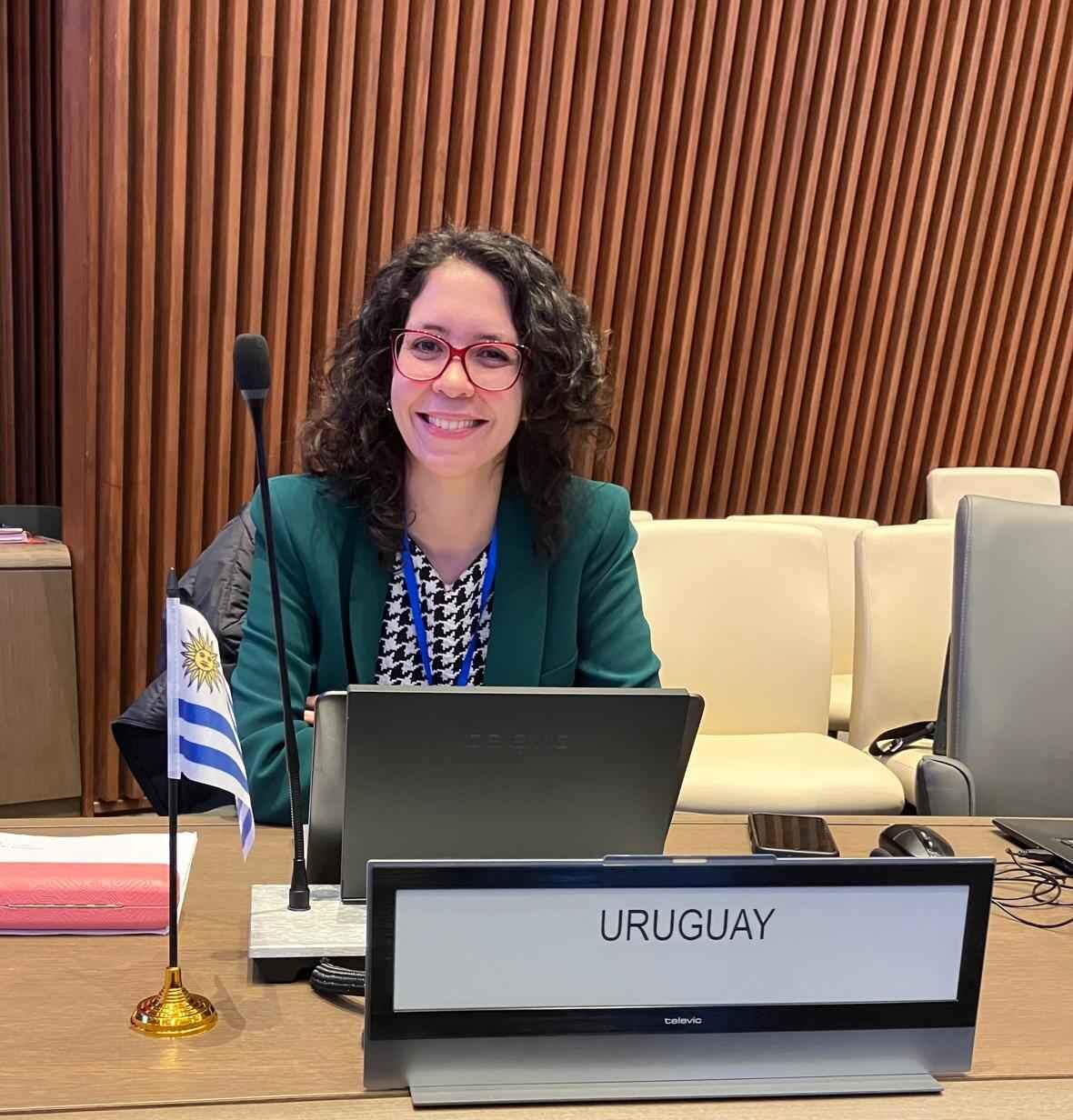
Laura, an alumna from Uruguay, reflects on how the Diplomatic Studies Programme (2013-14) shaped her career and broadened her global perspective. In this spotlight, she…