
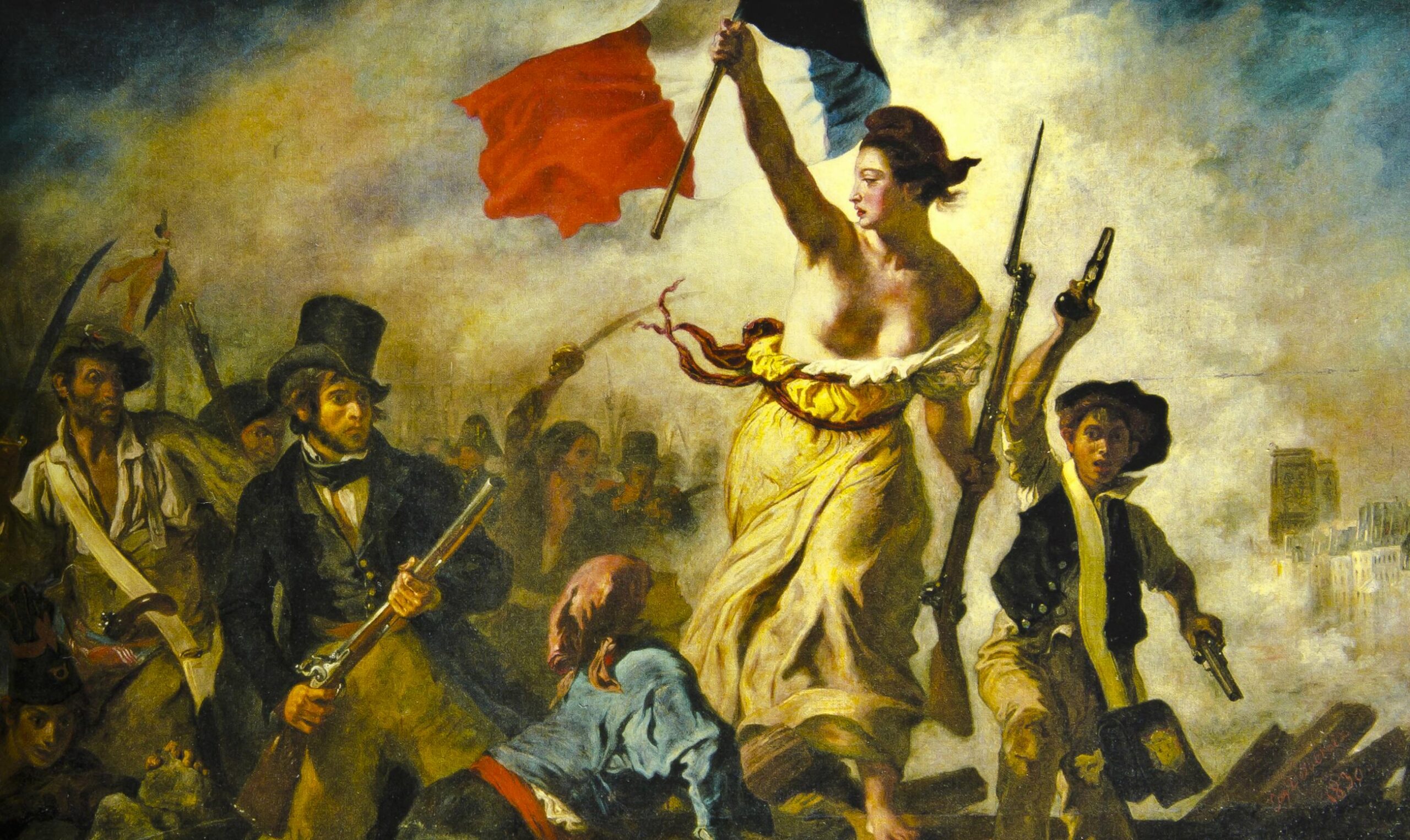
Short course
Age of Revolution

Course status:
Applications being accepted

Location:
Online

Dates:
13/01/2027 - 26/03/2027

Study format:
Online - flexible

Fees:
£430.00
Revolution was a powerful dynamic in European politics and society from 1789 to 1848. All over Europe radical citizens and reforming governments changed laws and ruling structures in a way which has created the forms of the modern European state. This course will examine this tremendous era of change.
Listen to Carl Wade talking about the course:
Revolution, the sudden and dramatic change in politics and society caused by the collective action of rulers or people, was a constant feature of European society from 1789 to 1848. It was both the engine of destruction and the catalyst for growth and progress throughout the period. This course examines revolutions and revolutionaries, the events and the ideas, the people and their actions. We will examine the philosophy and strategy of the revolutionaries and the romantics and writers of the time. Against the background of the new industrial society, Europe struggled to build the political structures for the continent to advance and prosper in the future. How important were these events for the future of Europe and the world? And how does their legacy affect us all today?
Book this course
Book your place online using the button below.
The course is broken down into 10 units over 10 weeks, each requiring approximately 10 hours of study time. The following topics are covered:
-
The French Revolution: The End of the Old Regime
-
Europe on the Eve of Revolution 1789
-
Declaration of the Rights of Man
-
-
Revolutionary Wars: Regicide, Terror and Conflict
-
French Revolutionary War
-
Execution of Louis XVI
-
Terror and Guillotine
-
-
The Struggle for Hegemony in Europe
-
Emperor of France
-
Administrative Reform and the Code Napoleon
-
European War and Defeat
-
-
Restoration and Repression: The Concert of Europe
-
Congress of Vienna
-
Restoration of Legitimacy
-
Police States
-
-
The Age of Romanticism
-
Enlightenment
-
Revolutionary Writers
-
Art and Poetry
-
-
Nationalism and the Revolutionary Underground
-
New Nationalism
-
Underground Revolutionaries
-
Independence and Repression
-
-
Crisis and the New Industrial Economy: ‘The Hungry Forties’
-
Harvest Failure and Unemployment
-
The New Industrial Economy
-
Destitution and Discontent
-
-
The Liberal Revolution
-
A New Dawn
-
Springtime of the Peoples
-
Liberal Europe
-
-
Liberal Failure and Reaction
-
Military Defeat
-
Age of Reaction
-
Constitutions and Authoritarianism
-
-
Legacy of Revolution
-
Reform or Revolution
-
Democracy and Constitution
-
Historical Legacy
-
We strongly recommend that you try to find a little time each week to engage in the online conversations (at times that are convenient to you) as the forums are an integral, and very rewarding, part of the course and the online learning experience.
Course aims
This course aims to examine the topic of revolution in Europe from 1789-1848 and determine the importance of the political developments of the period for the evolution of the modern state.
This course will enable participants to:
- Establish the importance of revolution in the history of modern Europe
- Examine the political and social developments of the period and determine the long-term historical legacy of those events.
- To encourage the extensive use of a variety of primary sources to illuminate the developments and debates of the period, and to encourage students to engage in constructive critical argument and debate.
Learning outcomes
By the end of this course students will be able to:
- Understand the main developments in the history of revolution, social and political change from 1789 to 1848, which will enable them to pursue further, more specialist, historical study of modern European history.
- Demonstrate an ability to assess and evaluate a wide variety of arguments and sources with reference to the period, and be able to express their views interacting with other students.
- Become familiar with the structures of academic learning and be confident presenting their argument in written form.
Level and demands
This course is open to all and no prior knowledge is required.
This course is offered at FHEQ level 4 (i.e. first year undergraduate level) and you will be expected to engage in independent study in preparation for your assignments. Our 10-week Short Online Courses come with an expected total commitment of 100 study hours.
English Language Requirements
We do not insist that applicants hold an English language certification, but warn that they may be at a disadvantage if their language skills are not of a comparable level to those qualifications listed on our website. If you are confident in your proficiency, please feel free to enrol. For more information regarding English language requirements please follow this link: https://www.conted.ox.ac.uk/about/english-language-requirements
IT requirements
This course is delivered online; to participate you must to be familiar with using a computer for purposes such as sending email and searching the Internet. You will also need regular access to the Internet and a computer meeting our recommended minimum computer specification.
Assessment methods
You will be set two pieces of work for the course. The first of 500 words is due halfway through your course. This does not count towards your final outcome but preparing for it, and the feedback you are given, will help you prepare for your assessed piece of work of 1,500 words due at the end of the course. The assessed work is marked pass or fail.
Mr Carl Wade
Carl Wade originally studied history at Jesus College, Cambridge. He specialises in the nineteenth and early twentieth centuries history. Since 2004 he has written and taught courses for OUDCE in modern European history. He also teaches on summer school programmes for Oxford University.
Credit Application Transfer Scheme (CATS) points
Coursework is an integral part of all online courses and everyone enrolled will be expected to do coursework. All those enrolled on an online courses are registered for credit and will be awarded CATS points for completing work at the required standard.
See more information on CATS points
Digital credentials
All students who pass their final assignment will be eligible for a digital Certificate of Completion. Upon successful completion, you will receive a link to download a University of Oxford digital certificate. Information on how to access this digital certificate will be emailed to you after the end of the course. The certificate will show your name, the course title and the dates of the course you attended. You will be able to download your certificate or share it on social media if you choose to do so.
Fees
| Description | Costs |
|---|---|
| Course Fee | £430.00 |
Funding
If you are in receipt of a UK state benefit, or are a care-leaver in the UK, you may be eligible for a reduction of 50% of tuition fees. Please see the below link for full details:
Concessionary fees for short courses
Textbooks
To participate in this course you will need to have regular access to the Internet and you will need to buy the following books:
- Rapport, M., Nineteenth Century Europe [2005], Palgrave, Basingstoke
- Sperber, J., Revolutionary Europe, 1780-1850 [2017]. Longman, Harlow (References in the course are to the 2017 edition but the 2000 edition can be used as a comparison chart is provided to help with finding readings).
Please ensure that you can access copies of any required textbooks before enrolling on a course. While cancellations are uncommon, courses may not run if enrolment is too low. The Department accepts no responsibility for books purchased in anticipation of a course running.
Module code: O26P393HIV
Please use the ‘Book now’ button on this page.