Short course
Beneath the Sands: The Archaeology of Silk Road Cities in Central Asia

Course status:
Applications being accepted


Dates and time:
08/10/2026 - 05/11/202614:00 - 16:00

Study format:
In-person weekly

Fees:
£190.00
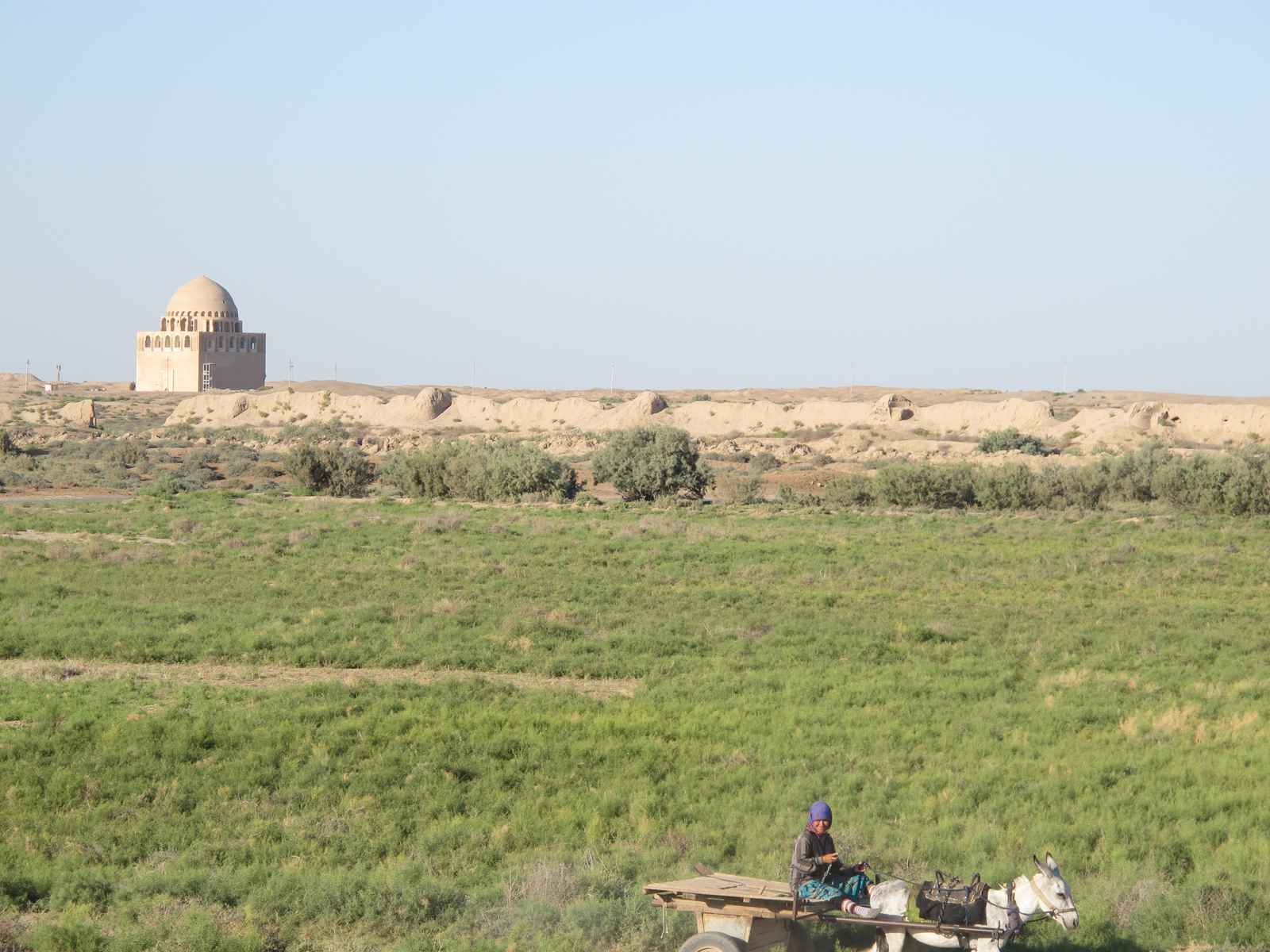
Central Asia is at the heart of the continent of Asia and the core of the complex series of routes and networks termed the ‘Silk Roads’. Spanning from northeastern Iran and Afghanistan to the Kazakh steppe and the western regions of China, the region’s diverse landscapes and environments, as well as the blending of local and regional traditions have led to distinctive urban forms. This course will introduce the region and its cities starting from the Bronze Age, through encounters with Alexander the Great, the Arab Conquest and Genghis Khan. Focussing on the major urban sites in the region, which include Samarkand, Bukhara, Merv and Panjikent, the course will examine the archaeological remains and increasingly incorporate their historical context.
A major theme is the influence of different peoples: Greeks, Persians, Turks and Mongols who ruled the cities and influenced their development. Different religious and economic communities also made their mark, especially through investment in local monumental buildings including mosques, madrasas, temples, monasteries and churches. The course will introduce the history and development of cities in Central Asia from their origins until the great empires of the Middle Ages. Finally, it will consider how these cities have been conserved, preserved and how they contribute to the different identities present in modern-day republics of Central Asia.
Book this course
Book your place online using the button below.
Contact the team
Phone: +44 (0)1865 280900
Course starts Thursday 8 October 2026
This is an in-person course which requires your attendance at the weekly meetings in Oxford on Thursdays, 2.00-4.00pm.
Week 1: Introduction to Central Asia, orientation to the environmental and geographical context, how and when urbanism appears in the Bronze and Iron Age
Week 2: Alexander the Great and the ‘classical’ interlude, exploring the influence of Alexander’s conquest on urbanism, architecture and design in Central Asia
Week 3: The Sogdians and their neighbours, looking at city states and a boom in ‘silk road’ trade
Week 4: The Arab Conquest, exploring how the Arabs and Islam changed the layout and character of cities in the region
Week 5: Nomadic Empires of the Mongols and Turks, from the very end of the 10th century, successive Turk and Mongol groups capture the cities of Central Asia and this session will explore their legacy
Course aims
Course aim:
This course aims to introduce students to the history, geography and environmental context of urbanism in Central Asia from the Bronze Age to the medieval period. It seeks to provide an overview of the major archaeological sites of the region and their historical context, and to examine the role of conquest, trade and religion in shaping the cities of Central Asia.
Course objectives:
By the end of this course, students will be able to identify the key geographical and environmental factors that shaped urban development in Central Asia and describe the history and development of major city sites including Samarkand, Bukhara, Merv and Panjikent. They will be able to analyse the influence of key historical figures such as Alexander the Great, Genghis (Chinggis) Khan and Tamerlane (Timur), on the urban landscape of the region, and evaluate the impact of successive peoples and religions on the architecture and layout of its cities. Finally, students will be able to assess how these cities are conserved today and how they contribute to cultural identity in the modern republics of Central Asia.
Learning outcomes
By the end of the course students will be able to:
- Describe the geography and environment of Central Asia and how urbanism developed in this region
- Summarise the chronology of urbanism in the region and the peoples and figures who shaped its development
- Distinguish the major architectural monuments and artefacts associated with urbanism in Central Asia
Level and demands
The Department’s Weekly Classes are taught at first year undergraduate level.
Teaching methods
Most sessions will involve a 1 hour lecture, followed by a short rest break and then an in-class exercise led by the tutor.
Between Weeks 1 and 2, students will be invited to take part in an optional independent exercise that involves visiting the Ashmolean Museum’s Silk Roads gallery, selecting an object, and considering its context (e.g. religious, economic, or technological). In class, we will then discuss the chosen objects, including their find locations and stylistic features, and explore the influences on their form, function, and design. Students may also complete this exercise using the Ashmolean’s online catalogue. Full instructions will be provided on the course.
Assessment methods
This course is not accredited, so there are no assessments or coursework.
Dr Katie Campbell
Dr. Katie Campbell joined Oxford Lifelong Learning in February 2026 and is concurrently a Research Fellow in Archaeology at King’s College, University of Cambridge. She studied history and archaeology at Exeter and worked as an archaeologist and heritage manager across Europe, the Middle East, and Central Asia before completing an MSc in digital heritage at York and a DPhil in archaeology at Oxford. Her research specialises in the urban archaeology of historic periods in Central Asia and the Caucasus, focusing on changes in cities between the 11th and 15th centuries AD, with field projects in Kazakhstan, Turkmenistan, Azerbaijan, and Georgia
Digital badge
Upon successful completion of this course, you will be issued with an official digital badge from the Department for Continuing Education, University of Oxford. In order to be issued with your badge, you will need to have attended at least 80% of the course.
After the course, you will receive an email with a link and instructions on how to download your digital badge. You will be able to add this badge to your email signature and share it on social media if you choose to do so.
Fees
| Description | Costs |
|---|---|
| Course fee | £190.00 |
Funding
If you are in receipt of a UK state benefit, or are a care-leaver in the UK, you may be eligible for a reduction of 50% of tuition fees. Please see the below link for full details:
Concessionary fees for short courses
Recommended reading
Recommended reading is optional and you are not required to purchase these books to study this course.
Library facilities
All short course students (online and in-person) may register to borrow from the Oxford Lifelong Learning Library, for the duration of their course.
Further information about the Oxford Lifelong Learning Library can be found on the library website.
Preparatory reading
- ‘Introduction’ to The age of achievement: A.D. 750 to the end of the fifteenth century, Vol 4, Part 1 / Bosworth, C E
- Central Asia in World History, especially chapters 1 and 4 / Golden, Peter B
- The Graeco-Bactrian and Indo-Greek World / Mairs, R
- The Silk Road: A Very Short Introduction / Millward J
Module code: O26P431AHW
How to enrol
Please use the ‘Book now’ button on this page.