

Award courses
DPhil in Archaeology

Course status:
Open

Duration:
6-8 years, part-time

Study format:
In person and online

Level:
Postgraduate
Pursue advanced, original research in archaeology at the University of Oxford.
This flexible, research-intensive programme connects you with world-leading expertise, specialist resources, and a supportive academic community.
Focusing on landscape and professional archaeology primarily in Britain and Europe, the course enables you to develop an original thesis through independent research and expert supervision. Proposals in other areas may be considered where suitable supervision is available.
As a doctoral researcher, you’ll undertake in-depth study involving extensive reading, data collection, analysis, and writing. You may also complete relevant research training within the department to support your development as a scholar.
Beyond your individual project, you’ll be encouraged to immerse yourself in Oxford’s dynamic archaeological community. Regular seminars, discussion groups, and lectures – hosted by the School of Archaeology, the Oxford University Archaeological Society, Graduate Archaeology Oxford, and others – offer valuable opportunities to exchange ideas, build networks, and enrich your research experience.
KEY INFORMATION
Upcoming application deadline: Wednesday 27 January 2027, 12:00 GMT


The part-time DPhil in Archaeology draws on Oxford’s specialist teaching and research expertise, with contributions from academics across the University. The programme focuses primarily on landscape and professional archaeology, particularly in Britain and Europe. Proposals in other areas may be considered, but only where appropriate supervision is available.
Supervision
Supervision is tailored to your research topic and arranged by Oxford Lifelong Learning. Supervisors may be based within the department or drawn from other departments, faculties, or colleges across the University.
While every effort is made to support your research interests, it is not always possible to guarantee supervision with a specific member of staff. Admission is dependent on the availability of suitable supervision, and applicants are encouraged to discuss their proposed topic with the DPhil Programme Director at an early stage.
The programme benefits from close links with the School of Archaeology and other related departments, offering access to a wide range of academic expertise, seminars, and training opportunities.
Oxford college affiliation
As a matriculated postgraduate degree student, you will become a member of one of the University’s famous interdisciplinary colleges, enabling you to encounter new perspectives in your field or learn more about many other different subjects from fellow college members.
The collegiate system makes studying at Oxford a truly special experience. Oxford colleges are vibrant and diverse communities, where you could find yourself absorbed in fascinating conversations with students and academics from a variety of disciplines at college seminars, dinners, and informal occasions.
To find out more about Oxford University colleges, please consult the University’s Graduate Admissions website.
This course is designed for experienced archaeology graduates who are ready to undertake independent, research-intensive study. Successful applicants will typically hold a master’s degree in archaeology or a related field, with a distinction or equivalent, and demonstrate a strong academic track record.
You should already have a clear research interest or proposed topic that builds on your previous study and is suitable for development into an 80,000-word doctoral thesis. If you are unsure about your eligibility or the suitability of your proposed research area, you are encouraged to contact the Programme Director before applying.
The programme supports research across a range of specialised themes, including:
- British and world archaeology
- Landscape archaeology
- Material culture
- Heritage and collection history
- Theoretical archaeology
The course is part-time. Part-time students are required to attend course-related activities in Oxford for a minimum of 30 days each year.
You will be required to attend supervision, training, seminars, milestone assessments (eg transfer of status) and other obligations in Oxford for a minimum of 30 days each year.
There will be flexibility in the dates and pattern of attendance, which will be determined by mutual agreement with your supervisor. Any dates for fieldwork should be discussed with your supervisor.
When not in physical attendance at Oxford, you will be expected to continue your research to an agreed time-plan. Your supervision will continue as normal, via online and remote means. You should take account of any time differences when planning online meetings with your supervisor or graduate training.
The part-time DPhil leads to the same Doctor of Philosophy (DPhil) qualification as the full-time programme, but is completed at approximately half the intensity. Students typically take six to eight years to complete the degree.
The Course Director for the DPhil is Professor David Griffiths.
DPhil supervision is drawn from academic staff within Oxford Lifelong Learning and, where appropriate, from across the wider University, including the School of Archaeology. Supervisors are allocated based on your research proposal, and applications can only be accepted where suitable supervision is available. Prospective applicants are encouraged to contact the Programme Director in advance to discuss their proposed research.
You will begin the programme as a Probationary Research Student (PRS), developing your research topic and skills through training provided within the Oxford Lifelong Learning Graduate School and across the University.
Progression is assessed at key milestones:
- Transfer of Status (Terms 6-8): You submit a piece of written work, assessed by two independent assessors. This confirms that your project is viable and of DPhil quality. After successful transfer, you will typically move into a period of primary research and data collection.
- Confirmation of Status (Terms 12-18): A further submission is assessed to review your progress, the quality of your work, and your plan for completing the thesis within the required timeframe.
The DPhil is awarded on the basis of a thesis of around 80,000 words, submitted after 18-24 terms (6-8 years). You will then defend your work in a viva voce (oral examination) with two examiners.
As a minimum, applicants should hold or be predicted to achieve the following UK qualifications or their equivalent:
- a master’s level qualification in archaeology, completed or predicted at distinction level; and
- a first-class or strong upper second-class undergraduate degree with honours in archaeology or a related subject.
For applicants with a bachelor’s degree from the USA, the minimum overall GPA that is normally required to meet the undergraduate-level requirement is 3.6 out of 4.0. However, selection of candidates also depends on other factors in your application and most successful applicants have achieved higher GPA scores.
English language proficiency
This course requires proficiency in English at the University’s higher level. If your first language is not English, you may need to provide evidence that you meet this requirement. To find out more about the minimum score requirements, please visit the Entry requirements section on the Graduate Admissions website.
Funding opportunities
Please see our funding page for help and information with regard to funding doctoral studies. We further recommend that applicants search for funding opportunities via the online Fees, Funding and Scholarship search tool.
In order to be considered for many scholarships, applicants are required to apply by the January deadline. However, applicants should note that some scholarships require additional application materials and may have different deadlines, so applicants should make sure they check the application process for each scholarship carefully.
Applications for this course should be made via the University of Oxford Graduate Admissions website. This website provides information on fees and entry requirements, along with help on preparing and submitting your application.
Application deadlines
12:00 midday UK time on:
- Stage 1: Wednesday 27 January 2027 (Latest deadline for most Oxford scholarships)
- Stage 2: Tuesday 2 March 2027
Contact us
Before submitting an application, you may email the Programme Director with a clear research proposal so that he may consider appropriate supervision in the first instance. If you have any questions regarding the application process or the progress of your application, please contact us via pgr@conted.ox.ac.uk.

Student Spotlight
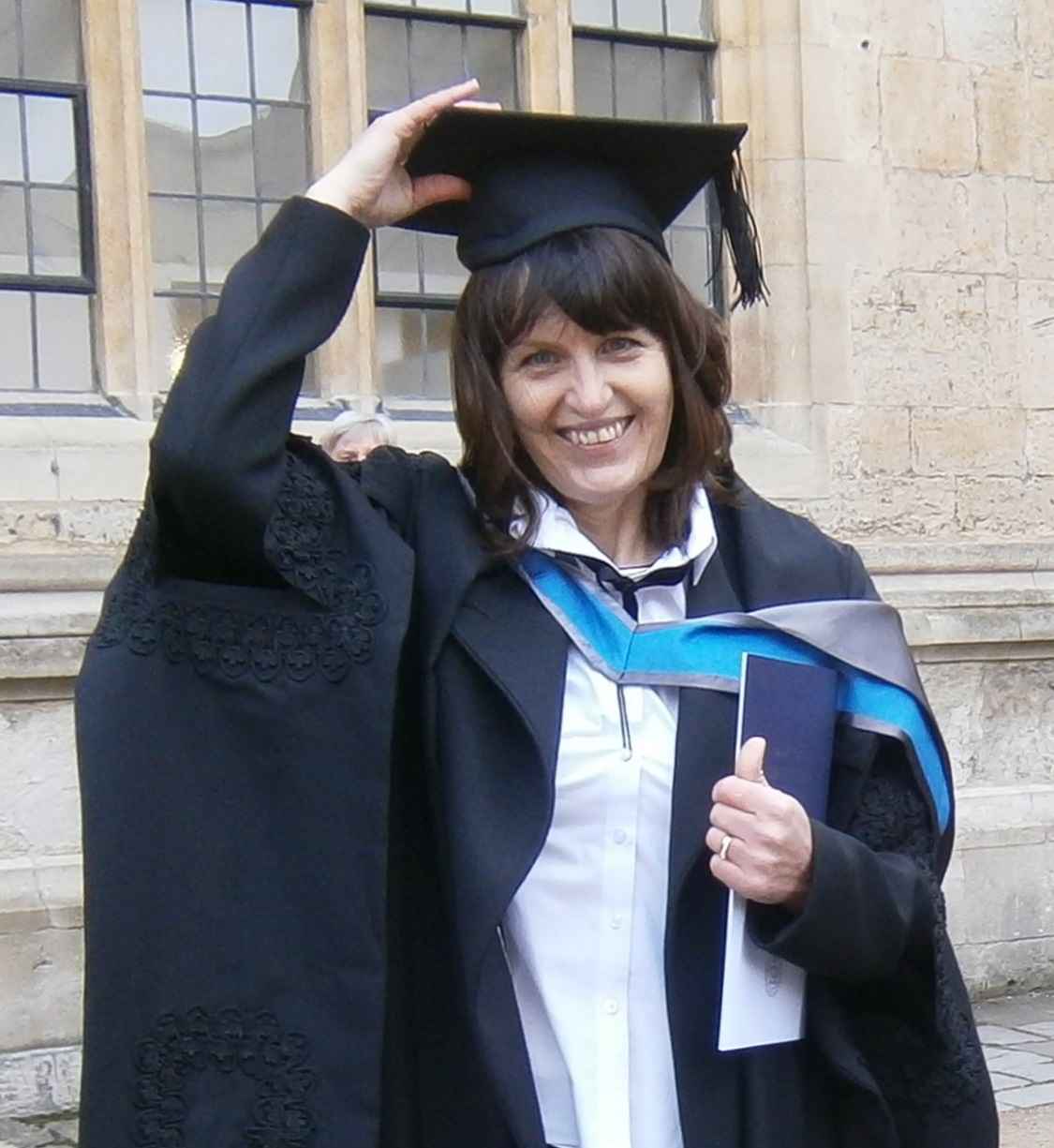
A chance conversation with friends pushed Sally into taking the first step to become an archaeologist. Sally has since progressed from the MSc in Applied Landscape Archaeology to…