Short course
Iran, Arabia and the Sunni-Shia Divide

Course status:
Applications being accepted


Dates and time:
28/09/2026 - 30/11/202610:30 - 12:30

Study format:
In-person weekly

Fees:
£315.00
Iran has enjoyed the richest civilisation, from the time of Cyrus II to the Qajar kings. The great poets Ferdowsi and Hafez are the pillars of Persian culture.
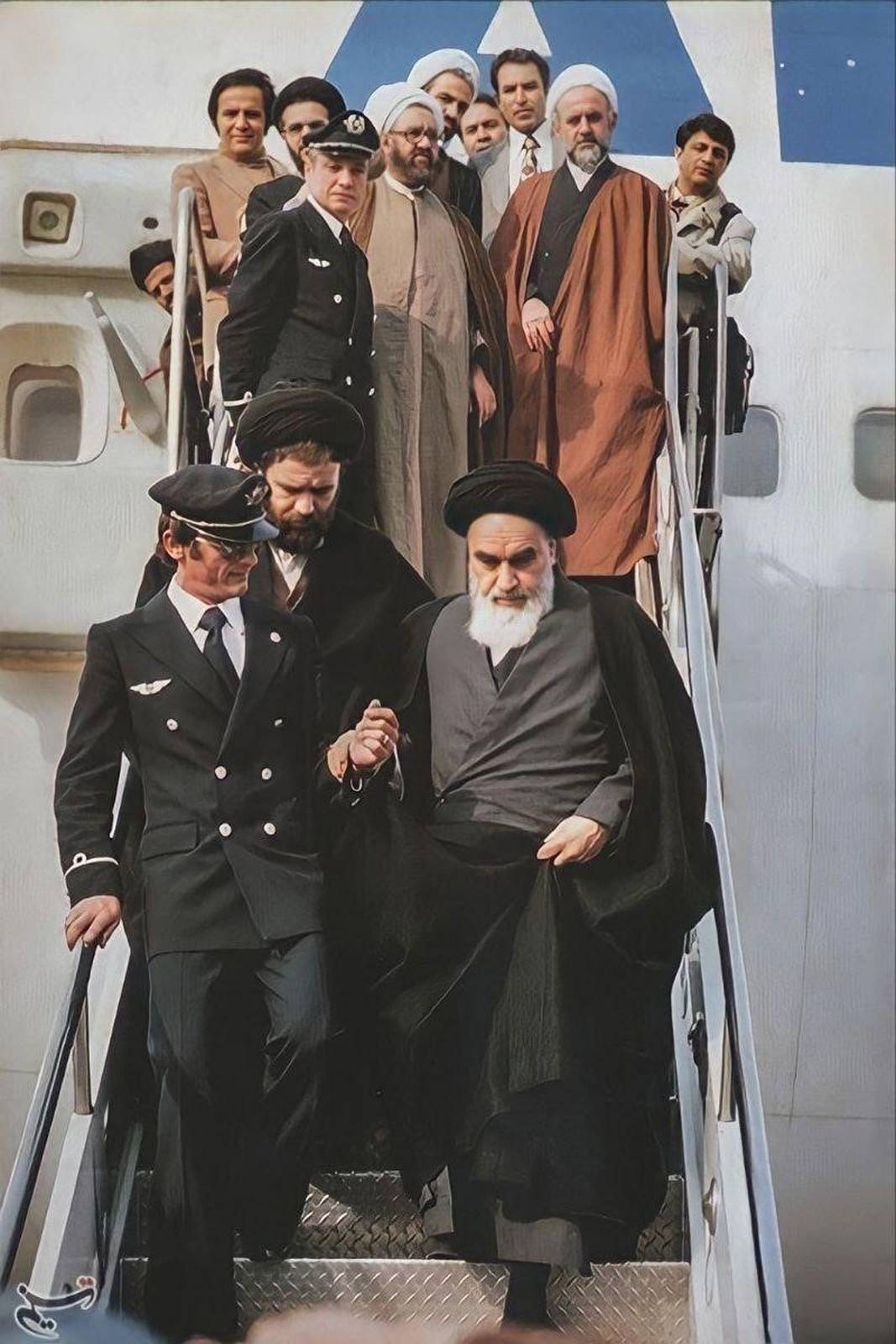
Despite The Great Game between Russia and Britain, Iran was never colonised. Saudi Wahhabi attacks on the Iraqi Shia heartland highlighted the Sunni-Shia divide. In 1906 Iranians won a liberal constitution based on that of Belgium. The First World War saw the emergence of European-inspired secularism in Reza Khan's restored Pahlavi empire. Iran's popular democratic process was stifled by Britain and the US in 1953 with the ousting of the popular Mohammad Mossadegh. Shah Muhammad Pahlavi's's return from exile brought modernity and tyranny but an overheated economy and a monarchy out of touch with tradition and subservient to the US. His White Revolution challenged the Islamic Waqf. This alienation paved the way for revolution in 1979. The network of mosques became a soundbox for dissent and the condemnation of the regime by Ayatollah Khomeini led to the creation of Islamic government. An early, fairly secular constitution in 1979 became radical and the network of of state institutions complex. The eight-year war with Iraq and Khomeini's fatwa against Salman Rushdie strengthened the hardliners. Khomeini used the war to consolidate power based on his principle of the Velayat-e faqih. Hopes for reform during the Persian Spring of 2009 and the massive popularity of President Khatami ended in disappointment.
Book this course
Book your place online using the button below.
Course starts Monday 28 September 2026
This is an in-person course which requires your attendance at the weekly meetings in Oxford on Mondays, 10.30am-12.30pm.
Week 1: Cyrus and the Jews and America’s Christian romance with Shia Iran
Week 2: From the Prophet Muhammad to the massacre of Husayn at Kerbela.
Week 3: The Shia sects from Ali to the Assassins (Hashishin) and the Agha Khan
Week 4: Ottomans, Safavids and the Sufi bridge
Week 5: The Sunni Wahhabis burn the Shia shrines
Week 6: The Pahlavi shahs: from Cossack king to Maxims at Persepolis, ‘the most expensive party in history’
Week 7: Trashing Mossadegh and democracy: the English under every stone
Week 8: Khomeini in Paris and the poetry of sin
Week 9: Analysing Azar Nafisi’s’s Reading Lolita in Tehran: Lolita, Gatsby, Pride and Prejudice, Daisy Miller and the crushing of freedom, torture, rape and executions in prisons and the violence of the state
Week 10: The death of the Persian Spring of 2009
Course aims
This course aims to enable participants to develop an understanding of the rich cultural and historical backstory leading to the emergence of the Islamic Republic of Iran, and to describe Iran’s regional and international relationships.
Course Objectives
By the end of the course, participants will have been given the opportunity to:
- explore the history of the Sunni-Shia divide in the Middle East, particularly as it affects the relationships between countries in the region, and their internal politics
- increase students’ knowledge and understanding of the emergence and politics of the Islamic Republic of Iran
- study human rights and the role of the ‘Women, Life, Freedom’ movement in Iran today
Learning outcomes
Knowledge
Hopefully, by the end of the course the student will have mastered a rich knowledge of The Sunni-Shia Divide, the standoff between Shia Iran and Wahhabi Saudi Arabia and the history of modern Iran, in particular that of the two Pahlavi shahs and ‘the reign of the ayatollahs’. Given Iran’s rich and ancient civilisation students will learn how inappropriate President Trump’s belittlement of Iran is.
Skills
Hopefully, by the end of the course students will be able to express their knowledge in written and oral form.
Development
Students should be able to explain their knowledge of the subjects discussed in an intelligent, focused and unbiased form at a time when some Iranians are nostalgic for the monarchy and are influenced by the US-based Reza Pahlavi, some applaud the Islamic Republic despite its human rights abuses and some believe that a return to western-style democracy is the only acceptable option.
Level and demands
The Department’s Weekly Classes are taught at FHEQ Level 4, first year undergraduate level, and you will be expected to engage in a significant amount of private study in preparation for the classes. This may take the form, for instance, of reading and analysing set texts, responding to questions or tasks, or preparing work to present in class.
The fundaments of Islam and of the Sunni-Shia Divide will be explained in the course so that only a basic understanding is necessary before attending the course.
Teaching methods
One or two pages of notes with chronologies and organograms (of Islamic sects, for example) will be provided online and in paper form.
Powerpoint slides illustrating the subject of the lectures and including relevant documents, maps, statistics and organograms will be shown each week.
A list of suggested essay titles will be provided during the second week.
Every ten minutes students will be encouraged to ask questions relevant to the course or make relevant observations.
If a student has relevant comments about how the course is developing he or she will be encouraged to leave a note for the lecturer on his desk or else to email the lecturer,
A rich bibliography will be provided and books will be available in the Rewley House Library.
Assessment methods
Only those students who have registered for assessment and accreditation, in advance of the course start date, can submit coursework/assignments for assessment.
Assessment
Students who have qualified are encouraged to deliver material throughout the course which the lecturer will read and comment on. At the end of the course they will be expected to produce brief formative contributions and a summative contribution of either one essay of approximately 1,500 words or three essays of about 500 words each.
Mr Trevor Mostyn
Trevor Mostyn read Arabic with Persian at Edinburgh University, spending a year at the American University in Cairo. Later he taught at Algiers University, then travelled throughout the Middle East as a publisher and then set up and ran the Med Media Programme (media projects between the then 12 EU countries and the 12 Mediterranean non-member countries) for the European Union. He has published 8 books on the region, lectured on ships and written for many newspapers. He teaches Islamic Studies at Oxford University’s Department for Continuing Education.
Academic credit
Credit Accumulation Transfer Scheme (CATS Points)
Please note, students who do not register for assessment and accreditation during the enrolment process will not be able to do so after the course has begun. If you wish to gain credit from completing this course you must register to do so before the course starts.
Only those who have registered for assessment and accreditation will be awarded CATS points for completing work to the required standard. Please note that assignments are not graded but are marked either pass or fail.
Learn more about the Credit Accumulation Transfer Scheme.
If you are enrolled on the Certificate of Higher Education at the Department you need to indicate this on the enrolment form but there is no additional registration fee for assessment and accreditation.
Digital certificate of completion
Students who are registered for assessment and accreditation and pass their final assignment will also be eligible for a digital Certificate of Completion. Information on how to access the digital certificate will be emailed to you after the end of the course. The certificate will show your name, the course title and the dates of the course attended. You will be able to download the certificate and share it on social media if you choose to do so.
Fees
| Description | Costs |
|---|---|
| Course fee (with no assessment) | £315.00 |
| Assessment and Accreditation fee | £60.00 |
Funding
If you are in receipt of a UK state benefit, or are a care-leaver in the UK, you may be eligible for a reduction of 50% of tuition fees. Please see the below link for full details:
Concessionary fees for short courses
Recommended reading
Recommended reading is optional and you are not required to purchase these books to study this course.
Library facilities
All weekly class students may become borrowing members of the Rewley House Library, part of the Bodleian Libraries, for the duration of their course. Prospective students whose courses have not yet started are also welcome to use the Library for reference.
- More information about the Library can be found on the Bodleian Libraries website.
- This guide for Weekly Class students also provides further information.
Preparatory reading
- Reading Lolita in Tehran / Azar Nafisi
- In The Rose Garden of the Martyrs / Chrstopher de Bellaigue
- Persia, through writers’ eyes / David Blow
- The English Job, Understanding Iran / Jack Straw
- Revolutionary Iran / Michael Axworthy
Module code: O26P401HIW
How to enrol
Please use the ‘Book now’ button on this page.
How to register for accreditation and assessment
To be able to submit coursework and to earn credit (CATS points) for this course, if you wish to do so, you will need to register and pay an additional £60 fee. You can do this by ticking the relevant box at the bottom of the enrolment form or when enrolling online.
Students who do not register for CATS points during the enrolment process will not be able to do so after the course has begun.
If you are enrolled on the Certificate of Higher Education at the Department you need to indicate this on the enrolment form but there is no additional registration fee.
