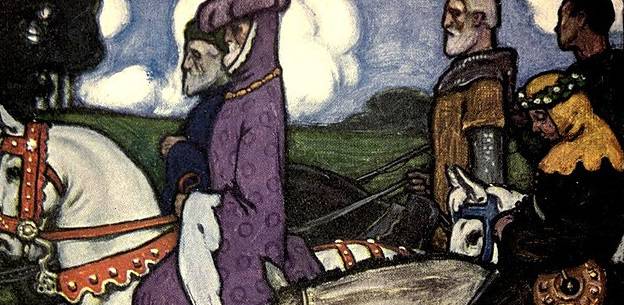
The civil wars that swept across the British Isles in the 17th century left few lives untouched. This course will explore the causes, conduct and significance of the English civil wars.
Course search results
Filter by:
Filters
Start month
Day of the week
Time of day
This course will examine the life and reign of Elizabeth I, from her troubled childhood to the death of the aged Virgin Queen. But what do we really know of this iconic queen? Can her reign be accounted a success?
This course introduces the key characteristics of creative writing. You will be supported with stage-by-stage guidance as you assimilate and employ a range of critical and creative methods. The course includes tutor feedback and participant discussion.
Investigate the power of maps and spatial data to document and illustrate local and global issues. Learn how to use Geographic Information Systems (GIS) to explore the world around you and share ideas.
An introduction to various aspects of the intriguing history, vibrant culture and fascinating personalities of Ancient Rome and its enemies during its decline and fall (or transformation) in the last two centuries of the Empire in the West.
This course seeks to explain why and how the First World War was fought, and to understand why its legacy remains relevant more than a century after it ended.
Explore Impressionism and modern life in nineteenth-century France through the work of Monet, Manet, Degas and their contemporaries. This course examines Impressionist techniques, women Impressionists, critical responses to the exhibitions, and the moveme
In this course we shall study five key novels of the twentieth century - by Fitzgerald, Faulkner, Silko, Morrison and Roth.
Examine Macmillan's push to join the EEC, and how, although unsuccessful, it contributed to the campaign's ultimate success down the line.
This day event explores 1940s film noir, which will be read through the contexts of the genre including their relationship to German expressionism, the legacy of fascism, and the pulp noir fiction of Raymond Chandler, Dashiell Hammett and James M. Cain.
In a world of endless multitasking, our brains struggle to allocate attention. This event explores the neuroscience of attention and distraction, the impact of digital technology, and how we can use science to reclaim our focus and flow states.
Using critical reflection as a framework to relate theoretical and conceptual models to practice, taking into account evidence, values, learner diversity and modes of learning.