The History of Humanity in Eight Species
3 November 2026
11:00am-12:30pm
Online or Rewley House 1 Wellington Square, Oxford, OX1 2JA

Event status:
Applications being accepted

Location:
Online or Rewley House 1 Wellington Square, Oxford, OX1 2JA

Dates:
3 November 2026 - 8 December 2026

Study Format:
Online - live

Fees:
From £75.00 to £90.00
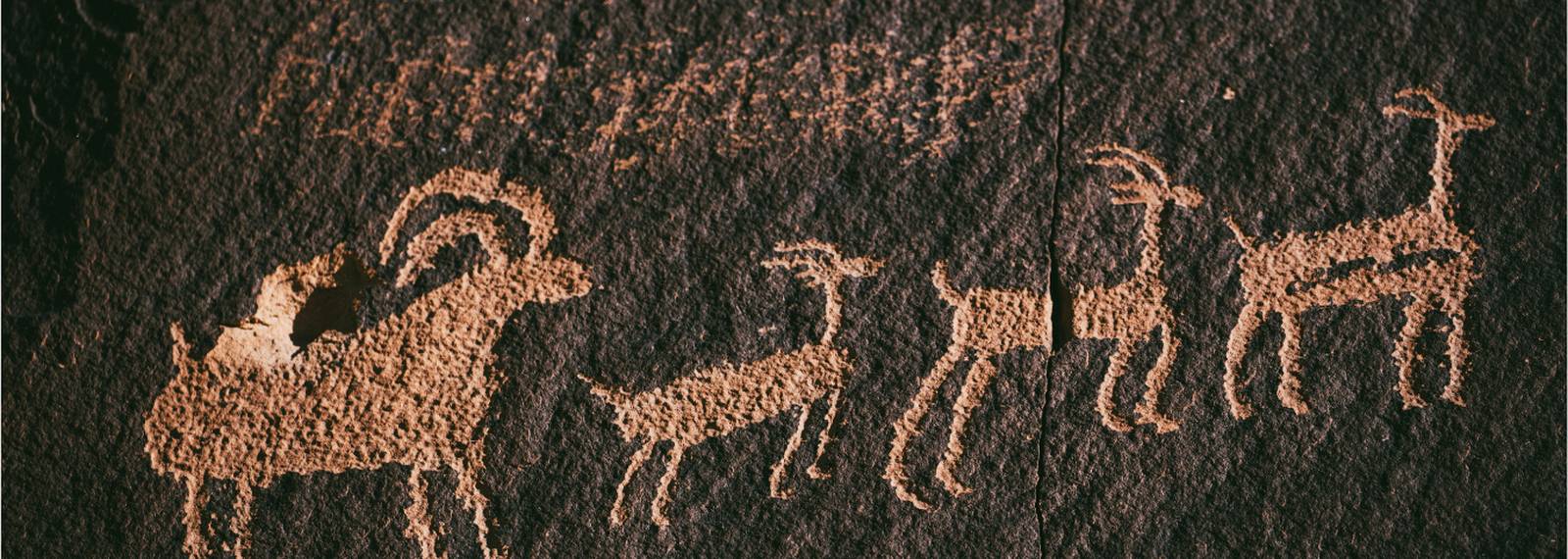
From hunting companions to religious icons, working animals to urban pests, animals have shaped the human story for millennia. This lecture series explores human history through eight key animal species, drawing on archaeological, historical, and genetic evidence.
We begin with dogs, the earliest domesticated animals, whose role as hunting partners was as significant as early stone tools in enabling human survival in the Palaeolithic. We then examine two contrasting dynamics of domestication: how humans genetically transformed sheep through selective breeding for wool, and how cattle dairying drove evolutionary change in humans, favouring those who could digest milk into adulthood.
Next, we turn to horses and camels, which enabled long-distance movement and trade across routes such as the Silk Road, facilitating the exchange of luxury goods and the development of global networks. Among the species that travelled these routes was the chicken, initially valued as an exotic curiosity before becoming a widespread food source.
We then examine cats and rats which thrived alongside humans through commensal relationships linked to settlement and urbanisation. Despite similar origins, their cultural meanings diverged: cats became valued companions, while rats remained associated with disease and decline.
We conclude with the pig, one of the earliest and most complex domesticated species that has been a free-ranging scavenger, urban cohabitant, livestock, pet, and pest. In the twentieth century, their industrial breeding reflects the priorities and contradictions of modern food systems and societies.
Spanning over ten thousand years of Eurasian history, this lecture series combines detailed case studies with broader reflections on the role of animals in shaping human societies. The aim is to think critically about the long-term entanglement of people and animals by tracing the cultural, biological, and technological relationships that have defined our shared history.
Please note: this event will close to enrolments at 23:59 on 29 October 2026.
Book this course
You can opt to attend this teaching event either online (via a livestream) or in person at Rewley House, Oxford. You will be given the option of how you wish to attend during the enrolment process. You can only pick one option. If your preferred attendance format is fully booked, you can email us to be put on the waiting list. For those who wish to attend online, please read the IT requirements below before enrolling.
IT requirements
We will be using Zoom for the livestreaming of this lecture series, and you will be able to submit questions via the Zoom interface. Joining instructions will be sent out prior to the start date. We recommend that you join the session at least 10-15 minutes prior to the start time – just as you might arrive a bit early at our lecture theatre for an in-person event.
Please note that this series will not be recorded.
Recommended reading
Fagan, B., The Intimate Bond (Bloomsbury, 2015)
Forrest, S., The Age of the Horse (Atlantic Books, 2016)
Hobgood-Oster, L., A Dog’s History of the World: Canines and the Domestication of Humans (Baylor University Press, 2014)
Programme details
Lectures take place on Tuesdays, 11.00-12.30pm (GMT)
Tuesday 3 November
Dogs: The First Companions
Tuesday 10 November
Sheep and Cattle: Co-evolution
Tuesday 17 November
Camels and Horses: Transportation Technology
Tuesday 24 November
Chickens: The Journey from Sacred Animals to Midweek Dinners
Tuesday 1 December
Cats and Rats: Sharing our Table
Tuesday 8 December
Pigs: Their History is Ours
How and when to watch
Each lecture will last approximately 1 hour, followed by questions.
For online attendees, please join in good time before each lecture to ensure that you have no connection problems. We recommend joining 10-15 minutes before the start time.
Fees
| Description | Costs |
|---|---|
| In-person event fee (includes tea/coffee and a pastry) | £90.00 |
| Virtual event fee | £75.00 |
Funding
If you are in receipt of a UK state benefit, or are a care-leaver in the UK, you may be eligible for a reduction of 50% of tuition fees. Please see the below link for full details:
Concessionary fees for short courses
Payment
Please see the terms and conditions for our open-access courses.
Dr Ashleigh Haruda
Dr Ashleigh Haruda is a zooarchaeologist with over 15 years’ experience working across Eurasia. Her interdisciplinary research combines traditional methods with ancient DNA, isotopes, and three-dimensional shape analysis to explore human–animal relationships in the past, particularly the role of animal breeding in global economies and trade networks.
Module code: O26P103AHL
Please use the ‘Book’ button on this page. Alternatively, please contact us to obtain an application form.
You can opt to attend this teaching event either online (via a livestream) or in person at Rewley House, Oxford. You will be given the option of how you wish to attend during the enrolment process. You can only pick one option. If your preferred attendance format is fully booked, you can email us to be put on the waiting list. For those who wish to attend online, please read the IT requirements below before enrolling.