
Short course
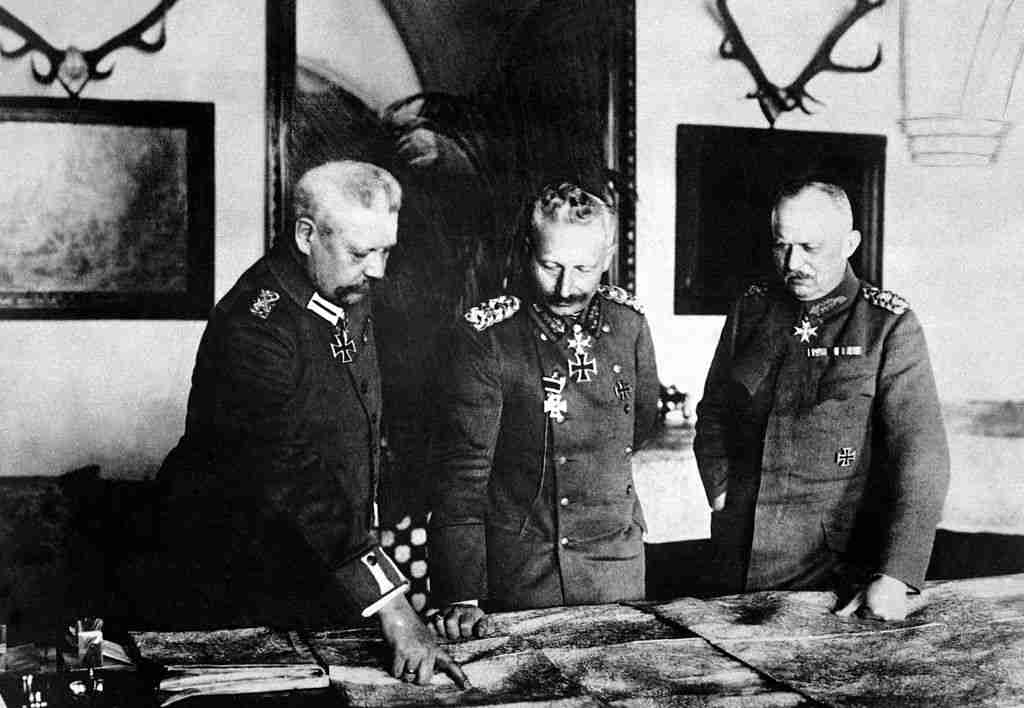
The Origins of the First World War

Course status:
In progress - closed to new applications

Location:
Online

Dates and time:
14/09/2026 - 23/11/202614:00 - 15:00

Study format:
Online - live

Fees:
£430.00
The First World War was a cataclysmic event in world history. It led to enormous loss of life and tremendous physical damage to towns and cities. This course examines the origins of this terrible conflict.
Initially, the course will examine the nature of international relations before 1914 and the politics, social structures and economies of the states which were the main participants in the war. Then the course will analyse the specific events which eventually pushed the world into an unprecedented international war. At the outbreak of war, we will consider the expectations of the populations of the countries involved and the way in which the brutal reality of the conflict shattered these illusions.
Finally, we will assess the significance of the First World War in the history of the twentieth century. To what extent do we still live with the consequences of that human tragedy today?
This course begins on the 14 Sep 2026 which is when course materials are made available to students. Students should study these materials in advance of the first live meeting, which will be held on 21 Sep 2026, 14:00-15:00 (UK time).
Week 1: International relations in the nineteenth century
Week 2: The quest for empire
Week 3: Economic rivalries
Week 4: France and Britain
Week 5: The Russian Empire and Asia
Week 6: Germany
Week 7: Austro-Hungary and the Balkans
Week 8: Countdown to conflict
Week 9: Outbreak of war: illusions and reality
Week 10: Aftermath and consequences
Course aims
The aim of the course is to analyse the origins of the First World War and to assess the long-term historical consequences of the events of 1914-1918
Course objectives:
1. To examine the historical background which led to the outbreak of the First World War, and to explore the political, social and economic reasons which caused the conflict to occur.
2. It also seeks to establish the long-term historical consequences of the conflict and to analyse the effect it has had on the politics and society of the world in the early-twenty-first century.
3. Extensive use will be made of a variety of original visual and documentary materials to illuminate the developments and debates of the period, and to encourage students to engage with those arguments and debates.
Learning outcomes
By the end of the course, students will be expected to:
- have an understanding and knowledge of the chronology of events leading up to the outbreak of the First World War.
- demonstrate an ability to assess and evaluate a variety of arguments and sources with reference to the period, and to be able to express their views, interacting with other students and in written form.
- become familiar with the structures of academic learning and be confident in expressing their argument in a group environment.
Level and demands
This course is open to all and no prior knowledge is required.
This course is offered at FHEQ Level 4 (first year undergraduate level), and you will be expected to engage in independent study in preparation for your assignments and for the weekly webinar. This may take the form of reading and analysing set texts, responding to questions or tasks, or preparing work to present in class.
English Language Requirements
We do not insist that applicants hold an English language certification, but we warn that they may be at a disadvantage if their language skills are not of a comparable level to those qualifications listed on our website. If you are confident in your proficiency, please feel free to enrol. For more information regarding English language requirements, please see here.
IT requirements
Any standard web browser can be used to access course materials on our virtual learning environment, but we recommend Google Chrome. To access the virtual learning environment you will be required to verify your identity using an authenticator app on a mobile device or laptop in addition to your username and password. Full instructions will be sent to you on the start date of the course. We also recommend that students join the live webinars on Microsoft Teams using a laptop or desktop computer rather than a phone or tablet due to the limited functionality of the app on these devices.
Teaching methods
This course takes place over 10 weeks, with a weekly learning schedule and weekly live webinar held on Microsoft Teams. On the start date of the course students are provided with access to an online virtual learning environment, which houses the course content, including video lectures, complemented by readings or other study materials. Any standard web browser can be used to access these materials, but we recommend Google Chrome. Working through these materials over the course of the week will prepare students for a weekly 1-hour live webinar you will share with your expert tutor and fellow students. All courses are structured to amount to 100 study hours, so that on average, you should set aside 10 hours a week for study. Although the course finishes after 10 weeks, all learning materials remain available to all students for 12 months after the course has finished.
All courses are led by an expert tutor. Tutors guide students through the course materials as part of the live interactions during the weekly webinars. Tutors will also provide individualised feedback on your assignments. All online courses are taught in small student cohorts so that you and your peers will form a mutually supportive and vibrant learning community for the duration of the course. You will learn from your fellow students as well as from your tutor, and they will learn from you.
Assessment methods
You will be set two pieces of work for the course. The first 500 words are due halfway through your course. This does not count towards your final outcome but preparing for it, and the feedback you are given, will help you prepare for your assessed piece of work of 1,500 words due at the end of the course. The assessed work is marked pass or fail.
Mr Carl Wade
Carl Wade originally studied history at Jesus College, Cambridge. He has written and taught courses for OUDCE since 2004 in modern European and German history.
Credit Application Transfer Scheme (CATS) points
Coursework is an integral part of all online courses and everyone enrolled will be expected to do coursework. All those enrolled on an online course are registered for credit and will be awarded CATS points for completing work at the required standard.
See more information on CATS points
Digital credentials
All students who pass their final assignment will be eligible for a digital Certificate of Completion. Upon successful completion, you will receive a link to download a University of Oxford digital certificate. Information on how to access this digital certificate will be emailed to you after the end of the course. The certificate will show your name, the course title and the dates of the course you attended. You will be able to download your certificate or share it on social media if you choose to do so.
Please note that assignments are not graded but are marked either pass or fail.
Fees
| Description | Costs |
|---|---|
| Course Fee | £430.00 |
Funding
If you are in receipt of a UK state benefit, or are a care-leaver in the UK, you may be eligible for a reduction of 50% of tuition fees. Please see the below link for full details:
Concessionary fees for short courses
Recommended reading
Recommended reading is optional and you are not required to purchase these books to study this course:
- The Sleepwalkers: How Europe went to war in 1914 / Clark, Christopher
- The war that ended peace: How Europe abandoned peace for the First World War / Macmillan, Margaret
- The Origins of the First World War: Controversies and Consensus / Mombauer, Annika
Module code: O26P751HIZ
Please use the ‘Book now’ button on this page..