Short course
Faith and Beauty in Renaissance Art

Course status:
Applications being accepted


Dates and time:
30/09/2026 - 02/12/202610:30 - 12:30

Study format:
In-person weekly

Fees:
£315.00
This course explores the relationship between faith and beauty in Renaissance art, analysing how artists visually expressed what theology describes as a profound mystery. Combining art history with theology and philosophy, it introduces students to key ideas, images, and figures that shaped Renaissance artistic culture.
We begin by considering classical and Christian ideas of beauty, from Plato to Pseudo-Dionysius, and their reception in Renaissance thought. These traditions understood beauty not simply as aesthetic pleasure, but as a reflection of divine order and a means of approaching God. From this foundation, the course examines how central Christian doctrines—above all the Incarnation and the sacramental nature of the material world—made the visible image essential to devotion.
Through close study of paintings, altarpieces, and other devotional objects, we explore how artists such as Leonardo, Michelangelo, and Raphael, as well as figures from Spain, northern Europe, and the wider Renaissance world, sought to represent the divine visually. Particular attention is given to depictions of Christ, the Virgin Mary, and the saints, as well as to the symbolic use of materials and colour, including ultramarine blue and its rich theological associations.
The course also introduces Renaissance theories of art and beauty through authors such as Leon Battista Alberti, Giorgio Vasari, and Baldassare Castiglione, alongside reflections on sacred imagery during the Reformation. These perspectives are brought into dialogue with selected modern thinkers who have written on beauty and the sacred.
Within this broader framework, the global dimensions of Renaissance Christianity are also examined, including its presence in the colonial Americas. There, ideals of beauty, order, and divine harmony informed artistic, architectural, and social forms, as seen in communities shaped by processes of cultural and religious encounter and by visions of the New Jerusalem.
The course is based on detailed visual analysis of selected works, guided discussion, and engagement with key texts, offering students an accessible introduction to the ways in which Renaissance art sought to make the invisible visible and give form to the divine.
Book this course
Book your place online using the button below.
Contact the team
Phone: +44 (0)1865 280900
Course starts Wednesday 30 September 2026
This is an in-person course which requires your attendance at the weekly meetings in Oxford on Wednesdays, 10.30am-12.30pm.
Week 1: What is Beauty? Art and the Divine in the Renaissance
We begin with close looking. Through selected works by artists such as Fra Angelico, Botticelli, and Leonardo da Vinci, we ask what makes an image “beautiful” and how beauty might point beyond the visible world. These examples introduce classical and Christian ideas of beauty and desire, from Plato to Pseudo-Dionysius.
Week 2: The Visible and the Invisible: Theology of the Image
Building on the previous session, we explore why images became central to Christian devotion. Through works such as Fra Angelico’s frescoes at San Marco, Jan van Eyck’s Ghent Altarpiece, and Rogier van der Weyden’s paintings, we consider how the Incarnation and sacramentality shaped the image as a means of encountering the divine.
Week 3: The Altarpiece: Art, Liturgy, and Devotion
Focusing on major altarpieces—from Duccio’s Maestà to Raphael’s Sistine Madonna—we examine how these works functioned within liturgical settings and structured relationships between image, ritual, and viewer.
Week 4: The Virgin Mary and the Language of Colour.
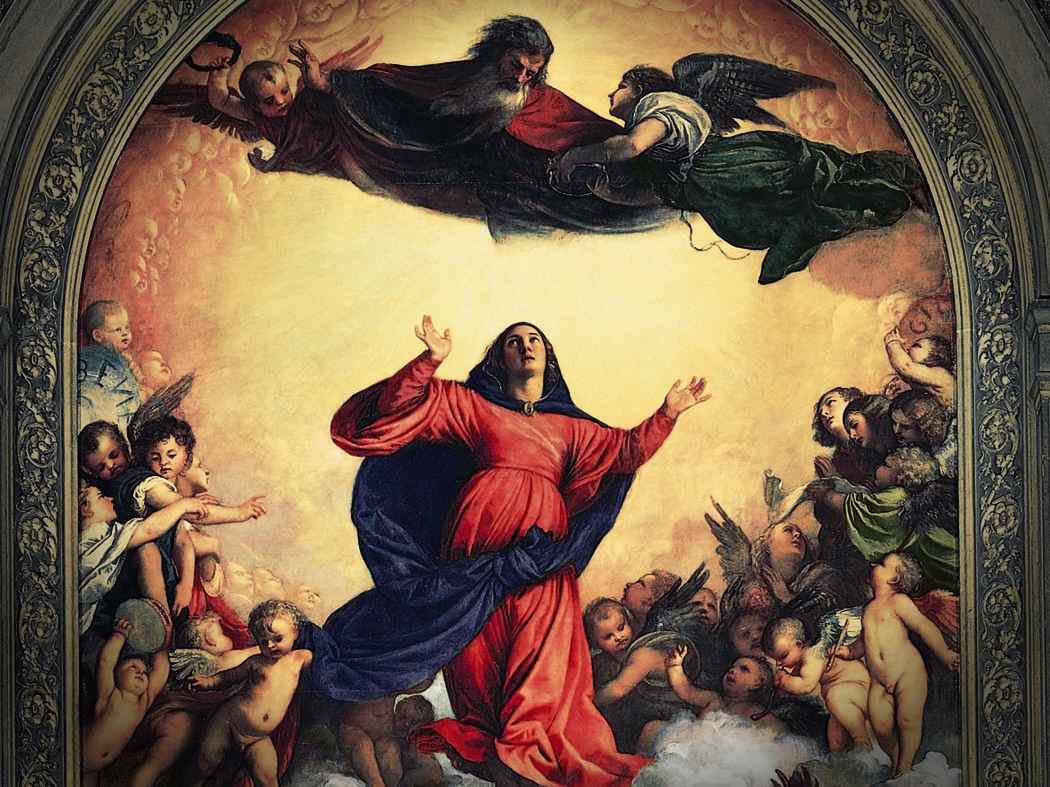
Through Marian images by artists such as Giotto, Fra Angelico, and Titian, we explore the figure of the Virgin Mary and the symbolic and material significance of colour, especially ultramarine blue. We also consider how Marian imagery engages themes of love, devotion, and the relationship between the sacred and the everyday.
Week 5: The Incarnate Body: Christ and the Human Form
With reference to works such as Michelangelo’s Pietà and Leonardo’s Last Supper, this session examines how artists represented the mystery of the Incarnation through the beauty and vulnerability of the human body, inviting reflection on the relationship between the divine and the worldly.
Week 6: Saints as Models of Holiness and Beauty
Examining images of saints—including Francis and Clare of Assisi, Mary Magdalene, Jerome, and Catherine of Siena—we consider how holiness, suffering, and devotion are made visible, and how desire is redirected towards spiritual ends.
Week 7: Beauty and Theory: Renaissance Writings on Art
Through key texts by Alberti, Vasari, and Castiglione, alongside selected artworks, we explore how Renaissance thinkers understood proportion, harmony, and artistic excellence, and how these ideas shaped visual practice.
Week 8: Art, Reform, and the Sacred Image
Focusing on works produced in the context of religious reform, particularly in Italy and Spain, we examine debates on sacred images, including the writings of Gabriele Paleotti, and consider concerns about the emotional and sensory power of images in shaping devotion.
Week 9: A New World: Divine Order Beyond Italy and Europe
Focusing on the Iberian worlds, this session explores how Renaissance ideals of beauty, divine order, and harmony were reinterpreted across Spain and the colonial Americas through architecture and the visual arts.
Week 10: Beauty, Memory, and the Vision of the Divine
In this final session, we return to the question that opened the course: how can art give form to the invisible? Revisiting key works, we reflect on how Renaissance art invites us not only to see, but to see beyond—towards the mystery it seeks to reveal.
Course aims
This course aims to enable participants to develop an understanding of the relationship between faith and beauty in Renaissance art and to explore how artists engaged with theological and philosophical ideas to give visual form to the divine.
Course objectives
By the end of the course, participants will have been given the opportunity to:
- explore key themes, figures and artworks in Renaissance art within their historical and religious contexts
- develop an understanding of major theological and philosophical ideas of beauty, and consider their relevance to artistic production
- analyse works of art through close visual observation, relating form, colour, and composition to questions of meaning, belief, and experience
Learning outcomes
By the end of the course, students will be expected to:
1. Demonstrate knowledge and understanding of key themes, figures, and artworks in Renaissance art, and their religious and cultural contexts.
2. Analyse works of art through close visual observation, relating form, colour, and composition to questions of meaning, belief, and experience.
3. Demonstrate awareness of major theological and philosophical ideas of beauty, and their relevance to the interpretation of Renaissance visual culture.
4. Develop confidence in discussing and interpreting works of art, articulating informed responses to images and ideas.
Level and demands
The Department’s Weekly Classes are taught at FHEQ Level 4, ie first year undergraduate level, and you will be expected to engage in a significant amount of private study in preparation for the classes. This may take the form, for instance, of reading and analysing set texts, responding to questions or tasks, or preparing work to present in class.
This course is designed as an introductory course and does not require prior knowledge of art history, theology, or philosophy. It is suitable for students with a general interest in Renaissance art and its cultural and religious context.
Students will be expected to engage with visual material and short extracts from primary and secondary texts, and to participate in group discussion. A willingness to reflect on images and ideas, and to contribute to a shared learning environment, will be beneficial.
Teaching methods
The course will be taught through a combination of illustrated lectures, close visual analysis of artworks, and guided group discussion. Each session will introduce key themes, artists, and ideas, supported by high-quality visual material, including paintings, altarpieces, and architectural examples.
Students will be encouraged to develop their own responses to works of art through structured discussion and collaborative analysis. Short extracts from relevant texts (e.g. Alberti, Vasari, and selected theological writings) will be introduced where appropriate to support understanding of historical perspectives.
Teaching will emphasise active participation, with opportunities for students to ask questions, share observations, and relate course material to their own interests and experience. Further reading will be suggested for those who wish to explore topics in greater depth.
Assessment methods
Only those students who have registered for assessment and accreditation, in advance of the course start date, can submit coursework/assignments for assessment.
Assessment
You will be set two pieces of work for the course. The first of 500 words is due halfway through your course. This does not count towards your final outcome but preparing for it, and the feedback you are given, will help you prepare for your assessed piece of work of 1,500 words due at the end of the course. The assessed work is marked pass or fail.
Dr Joaquin Cruz Lamas
Joaquín Cruz Lamas is a historian of art, religion, and philosophy specialising in the visual and architectural cultures of early modern Latin America, with a particular focus on colonial Mexico. He is currently a Departmental Tutor at the University of Oxford, where he teaches the History of Art of the Global Renaissance. He has also taught courses on viceregal art at the Universidad Panamericana in Mexico. He has submitted his PhD in Theology and Religious Studies at King’s College London, examining religious identity and Baroque architecture in viceregal Mexico. His work engages the intersections of art history, theology, and philosophy, with broader interests in global Catholicism and visual culture.
Academic credit
Credit Accumulation Transfer Scheme (CATS Points)
Please note, students who do not register for assessment and accreditation during the enrolment process will not be able to do so after the course has begun. If you wish to gain credit from completing this course you must register to do so before the course starts.
Only those who have registered for assessment and accreditation will be awarded CATS points for completing work to the required standard. Please note that assignments are not graded but are marked either pass or fail.
Learn more about the Credit Accumulation Transfer Scheme.
If you are enrolled on the Certificate of Higher Education at the Department you need to indicate this on the enrolment form but there is no additional registration fee for assessment and accreditation.
Digital certificate of completion
Students who are registered for assessment and accreditation and pass their final assignment will also be eligible for a digital Certificate of Completion. Information on how to access the digital certificate will be emailed to you after the end of the course. The certificate will show your name, the course title and the dates of the course attended. You will be able to download the certificate and share it on social media if you choose to do so.
Fees
| Description | Costs |
|---|---|
| Course fee (with no assessment) | £315.00 |
| Assessment and Accreditation fee | £60.00 |
Funding
If you are in receipt of a UK state benefit, or are a care-leaver in the UK, you may be eligible for a reduction of 50% of tuition fees. Please see the below link for full details:
Concessionary fees for short courses
Recommended reading
Recommended reading is optional and you are not required to purchase these books to study this course.
Library facilities
All short course students (online and in-person) may register to borrow from the Oxford Lifelong Learning Library, for the duration of their course.
Further information about the Oxford Lifelong Learning Library can be found on the library website.
Preparatory reading
- Civilisation : A Personal View / Clark, Kenneth
- History of Beauty / Eco, Umberto
- Faith and Beauty : A Theological Aesthetic / Farley, Edward
- The Story of Art / Gombrich, EH
- Art in Renaissance Italy / Paoletti, John T, and Gary M Radke
- Beauty : A Very Short Introduction / Scruton, Roger
Module code: O26P462ARW
How to enrol
Please use the ‘Book now’ button on this page.
How to register for accreditation and assessment
To be able to submit coursework and to earn credit (CATS points) for this course, if you wish to do so, you will need to register and pay an additional £60 fee. You can do this by ticking the relevant box at the bottom of the enrolment form or when enrolling online.
Students who do not register for CATS points during the enrolment process will not be able to do so after the course has begun.
If you are enrolled on the Certificate of Higher Education at the Department you need to indicate this on the enrolment form but there is no additional registration fee.