Short course
Propaganda in the 20th Century

Course status:
In progress - closed to new applications

Location:
Online

Dates and time:
16/09/2026 - 25/11/202614:00 - 15:00

Study format:
Online - live

Fees:
£430.00
Along with the the 'masses' in politics, mass media and increasing literacy with which it was closely associated, modern propaganda was one of the major historical developments of the twentieth century. It was first used systematically in the attempt to shape the opinion of allies and enemies and to maintain morale at home during the First World War. This produced a body of theory and a cadre of practitioner. But the embedding of propaganda as a technique of political management at the end of the war, caused by the grave weakening of pre-war Liberalism around the world, ensured that it would play a major and increasing role globally over the rest of the century.
Propaganda was indispensable to the development of 'propaganda states' – Lenin's and Stalin’s Soviet Union, Mussolini’s Italy, Hitler’s Third Reich, and, after the Second World War, Mao Zedong’s China. It was also used increasingly as an instrument of the state in Liberal democracies. Liberals reacted against it. But in Western Europe and North America, it was used increasingly by politicians to engage with mass electorates. From print in all its forms, cinema and poster art, a step change took place over the interwar years with the development of broadcasting. By the Second World War, propaganda was ubiquitous, and was accepted by ordinary people as an inevitable part of everyday life.
Even before the end of the Second World War it was becoming clear that in a world dominated by superpowers, propaganda threatened the very idea of the truth. In the Cold War, each sides' propaganda was aimed at least as much at its own side as at the enemy. When the Cold War ended in the early 1990s, propaganda had transformed the politics and culture not just of the totalitarian states but also of 'free world'.
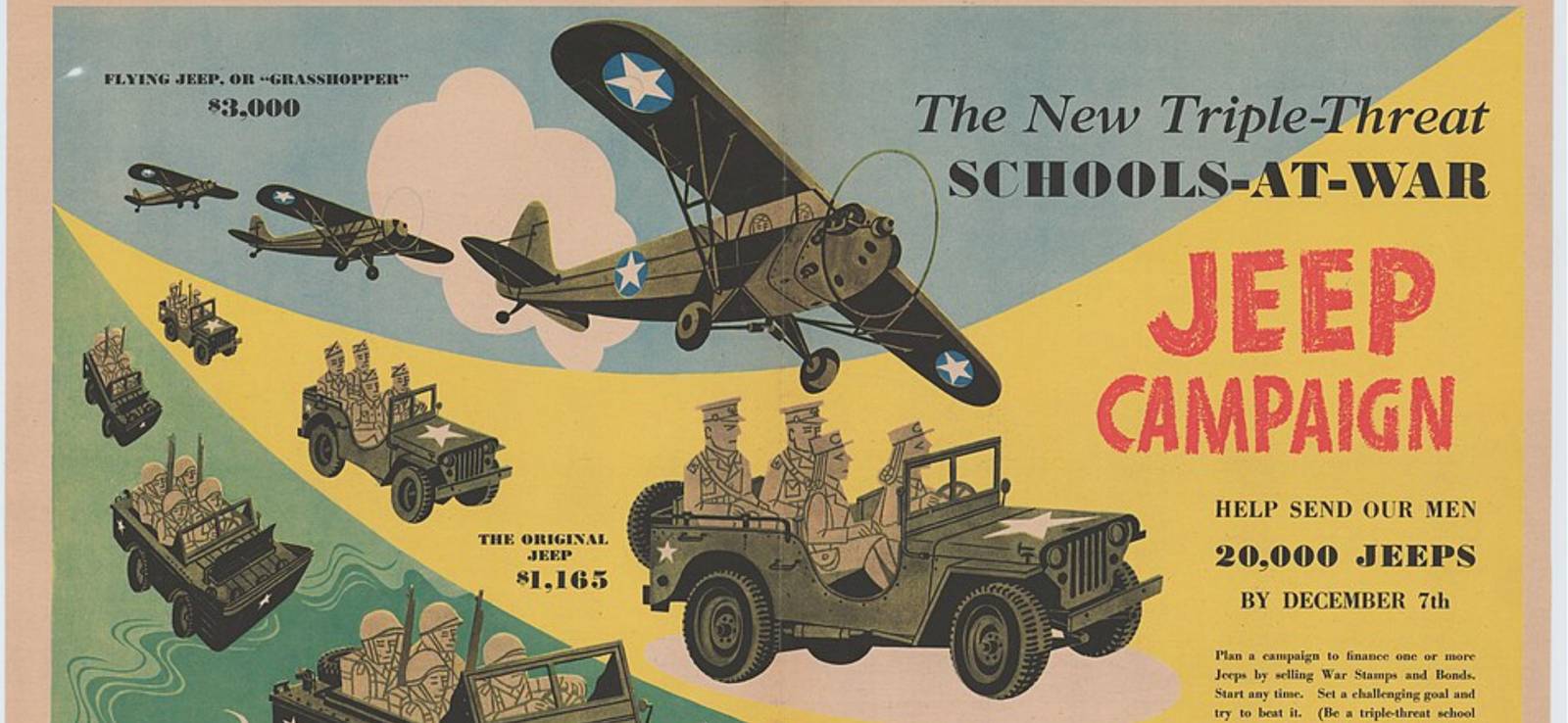
We will look during the course not just at the historical role of propaganda, but also at propaganda artefacts, in the press, books and leaflets, cartoons, art, films, events and monuments. We will explore the role of popular culture as a means of disseminating propaganda, which at the same time reshaped culture.
Propaganda studies is an exciting new area of historical enquiry which has produced many new insights since it began in the 1970s. We will start by looking at the special tools historians need to study propaganda, and conclude by considering whether the twentieth century should be considered 'the age of propaganda'.
This course begins on the 16 Sep 2026 which is when course materials are made available to students. Students should study these materials in advance of the first live meeting which will be held on 23 Sep 2025, 14:00-15:00 (UK time).
Week 1: The historian’s tool bag – definitions and issues
Week 2: The ‘masses’ in modern propaganda
Week 3: War and Peace: propaganda embedded 1918
Week 4: Totalitarian propaganda states: the Soviet Union and National Socialist Germany
Week 5: Interwar denial: Britain and the United States
Week 6: Ubiquity and new media: The Second World War
Week 7: The crisis of Western values and the Cold War
Week 8: Mao’s Zedong’s China
Week 9: George Orwell and ‘Post-Truth’
Week 10: Conclusions: The Century of Propaganda?
Course aims
- To develop an awareness of the nature of propaganda, some of its theoreticians and practitioners, and the part it has played in shaping the major events of the twentieth century.
- To identify how propaganda shaped the history of the twentieth century.
- To consider how propaganda developed through war, the evolution of the state, and the expansion and diversification of mass media.
Learning outcomes
By the end of the course students will be expected to:
- have an understanding of the nature of propaganda in the Twentieth Century, and be able to quote examples of its influence in politics and culture in more than one country;
- be able to describe some of the main events in the twentieth century in which propaganda played a key part;
- be able to discuss issues involved for the historian in understanding, explaining and exploring propaganda.
Level and demands
This course is open to all, and no prior knowledge is required.
This course is offered at FHEQ level 4 (first year undergraduate level), and you will be expected to engage in independent study in preparation for your assignments. Our 10-week Short Online Courses come with an expected total commitment of 100 study hours.
English Language Requirements
We do not insist that applicants hold an English language certification, but we warn that they may be at a disadvantage if their language skills are not of a comparable level to those qualifications listed on our website. If you are confident in your proficiency, please feel free to enrol. For more information regarding English language requirements, please see here.
IT requirements
Any standard web browser can be used to access course materials on our virtual learning environment, but we recommend Google Chrome. To access the virtual learning environment you will be required to verify your identity using an authenticator app on a mobile device or laptop in addition to your username and password. Full instructions will be sent to you on the start date of the course. We also recommend that students join the live webinars on Microsoft Teams using a laptop or desktop computer rather than a phone or tablet due to the limited functionality of the app on these devices.
Teaching methods
This course takes place over 10 weeks, with a weekly learning schedule and weekly live webinar held on Microsoft Teams. On the start date of the course students are provided with access to an online virtual learning environment, which houses the course content, including video lectures, complemented by readings or other study materials. Any standard web browser can be used to access these materials, but we recommend Google Chrome. Working through these materials over the course of the week will prepare students for a weekly 1-hour live webinar you will share with your expert tutor and fellow students. All courses are structured to amount to 100 study hours, so that on average, you should set aside 10 hours a week for study. Although the course finishes after 10 weeks, all learning materials remain available to all students for 12 months after the course has finished.
All courses are led by an expert tutor. Tutors guide students through the course materials as part of the live interactions during the weekly webinars
Assessment methods
You will be set two pieces of work for the course. The first 500 words are due halfway through your course. This does not count towards your final outcome but preparing for it, and the feedback you are given, will help you prepare for your assessed piece of work of 1,500 words due at the end of the course. The assessed work is marked pass or fail.
Dr Michael Redley
Michael’s doctoral work at Cambridge University was in the colonial history of Africa. He has a Masters Degree from the London School of Economics, and has taught various topics in politics and twentieth century history.
Credit Application Transfer Scheme (CATS) points
Coursework is an integral part of all online courses and everyone enrolled will be expected to do coursework. All those enrolled on an online course are registered for credit and will be awarded CATS points for completing work at the required standard.
See more information on CATS points
Digital credentials
All students who pass their final assignment will be eligible for a digital Certificate of Completion. Upon successful completion, you will receive a link to download a University of Oxford digital certificate. Information on how to access this digital certificate will be emailed to you after the end of the course. The certificate will show your name, the course title and the dates of the course you attended. You will be able to download your certificate or share it on social media if you choose to do so.
Please note that assignments are not graded but are marked either pass or fail.
Fees
| Description | Costs |
|---|---|
| Course Fee | £430.00 |
Funding
If you are in receipt of a UK state benefit, or are a care-leaver in the UK, you may be eligible for a reduction of 50% of tuition fees. Please see the below link for full details:
Concessionary fees for short courses
Recommended reading
Recommended reading is optional and you are not required to purchase these books to study this course:
- Munitions of the Mind: War Propaganda from the Ancient World to the present day, / Taylor, P.M.
- Propaganda: Power and persuasion / Welch, D
Module code: O26P753HIZ
Please use the ‘Book now’ button on this page..