Award courses
MSt in the History of Design

Course status:
Open

Location:

Duration:
2 years, part-time

Study format:
Blended learning

Level:
Postgraduate
How do everyday things and places embody historical experience?
This two-year part-time master’s degree explores how ordinary things and places created since 1851 reveal fascinating traces of historical experience.
The programme is taught through blended learning, enabling participants from all over the world and those with other commitments, such as full-time employment and caring responsibilities, to pursue postgraduate study at Oxford University.
The course aims to provide students with a framework of interpretative skills that will help them understand design historically. Combining close visual and material analysis with archival research and historical methodologies, the course explores the design of objects for use and environments.
KEY INFORMATION
Upcoming application deadline: Wednesday 27 January 2027, 12:00 GMT


To be accessible to the greatest diversity of applicants worldwide, this interactive programme of study is taught synchronously through live online sessions. The degree also has three required three-day residencies in Oxford: handling sessions and site visits at the start of each year, and a Dissertation Forum in the summer of the second year.
In Year One, the whole cohort meets for mandatory courses taught through synchronous virtual sessions on weekly Saturday afternoons (UK time) for three terms between October and June.
In Year Two for the first two terms, the cohort splits into smaller groups focusing on a choice of one of two option modules, which are taught through synchronous virtual sessions on monthly Saturdays and a weekly group tutorial also brings the whole cohort back together on five Thursday evenings (UK time) .
In the first five terms of the programme, each student has two individual tutorials, with the Course Director or the Departmental Lecturer normally booked on Thursdays. Each student also has four individual dissertation supervisions with the Course Director on set monthly Thursdays, Fridays or Saturdays between April and August of Year Two.
This course will appeal to those who wish to develop a critical understanding of the history of design, such as:
- graduates of any age seeking to develop their previous experience of critical analysis and writing about objects and sites
- teaching professionals in art and design, history and cultural studies seeking to deepen their grounding in the critical and contextual components of their teaching and research
- studio practitioners in the fields of graphic, industrial, interior and textile design, craft, and landscape architecture and the built environment who wish to inform their own work with specialist knowledge of design history and current methodological debates
- museum, heritage industry and art market professionals seeking to continue their professional development by enriching their specialist knowledge
The blended format of the course should enable applicants worldwide who are employed, have caring duties or other constraints to pursue postgraduate study. To make the most of this degree requires a determined commitment to the history of design and 20 hours each week to develop skills as an independent researcher.
This preliminary reading list gives an indication of the level and content of the degree: See preliminary reading suggestions.
Future research and career paths might include a DPhil programme, the creative industries, museum curatorship, the art market, teaching and arts publishing.
The first year grounds everyone in the skills of close material analysis and historical research methods. We explore how design is represented in and can be interpreted through advertising, writing and film. The second year focuses on how you can develop as a researcher through themed small-group seminars and individual dissertation supervision.
Course aims
The course aims to enable students to:
- develop further their critical understanding of the principles and practice of the history of design
- enhance their subject knowledge and the analytical and communication skills needed for professional involvement in the history of design
- demonstrate a grasp of primary evidence to build on their critical understanding of the types of evidence used in the historical study of designed objects and sites, and how they are selected and interpreted
- build on the appropriate skills and concepts for analysing material objects and textual sources
- undertake their own research to be presented in essays, oral presentations and a dissertation
- demonstrate an understanding of primary evidence and secondary sources through the application of appropriate analytical skills and concepts within a research context, resulting in a dissertation
Course content
The syllabus examines how everyday things and places are created through handicraft, industrial and digital processes. We immerse ourselves in the rediscovery and analysis of critical debates amongst makers, manufacturers, mediators and consumers. Assessing the printed and spoken word, graphic design and moving images is vital to understanding how designed objects and environments were experienced historically. We will assess how and why design embodies local and transnational identities and politics, as well as private and public sensorial histories.
Students complete four compulsory core modules and select two option modules.
Year 1
In Year 1, students take three core modules:
Term 1 (Michaelmas term)
Materials and Techniques of Design
Term 2 (Hilary term)
Historical Methods
Term 3 (Trinity term)
Research Project in the Histories of Modern Design 1851–1951
Year 2
In Year 2, students complete two option modules and a dissertation. The options in 2026–27 will be:
Michaelmas term 2026
- Modern Design and the Home
- Design for War and Peace
Hilary term 2027
- Arts and Crafts Traditions: Local and Transnational Perspectives
- Design, Body, Environment
Oxford College affiliation
As a matriculated postgraduate degree student, you will become a member of one of the University’s multidisciplinary colleges, enabling you to encounter new perspectives in your field or learn more about many other subjects from fellow college members.
The collegiate system makes studying at Oxford a truly special experience. Oxford colleges are friendly and diverse communities, where you could find yourself absorbed in fascinating conversations with students and academics from a variety of disciplines at college seminars, dinners and informal occasions.
For a list of colleges that accept students on the MSt in the History of Design, please see the Graduate Admissions course page.
To find out more about Oxford University colleges, please consult the University’s Graduate Admissions website.
Course Director
Dr Claire O’Mahony, Associate Professor in History of Art and Design
Guest speakers
Teaching will be provided principally by the Course Director. Guest speakers are also invited each term to present their recent publications and provide opportunities to hear about their career paths.
Speakers have included Dr Jonathan Black, Professor David Brett, Professor Nicholas Bullock, Dr Helena Chance, Professor Luca Csepely-Knorr, Dr Elizabeth Darling, Professor Amy de la Haye, Dr Adhitya Dhanapal, Dr George Entwistle, Dr Emma Ferry, Professor Fred Gray, Dr Marjan Groot, Dr Zoe Hendon, Dr Eleanor Herring, Dr Clare Hickman, Dr Steven Knott, Dr Patricia Lara-Betancourt, Dr Yunah Lee, Dr Joseph McBrinn, Professor Paul Micklethwaite, Dr Sorcha O’Brien, Professor Jane Pavitt, Professor Alan Powers, Dr Anthony Presland, Dr Megha Rajguru, Dr Kaja Schelker, Dr Neal Shasore, Professor Penny Sparke, Professor Deborah Suggs-Ryan, Dr Geoffrey Tyack, Dr Jane Tynan, Professor Greg Votolato, Dr Verity Wilson, Dr Gillian White, Dr Ghislaine Wood and Dr Michaela Young.
Students must attend at least 80% of all residencies, seminars, and group and individual tutorials. Formal assessment is by means of analytical writing grounded in material analysis and historical context.
Committing to sustained weekly reading, looking and reflection, participation in group discussion, and timely delivery of preparatory tasks before each individual tutorial or supervision will be vital for you to get the most out of this degree. The independent research required for analytical design history writing is enhanced by direct observation of case studies, and archival searching where possible, so candidates should plan for the time and logistics required to undertake fieldwork alongside the assigned weekly study.
Year 1
There are three assignments for the compulsory core modules taken in Year 1:
- Materials and Techniques: Object case study (2,500 words)
- Historical Methods: Methodology and critical sources analysis (3,000 words)
- Research Project: Extended essay (5,000 words)
Students are also required to complete skills development tasks through the Virtual Learning Environment in concert with the compulsory core modules.
Year 2
In Year 2, students complete:
- Two Advanced Papers (option module) extended essays of 5,000 words each
- a dissertation with a maximum length of 15,000 words
Degree-level qualifications
As a minimum, applicants should hold or be predicted to achieve the following UK qualifications or their equivalent:
- a first-class or strong upper second-class undergraduate degree with honours in cognate humanities subjects such as history (history of art, visual and material culture; modern social and economic history, etc.), modern languages, literature, studio practice, as well as design-related forms of social sciences (cultural theory and film studies) and engineering.
For applicants with a bachelor’s degree from the USA, the minimum overall GPA that is normally required to meet the undergraduate-level requirement is 3.6 out of 4.0. However, selection of candidates also depends on other factors in your application and most successful applicants have achieved higher GPA scores.
If your degree is not from the UK or another country specified above, visit our International Qualifications page for guidance on the qualifications and grades that would usually be considered to meet the University’s minimum entry requirements.
English language proficiency
This course requires proficiency in English at the University’s higher level. If your first language is not English, you may need to provide evidence that you meet this requirement. Further information on English language requirements can be found here.
IT requirements
This course uses the Department’s online assignment submission system. In order to prepare and submit your course assignments, you will need access to the internet and a computer meeting our recommended minimum computer specification. Students on this course may use the student computing facilities provided in the departmental buildings.
Please visit the MSt in History of Design page on the University of Oxford Graduate Admissions website for details of course fees and costs.
Please see our funding page for help and information with regard to funding postgraduate studies. We further recommend that applicants search for funding opportunities via the online Fees, Funding and Scholarship search tool.
In order to be considered for many scholarships, applicants are required to apply by the January deadline. However, applicants should note that some scholarships require additional application materials and may have different deadlines, so applicants should make sure they check the application process for each scholarship carefully.
Applications for this course should be made via the University of Oxford Graduate Admissions website. This website provides information on fees and entry requirements, along with help on preparing and submitting your application.
Application deadlines
12:00 midday UK time on:
-
- Stage 1: Wednesday 27 January 2027 (Latest deadline for most Oxford scholarships)
- Stage 2: Tuesday 2 March 2027
When to apply
Early application for the programme is strongly advised. After the March deadline, the course will only stay open for that year’s entry if places are still available.
Remember that it can take a number of weeks to obtain all of the documents you need and to prepare a competitive application. You should also allow your referees plenty of time to submit your references. We therefore recommend you apply as soon as possible.
Interviews are normally held as part of the admissions process within six weeks of the application deadline.
Contact us
All queries should be addressed to pgt@conted.ox.ac.uk.
The Course Director will be available to meet and to respond to any and all potential applicants at the virtual open events. However, to ensure absolute parity across the admissions period, she does not correspond or interact individually with any applicant prior to the formal interview process. Administrators seek her advice on queries on your behalf.

STUDENT SPOTLIGHTS
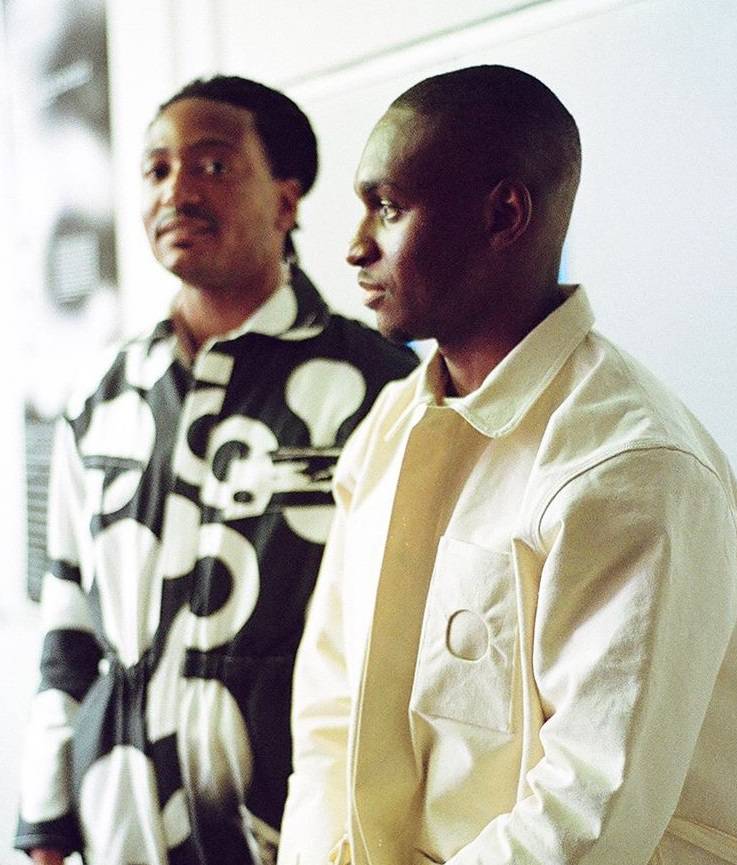
On the MSt in the History of Design programme, Bior Elliott developed his own critical and academic approach to the subject of design while still…

With a background in architectural design, Oksana enrolled on our part-time MSt in History of Design initially to satisfy her own intellectual curiosity. However, since…