
Award courses
MSc in English Local History

Course status:
Opening Soon

Location:

Duration:
2 years, part-time

Study format:
In person, Oxford

Level:
Postgraduate
Take your knowledge of English history to the next level.
This exciting two-year, part-time master’s degree combines rigorous training in historical research techniques with the study of major themes in English local history, culminating in an individually researched dissertation.
The programme builds on many years of specialist teaching in local history and benefits from close links with local, social and economic historians across the University. With their supervision, you will explore two advanced topics, which are chosen from a range of specific themes in English local history. There are a wide range of topics available, with some including:
- English Society, 900-1100
- Riot and Rebellion, 1450 to 1650
- Continuity and Change in Earl Modern English Rural Communities
- Kinship, Culture and Community – Provincial Elites in Early Modern England
- Medicine and Society in Early Modern England
KEY INFORMATION
Applications for 2027 entry will open in autumn 2026

The course comprises two compulsory topics and two advanced topics.
Concepts and Methods: An Introduction to Research in Local History
This part of the course introduces the main theories and methods used in local history. Teaching is based on the study of secondary literature and original source materials. It aims to help students understand how data is used and interpreted in secondary literature, assess suitable forms of data collection and analysis for their own research, use IT where appropriate, and present and integrate findings effectively in historical writing.
Topics include:
- the development of local history as a subject
- theoretical issues for local historians
- the nature of historical evidence
- finding, extracting and organising historical information
- the strengths, weaknesses and potential uses of fieldwork, and qualitative and quantitative source materials
- interpreting maps, buildings and oral testimony as sources for local history
Sources, Methods and Foundations in Local History
All students take Sources, Methods and Foundations in Local History in the early modern period in their first year, and choose between the medieval or modern periods in their second year.
Advanced papers
Students take two papers from the following – one in Trinity term of the first year and one in Hilary term of the second year. Please note that the list may vary from year to year and availability is subject to change.
A.1 Power and Patronage in the Later Medieval Localities
This course examines the exercise of power and authority at local level in England in the thirteenth, fourteenth and fifteenth centuries. It explores relations between central government and the localities, how information and financial resources were gathered for royal government, the framework and role of local government, and how royal policies were enforced. It also considers how monarchs worked with those who shared or received delegated power, including church leaders, members of the nobility and gentry, and the governing bodies of larger towns. The course also looks at how local elites exercised power and patronage for their own ends, legitimately or otherwise. Students study a range of printed primary sources in English translation.
A.2 Continuity and Change in Early Modern Rural Communities
This course examines continuity and change in early modern rural communities. Religion and agriculture changed significantly during this period, and the population increased, leading some historians to argue that it marked a complete break with earlier centuries. More recent research suggests instead that existing local social structures adapted to accommodate these changes. The course considers the nature of early modern society, including national and local population figures and how news and information were shared. It explores the effects of the Reformation on the rural parish, including responses to directives from the crown and laws made by parliament, and how religious change was managed locally. It also examines the development of the land market, new forms of landholding, the effects of population growth on demand for land and food, and changes in farming practices. These developments affected employment and landholding opportunities and drew attention to the landless labouring poor. The course also considers how communities and government responded to the problems associated with this group.
A.3 Kinship, Culture and Community: Provincial Élites in Early Modern England
This course examines the lifestyles and attitudes of the gentry who, with their professional and mercantile associates, dominated but never fully subdued provincial society and culture in early modern England. Topics include the impact of estate management and entrepreneurial activity on local communities, the reach and spread of family, kinship, patronage and service networks, the effects of education and book consumption on ideas of public duty and office holding, the spread of news and political awareness, and changing expressions of religious belief and attempts to shape community values and behaviour, especially in relation to puritanism. While particular attention is given to case studies from central English counties, provincial élites are considered throughout in the wider national context of social, economic, religious and political change.
A.4 The English Civil War and Local Society
This special subject examines the causes, outbreak, conduct and memory of the Civil Wars in the English provinces from 1640 to the 1660s. It considers how events in Scotland and Ireland helped destabilise England by 1642, and approaches the wars through political, religious, military, social and economic themes. It asks how each side mobilised support, which groups supported them, whether some regions and localities were more inclined to one side than the other, how the rival war efforts were organised, led and financed, what codes of conduct shaped the fighting, and how far atrocities marked the conflict. The course also moves beyond the usual sources written by the gentry and nobility to explore the experiences of ordinary people, using testimonies of maimed soldiers, war widows and orphans to examine how people in England and Wales articulated their losses and remembered the conflict.
A.5 The First Welfare State? Poverty and the Poor Law in England, 1660–1800
Legislation under the Tudors laid the foundations of the first known national system of tax-funded poor relief in the world. This paper examines the system in its mature form, considering its successes and difficulties, who received relief and who was left out, whether it benefited an industrialising economy or held it back, and whether it functioned as a benevolent system of social security or as a mechanism of discipline and control.
A.6 Agricultural Revolution, Enclosure, and the Impact on Rural Society, 1700–1870
Between 1700 and 1870, British food production increased dramatically to feed a rapidly growing and increasingly urban population, while rising productivity meant more food could be grown by a smaller proportion of the workforce. This course examines when and how food production increased, and the role of enclosure by agreement and Parliamentary enclosure in reshaping the farming landscape. It also considers the impact of agricultural change, enclosure and greater regional specialisation on rural society. Questions include who drove these changes, how the benefits of rising output and productivity were shared between landowners, farmers, farm workers and consumers, and how far these developments contributed to widening inequality, the impoverishment of agricultural labourers’ families and the marginalisation of women in the farm workforce.
A.7 The English Suburb, 1800–1939
This course examines the growth and development of suburbs in the nineteenth and early twentieth centuries. The separation of work from home is a major feature of modern urban life, and historians have increasingly taken an interest in the suburb as a historical phenomenon. The course considers the physical growth of both middle-class and working-class suburbs, and examines the role of landownership, the building industry, transport, and local and central government in shaping their distinctive identities. Students are expected to work with primary as well as secondary sources and to pay close attention to the layout and built fabric of suburbs on the edges of both large cities and smaller towns.
This course is ideal for practising teachers, archaeologists, environmental planners, archivists, librarians, museum professionals and teachers in adult education, as well as researchers pursuing the subject in its own right.
The course is based in Oxford during weekly evening classes and occasional Saturday schools.
Induction day
All students attend this general introduction to research in local history and to the facilities available to them in Oxford:
- Library, computing and study facilities available at the Department for Continuing Education, the Bodleian Library and the University Computing Service.
- Basic reference works and aids to research, including indexes, abstracts, specialist bibliographies and national theses lists.
- Use of information technology, including the facilities of the University’s Computing Services.
Matriculation ceremony
This is compulsory for new postgraduate students, followed by college welcome and lunch. Your college will inform you of other dates in the college calendar.
Year 1
- Michaelmas term – Concepts and Methods: An Introduction to Research in Local History 32 hours of tuition, including 10 Thursday evening classes and a Saturday field trip in late October.
- Hilary term – Skills for Local History: Sources and Methods in the Early Modern Period 16 hours of tuition across 8 weekly two-hour classes.
- Trinity term – Advanced paper 16 hours of tuition across 8 weekly two-hour classes, plus a Saturday school on dissertation planning.
Year 2
- Michaelmas term – Skills for Local History: The Medieval or Modern Period 16 hours of tuition across 8 weekly two-hour classes.
- Hilary term – Advanced paper 16 hours of tuition across 8 weekly two-hour classes.
- Trinity term – Dissertation Tutorials and group seminars, with the dissertation submission deadline to be confirmed.
Oxford College affiliation
As a matriculated postgraduate degree student, you will become a member of one of the University’s multidisciplinary colleges, enabling you to encounter new perspectives in your field or learn more about many other subjects from fellow college members.
The collegiate system makes studying at Oxford a truly special experience. Oxford colleges are friendly and diverse communities, where you could find yourself absorbed in fascinating conversations with students and academics from a variety of disciplines at college seminars, dinners, and informal occasions.
For a list of colleges that accept students on the Msc in English Local History, please see the ‘college preference’ tab on the Graduate Admissions course page.
To find out more about Oxford University colleges, please consult the University’s Graduate Admissions website.
The Course Director is Dr Jonathan Healey.
Along with Dr Jonathan Healey the teaching panel includes a number of experienced tutors – not only in their subject but in teaching adult students. They understand the learning needs of students returning to education and will be able to advise you on subject-based study skills throughout the course. Some of the tutors include:
- Dr Heather Falvey
- Dr Rachael Jones
- Dr Rachel Moss
- Dr Frances Richardson
- Dr Geoffrey Tyack
Assessment is based on a mix of coursework assignments and a dissertation. The assessment falls into two parts, the first of which is called by the University a Qualifying Test and the second of which is called the Final Examination.
The Qualifying Test
The Qualifying Test, which must be passed in order to proceed to the rest of the degree, consists of a total of three assignments related to the work of the first term.
- Assignment 1: A review of a work of local history (500 words). 10% of the marks for the test.
- Assignment 2: An essay on issues relating to the nature of local history (2,000-2,500 words). 40% of the marks for the test.
- Assignment 3: An essay on issues relating to the sources and practices of local history, especially the relationship of fieldwork and/or quantification to other sources and approaches (2,500-3,000 words). 50% of the marks for the test.
The Final Examination
The second part of the assessment determines the final classification of the MSc and comprises six written assignments and a dissertation.
There will be 2 x 3,000 word assignments for each of the Sources, Methods and Foundations papers. (In total the assignments for the Sources, Methods and Foundations papers comprise 10% of the marks for the final examination.)
There will be 2 x 5,000 word essays for each of the Advanced Papers. (In total the essays for the Advanced Papers comprise 40% of the marks for the final examination.)
There will be a dissertation of 15,000 words (The dissertation counts as 50% of the marks for the final examination.)
Degree-level qualifications
Applicants should hold or be predicted to achieve a first-class or strong upper second-class undergraduate degree with honours in any relevant subject.
If your degree is not from the UK or another country specified above, visit our International Qualifications page for guidance on the qualifications and grades that would usually be considered to meet the University’s minimum entry requirements.
English language proficiency
This course requires proficiency in English at the University’s higher level. If your first language is not English, you may need to provide evidence that you meet this requirement. Further information on English language requirements can be found here. Applicants are required to have the higher level scores.
IT requirements
Most Departmental courses require assignments to be submitted online. While the submission system is straightforward and provides step-by-step instructions, it assumes access to a PC and a sufficient level of computing experience to upload assignments. Applicants should therefore be familiar with using computers (such as word-processing, using email and searching the internet).
Please visit the MSc in English Local History page on the University of Oxford Graduate Admissions website for details of course fees and costs.
Please see our funding page for help and information with regard to funding postgraduate studies. We further recommend that applicants search for funding opportunities via the online Fees, Funding and Scholarship search tool.
In order to be considered for many scholarships, applicants are required to apply by the January deadline. However, applicants should note that some scholarships require additional application materials and may have different deadlines, so applicants should make sure they check the application process for each scholarship carefully.
Applications for this course should be made via the University of Oxford Graduate Admissions website. This website provides information on fees and entry requirements, along with help on preparing and submitting your application.
Application deadlines
12:00 midday UK time on:
- Stage 1: Wednesday 27 January 2027 (Latest deadline for most Oxford scholarships)
- Stage 2: Tuesday 2 March 2027
When to apply
Early application for the programme is strongly advised. After the March deadline, the course will only stay open for that year’s entry if places are still available.
Remember that it can take a number of weeks to obtain all of the documents you need and to prepare a competitive application. You should also allow your referees plenty of time to submit your references. We therefore recommend you apply as soon as possible.
Interviews are normally held as part of the admissions process within six weeks of the application deadline.
Contact us
If you have any questions about this course, please email: pgt@conted.ox.ac.uk.
STUDENT SPOTLIGHTS
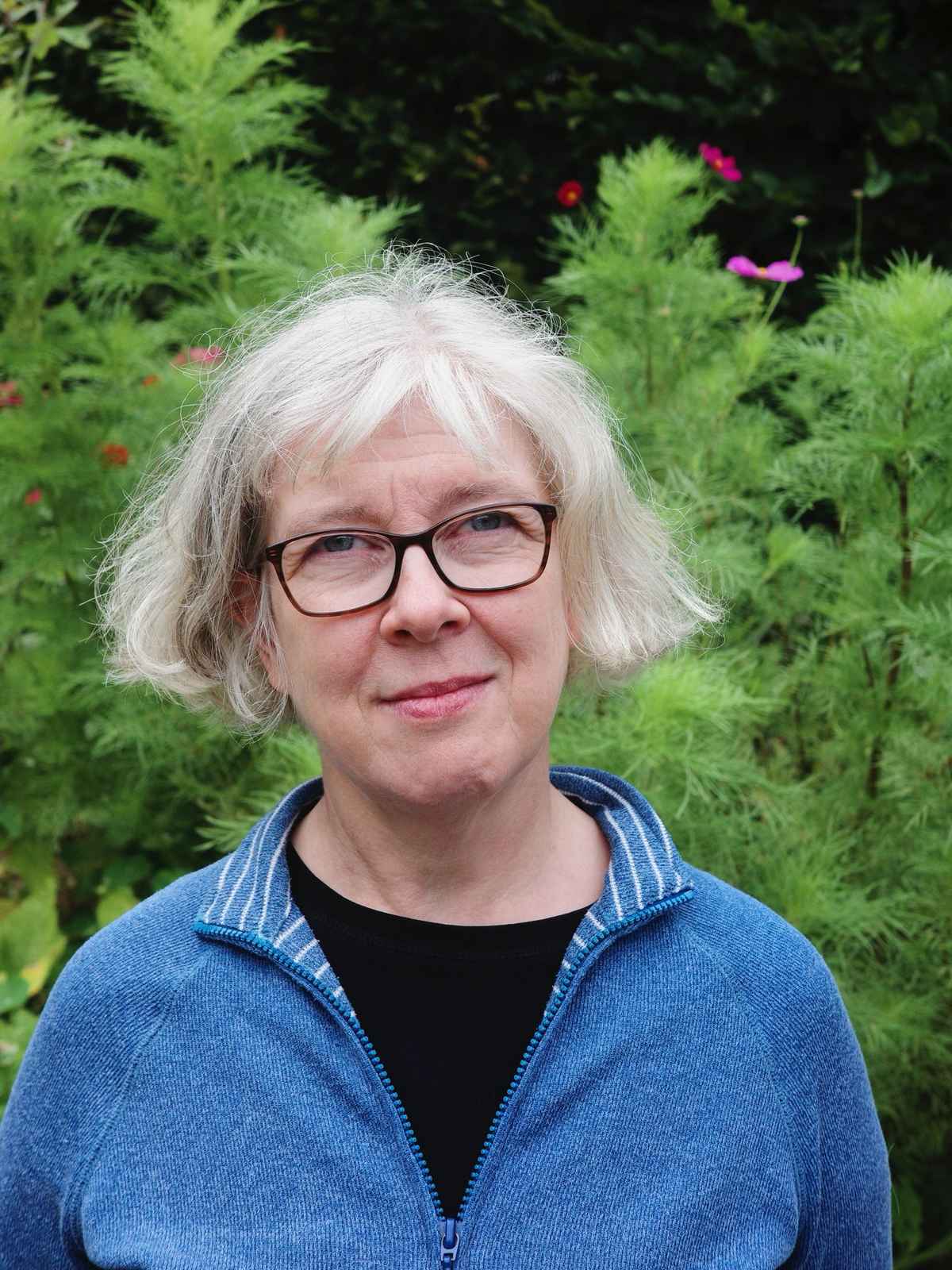
After a 30-year career in London, Rachel returned to her passion of local and social history through Oxford Lifelong Learning – progressing from an online…
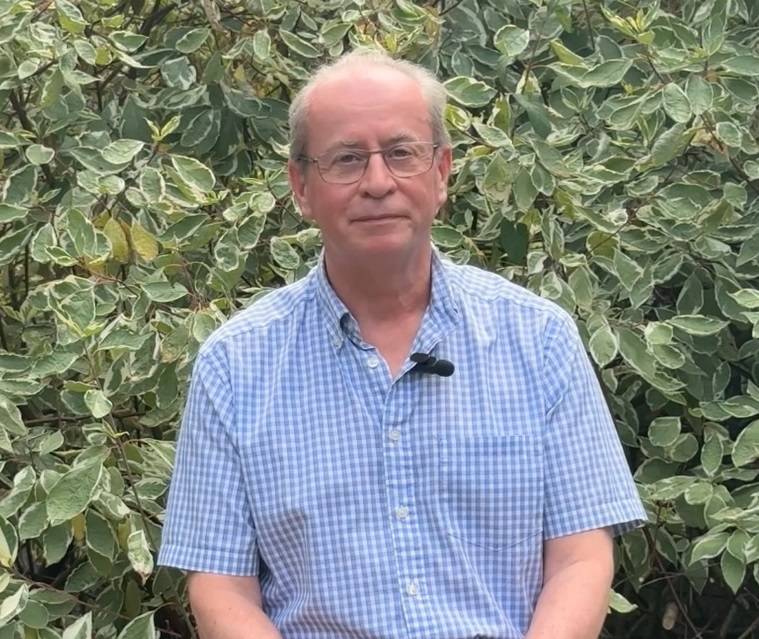
After a career in IT for more than 40 years, Peter turned a lifelong passion for history into an academic journey at Oxford Lifelong Learning.…


YOU MIGHT ALSO BE INTERESTED IN

Student in Rewley House Library.

Student in Common Room.

Rewley House classroom.

Rewley House classroom.