Award courses
Undergraduate Advanced Diploma in Local History

Course status:
Closed

Duration:
1 year, part time

Study format:
Online

Level:
Undergraduate
Learn how to uncover the stories, challenge the evidence – and think like a historian.
Take your study of history further with advanced training in research and analysis. The Advanced Diploma in Local History is a one-year, part-time course taught entirely online, giving you access to Oxford University teaching and resources wherever you are. Equivalent to third-year undergraduate study, it enables you to develop the specialist skills needed to investigate local, regional and social history in-depth.
You will develop advanced research skills, from managing information with spreadsheets and databases to producing clear, scholarly writing. With your tutor’s guidance, you will also complete an independent research project in local history. Many students choose to investigate the history of a place that matters to them, such as their own community, and some projects have even been published in academic journals. The methods you learn can be applied anywhere, whether to your own street or to a place you have always been curious about.
Taught at third-year undergraduate level (FHEQ Level 6), the course provides excellent preparation for postgraduate study, including Oxford University’s part-time MSc in English Local History, as well as master’s programmes at other universities.

The course begins with a short preparatory unit to familiarise you with study and discussion online. Module 1 usually begins in late September and Module 2 in March.
In addition to the modules, live study skills sessions via Microsoft Teams will be run by the Course Director throughout the course and the recordings made available afterwards. Attendance at these sessions is not mandatory but may be useful to those returning to study or studying at university level for the first time.
Module 1: Concepts and methods of local history
This module consists of eight units, making extensive use of original sources and case studies. There will be four written assignments, allowing you to practise historical skills and to write some local history. The units cover approaches to local history, finding primary and secondary sources, the critical use of evidence, personal testimony as a source, a practical guide to the use of statistics for history and the use of Excel, record linkage, and effective writing and publication.
Module 2: Databases for historians
The second module consists of six units and uses data sets for two contrasting communities, the Lancashire port of Liverpool 1650-1750 and the Oxfordshire market town of Woodstock in the 17th century, as well as criminal records for London from the Old Bailey online database. Students will practise methods for querying existing databases, then move on to learn how to design, create and use their own database for the analysis of historical data. Two further units introduce some of the exciting ways in which historians are now using databases. There will be two assignments, the first to design a database to answer an historical question, based on data supplied. The final project is a longer piece of historical writing using data analysis.
This course could be a great fit if you would like to use original sources and databases in your own research into local or family history. It may also be particularly useful if you are hoping to build a career in the heritage, archives or library sector, or if you work as a history teacher or local studies librarian. You may also find it valuable if you volunteer in a museum or historic property, or are involved in a local history society or research project.
Past students have gone on to work in a range of related fields, including as historians and in the heritage sector. The skills you develop are highly transferable, so they can be valuable in many different roles, and just as rewarding if you are retired or not currently working.
Although the course focuses on English local history, the skills you gain can be applied much more widely, and your final project may explore the local history of your own region or an area that particularly interests you. Students outside Britain are encouraged to apply, although some knowledge of British history, society and institutions will be helpful.
All course materials will be provided through our e-learning platform. Alongside the course units, you will have access to readings, documents, spreadsheets, database files, and a wide range of online resources. A reading list of recommended books will also be sent to you well before the course begins.
The units are published on the course website and studied in sequence. You will normally have two weeks to complete each one, giving you the flexibility to study in your own time and at your own pace within that framework.
There will be online material to guide your work on each unit, which will involve a mixture of downloading and studying selected passages from historical sources, exploring wider reading online or in a library, doing self-study exercises with spreadsheets and databases, and participating in online discussion with your tutor and fellow students. You must also complete your assignments and submit them via the course website by the deadlines given.
The Advanced Diploma is a rewarding and intellectually demanding course, and it does require a steady commitment over the year. Study time will vary from person to person, but you should expect to spend around 15 hours a week on the course alongside your other commitments.
Award and credit transfer
Students who successfully complete this course will be awarded an Oxford University Undergraduate Advanced Diploma in Local History. You will be invited to celebrate at the annual Awards Ceremony, held at Oxford’s Sheldonian Theatre.
The Advanced Diploma carries a Credit Accumulation and Transfer Scheme (CATS) rating of 60 points at FHEQ Level 6. Outstanding performance will qualify for a Distinction.
Opportunities vary for the transfer of credit, so students who are considering taking this course in order to transfer credit are advised to discuss the possibilities with the Course Administrator on undergraduate@conted.ox.ac.uk
Learn more about the Credit Accumulation and Transfer Scheme (CATS points).
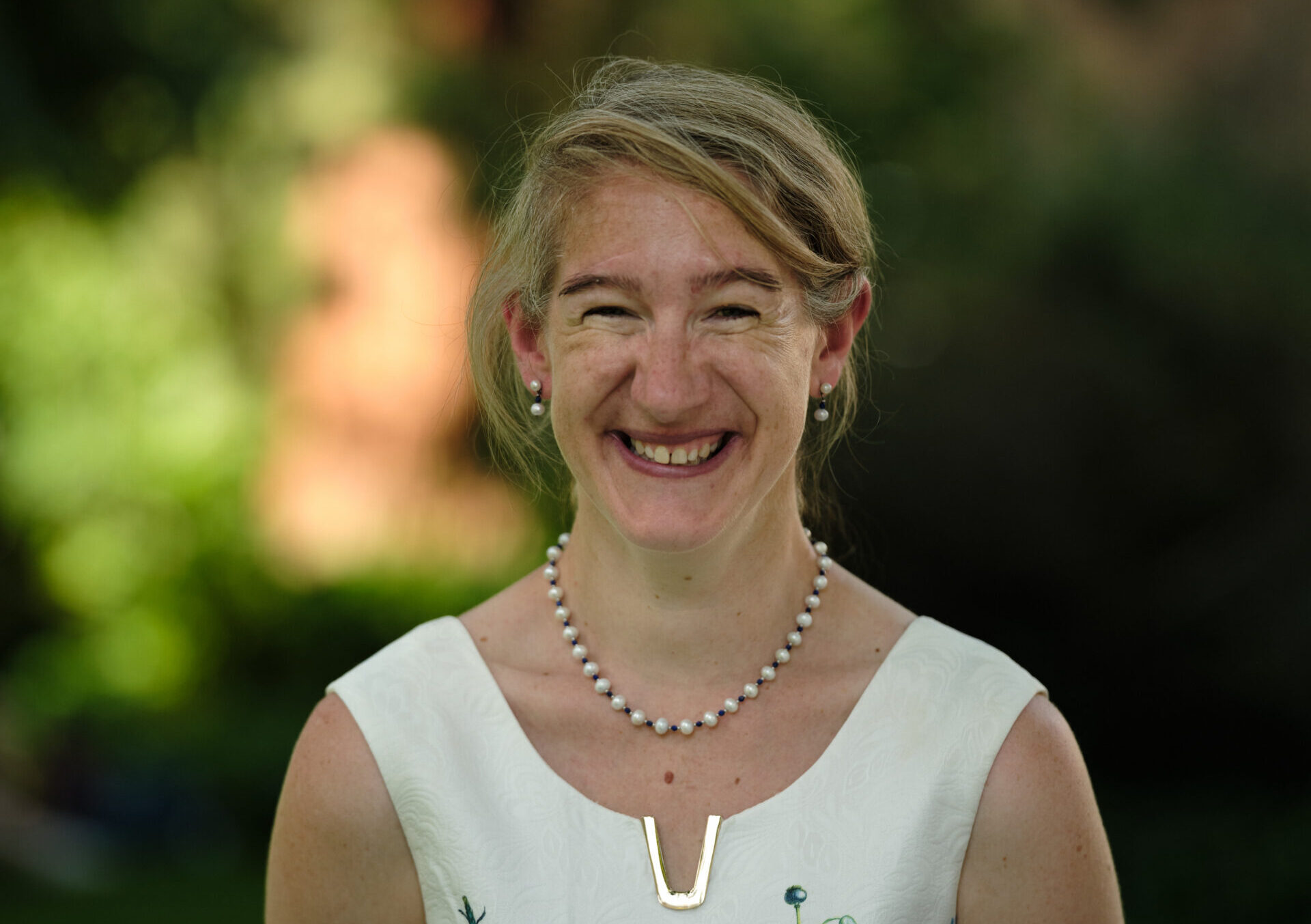
The Course Director is Dr Ismini Pells.
Along with Dr Ismini Pells, the teaching panel includes a number of experienced tutors – not only in their subject but in teaching adult students. They understand the learning needs of students returning to education and will be able to advise you on subject-based study skills throughout the course.
Tutorials
Having the support of a dedicated tutor is an essential feature and benefit of studying at the University of Oxford, a tradition which is continued in this online course. You will be assigned to a tutorial group of about 15 students, led by a tutor with whom you can communicate via email or the online conferencing system for general advice and for assistance with any problems. Your tutor will also mark your assignments and provide feedback on your progress. An experienced IT help team is available to advise on any technical problems.
The award of the Advanced Diploma is based on successfully completing the five written assignments (including the database for assignment 5) and the final project. There is no written examination.
All students are strongly encouraged to participate in the group discussions and activities which are an essential part of the course. The weekly tutorial is conducted as a live session via Microsoft Teams
As the course is delivered entirely online, students from around the world are welcome to join. There are no formal entry qualifications, but you should have a strong interest in the localities and communities of the past, along with some experience of local history. This might come from previous study, family history and genealogy, or from researching local, rural, public or labour history using sources in libraries and record offices.
IT requirements
This course also has a substantial IT element, so you should be comfortable using a computer for word processing, email and internet research. You will use the course website to register, access course materials, receive and respond to emails, complete online study modules, take part in library research, and submit assignments. Some experience of Access, Excel, or another database or spreadsheet program is recommended before starting the Advanced Diploma. If needed, short introductory courses are often available locally and online.
You will need regular access to a computer and the internet, along with a good working knowledge of Microsoft Word or a similar word-processing package, email, and an internet browser such as Firefox or Google Chrome. The computer you use must meet our recommended minimum computer specification. Please also read the Advanced Diploma in Local History System Requirements, which provides further details of the specific equipment and software you will need to study this course.
English language requirements
Please check the information on the specific English language requirements for this course. Applicants are required to have the higher level scores.
Fees for 2026-27 will be £4,095 (Home, Islands, and Republic of Ireland students) or £7,025 (Overseas students).
Please be aware that fees will usually increase annually.
Information for applicants from the EU, EEA and Switzerland
On 11 May 2021 the UK Council for International Student Affairs (UKCISA) published new regulations and guidance to be used in assessing the fee status of students commencing courses in August 2021 and later. We will be using this guidance to carry out fee status assessments for students commencing courses in 2026/27, including students from the EU, EEA and Switzerland. If you are an EU national and do not live in the UK then you are likely to be charged Overseas fees. Students with settled and pre-settled status in the UK and some other categories of students who work in the UK can qualify for Home fee status as long as they meet the residence criteria.
Information on financial support can be found on our website here
Financial Declaration
All undergraduate offer-holders are required to complete a Financial Declaration Form (FDF) to demonstrate how they will meet the financial conditions of admission. If you are offered a place on this course, you will be asked to complete this form. It demonstrates that you can, or are likely to be able to, afford the course, and must be accepted before you can be considered to have met the conditions of your offer.
Click the ‘Apply’ button to request the online application link. We will email you the form and application guidance, usually by the next working day.
You should allow plenty of time to complete the application form, and upload any supporting documents required. You should also allow sufficient time for your referee(s) to submit their reference by the application deadline.
You will need to upload the following documents as part of your application:
- A written statement of 300-400 words stating why you wish to study Local History at this level. This should include any examples of local history projects, societies, historical sites or other local history activities you are involved with. You should also explain why the level of this course (FHEQ Level 6 i.e. third-year undergraduate level) is appropriate for you.
- A short summary of your computing experience, showing your ability to use basic computer tasks and digital tools.
- Proof of English language ability if a non-native English speaker. Further information on English language requirements can be found here. Please note that candidates are required to have the higher-level score.
- Contact details for two referees.
Application deadlines
- 12 February 2026, 12:00 GMT
- 28 May 2026, 12:00 BST
Early application is advised. The sooner you submit your application, the sooner your place will be considered.
Referees
If possible, your referee should be able to comment on your academic ability and background, but where this is not appropriate, please choose a referee who can vouch for your motivation, commitment and potential. References from friends and family members cannot be accepted.
Admissions decisions will be based on an assessment of knowledge, relevant experience, academic ability, potential and suitability for a course of study. We welcome applicants who may not hold traditional qualifications but can demonstrate relevant career experience or life skills.
Selection criteria
Even if a course has no specific academic entry requirements then: (a) assessment of an applicant’s academic ability and suitability for the course of study will still take place and (b) since applications for many courses often significantly exceed places available, each application will be judged against the gathered field of applicants for each course each year.
The University is committed to promoting diversity, equality, inclusion, and widening access, including during the admissions process. We fully endorse the Equality Policy and our admissions procedures are kept under regular review to ensure compliance with this policy.
Short-listed applicants will be invited for interview. The final decision on admission to the course rests with the Department.
Contact us
If you have unanswered questions or would like an informal discussion on academic matters before applying, you may contact:
- Course Director, Dr Ismini Pells at ismini.pells@conted.ox.ac.uk.
- For general guidance, application and admissions advice, course specific information, or credit transfer: undergraduate@conted.ox.ac.uk, +44 (0)1865 270312.
- For information about disability support or sources of funding: student.support@conted.ox.ac.uk, +44 (0)1865 280355.
STUDENT SPOTLIGHTS

Driven by a desire to make historical video content both accurate and engaging, Robyn, a Digital Content Producer, enrolled on our part-time online Advanced Diploma in…

Garyfallia enrolled on our Undergraduate Advanced Diploma in Local History to develop her research skills and knowledge of historical methodologies. She completed the course entirely online from her…

Gregory, a Minister of Music at a church in California, enrolled on our online Digital Ethnography short course as he wanted to gain an understanding of how digital…
After a 30-year career in London, Rachel returned to her passion of local and social history through Oxford Lifelong Learning – progressing from an online…