The Art and Architecture of the 1920s
30 March 2027
2:00-3:30pm
Online or Rewley House 1 Wellington Square, Oxford, OX1 2JA

Event status:
Applications being accepted

Location:
Online or Rewley House 1 Wellington Square, Oxford, OX1 2JA

Dates:
30 March 2027 - 4 May 2027

Study Format:
Online - live

Fees:
£75.00 – £90.00
Five-part lecture series by Dr Jan Cox and Dr David Morgan
This hybrid five-part lecture series given by Jan Cox and David Morgan explores the radical art and architecture of the 1920s.
The 1920s was a turbulent and immensely fertile decade in both artistic and architectural terms. This – the ‘Jazz Age’ – was the era which witnessed the earliest flowerings of Modernism across all areas of artistic culture. Radically new forms and styles came suddenly to the fore, sustained by an exuberant post-war sense of utopian social and political idealism. The ‘old’ was swept abruptly aside in favour of the ‘new’ – and the foundations were laid for the material and cultural world of today.
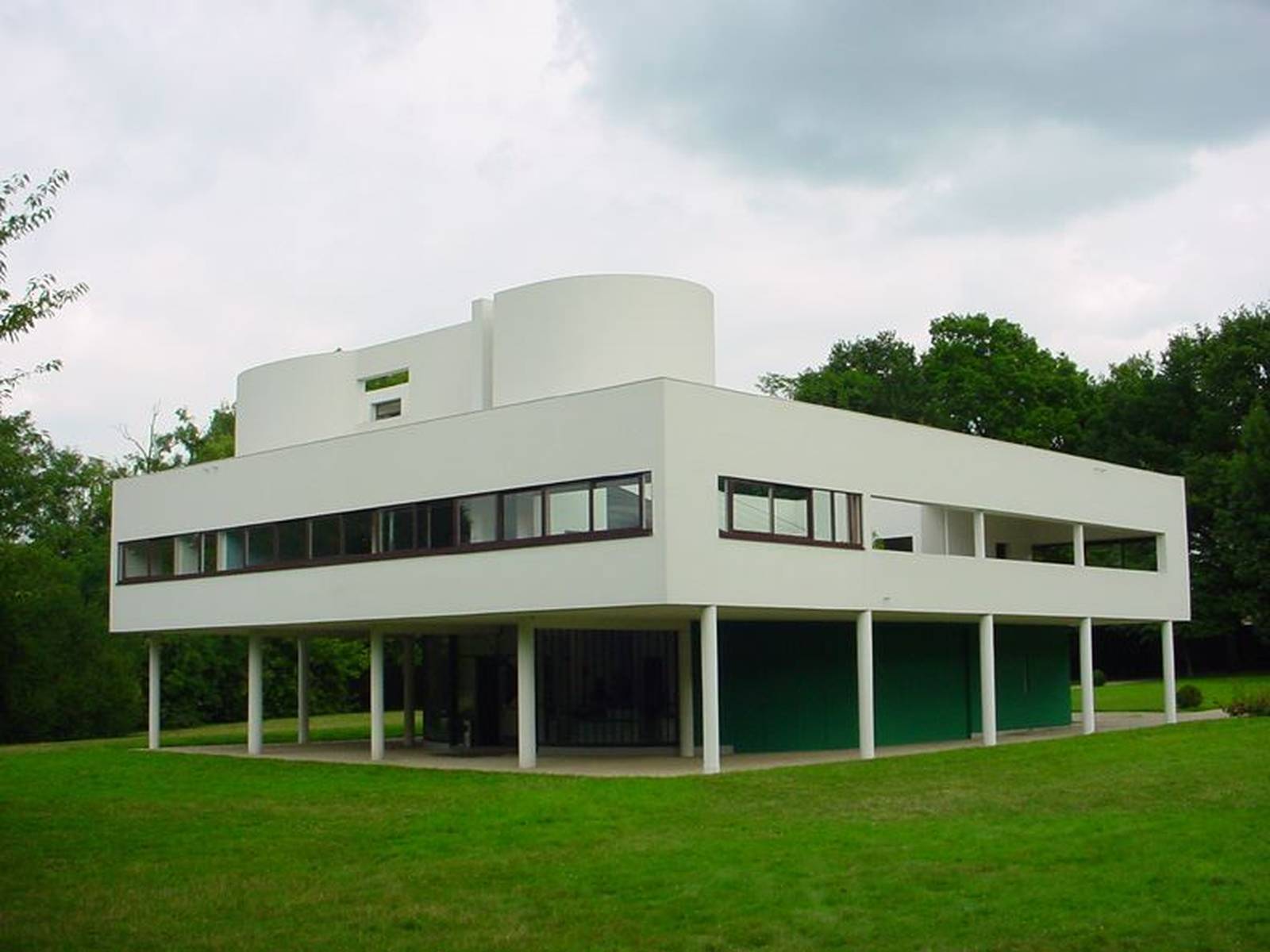
This course will explore the impact of Modernism as it was manifested in both art and architecture during the 1920s. We will evaluate the pioneering Modernist architecture of Le Corbusier alongside the 'Purist' Modernism of Corbusier's own paintings. Walter Gropius' ground-breaking Modernist architecture at the Bauhaus will be set alongside the products of that school: a style of design and decor which still exerts a powerful influence today.
We will explore the startling artistic and architectural experimentations of the newly formed Soviet Union: the idealistic era of Lenin and the Constructivists. Attention will also turn to the still pre-Modernist USA, where the extravagance and decadence of Art Deco held sway in architecture, whilst the first stirrings of European Modernism were beginning to be felt in the visual arts.
We will also trace the burgeoning presence of European Modernism in Britain during this decade: the Surrealism of Paul Nash and the pioneering sculptural experiments of Henry Moore and Barbara Hepworth.
Register for the whole series or individual lectures
For this lecture series, you can register for the entire series by clicking 'Book Now' on this page or you can register for individual lectures via the links below.
Please note: enrolments for the complete series will close at 23:59 GMT on 24 March 2027. Enrolments for each individual lecture will close two days before each lecture.
Book this course
You can opt to attend this teaching event either online (via a livestream) or in person at Rewley House, Oxford. You will be given the option of how you wish to attend during the enrolment process. You can only pick one option. If your preferred attendance format is fully booked, you can email us to be put on the waiting list. For those who wish to attend online, please read the IT requirements below before enrolling.
Contact the team
Phone: +44 (0)1865 270368
Email: events@conted.ox.ac.uk
Programme details
Lectures take place on Tuesdays, from 2–3.30pm BST (UTC+1)
Tea, coffee and pastries will be served after each lecture at 3.30pm for in-person attendees.
Tuesday 30 March
Introduction – Tradition and Modernism
The Modernists of the 1920s embraced all that was new and innovative in the arts and sciences. Artists such as Picasso, writers such as James Joyce, and architects such as Le Corbusier sought radically new artistic forms that broke with the conventions of the past.
New mass media, such as cinema and recorded music, enabled the spread of innovative, transgressive styles in the popular culture of the era. Jazz music emerged from the USA and spread across the globe, enabled by the mass availability of the new phonograph record. Cinema enraptured audiences around the world, with the Hollywood ‘star system’ becoming firmly established. Fashions reacted against the stifling conventions of the pre-war Edwardian era – and began to experiment with startlingly daring new styles, with the ‘flapper’ look becoming an icon of the era.
The horrors of the ‘Great War’ came almost to be forgotten in the hedonistic rush of the newly affluent 1920s. Until, at the decade’s end, Remarque’s novel ‘All’s Quiet on the Western Front’ reminded the world of the terrible sacrifices which had been made…
David Morgan
Tuesday 6 April
1920s Modernism
It was during the 1920s that Modernism, as a distinct set of stylistic and theoretical values, became firmly established across European artistic culture. In this lecture we will explore both the appearance, and the rationale, of Modernism, as it came to dominate painting, sculpture, and in particular, architecture. We will ask how and why it was that ‘the past’ came to be so decisively and impetuously rejected by this new generation of artists and architects – and why it was that Modernism was so very slow to percolate across the Atlantic, to the USA?
Artists whose work will feature include Picasso, Braque, Matisse, Paul Nash, and Barbara Hepworth. Architects will include Le Corbusier, Mies van der Rohe, and Walter Gropius.
The pioneering photography of Man Ray, and Alfred Stieglitz will also be examined.
David Morgan
Tuesday 13 April
Art Deco in 1925 Paris
The name Art Deco was coined much later, but it originated from the Exposition internationale des arts decoratifs et industriels modernes held in Paris in 1925.
Taking from a number of sources – design, fashion, architecture – it rejected the rounded, organic style of art nouveau, and embraced clean lines, shiny surfaces, and a celebration of the modern industrial age.
The huge exhibition had exhibits from twenty mainly European countries, its goal was to show the world French ‘creative genius’ by ‘comparing all forms of knowledge and arts in their richest expressions’. It featured spectacular nighttime illuminations, luxurious shopping boutiques, glass by Lalique, architecture by le Corbusier, jewellery by Van Cleef & Arpels, fashion by Sonia Delaunay, and national pavilions from many countries. Fifteen million visitors saw around 15,000 exhibits, which had a substantial future international impact.
Jan Cox
Tuesday 20 April
Art on the French Riviera
Cézanne, Monet and Renoir were pioneer artists on the French Riviera, then a rural backwater, undeveloped and remote. Paul Signac discovered the fishing village of St Tropez; he dreamed of an idealistic commune based there. We concentrate on the modern artists of the 1920s and ‘30s – In 1923 wealthy Americans Gerald and Sara Murphy had the bizarre idea of staying in Antibes in the summer (May to September were taboo previously), where they were joined by Pablo Picasso. Their story is told in Tender is the Night by Scott Fitzgerald.
Artists from many countries came to the Riviera: the Belarusian Chaim Soutine, the Scot S. J. Peploe, the American William H. Johnson. The home team were led by Matisse, Bonnard and Raoul Dufy. All these artists applied their distinctive individual talents to the light, landscape and structures of the South of France.
Jan Cox
Tuesday 27 April
No lecture.
Tuesday 4 May
Surrealism, Dada and Soviet Constructivism
This final lecture will concentrate upon the lasting legacies of the 1920s, in cultural terms.
Arising from the turmoils and horrors of the First World War, Dada represented a traumatised reaction against the very notion of ‘high culture’. Dada artists stridently and anarchically parodied the production, exhibition and admiration of ‘works of art’ of any kind. For Dada, art, culture, even language itself had become irremediably tainted by the industrialised mass slaughter of the trenches, so that from now onward, chaos, anarchy, and radical insurrection were to be the watchwords of post-war art. How did this chaotic ‘anti-art’ movement come to co-exist alongside the sleek utopianism of 1920s Modernism? Which, in the end, devoured which?
Surrealism grew out of the Dada movement. It retained the Dada fascination with the random and the spontaneous in art: yet it sought to anchor that randomness in a new appreciation of psychoanalysis – and in particular the works of Sigmund Freud. So can we see the burgeoning Surrealism of the 1920s as representing a synthesis between Dada and Modernism?
Soviet Constructivism represented an attempt, on the part of the new Leninist Soviet Union, to harness visual and technical ideas and methods derived from western European Modernism – particularly as developed and practiced in the German Bauhaus – to the political and ideological requirements of the Soviet state. How successful was this endeavour? And could it have ever survived the death of Lenin, and the coming to power of Stalin…?
Artists whose works will be featured include Max Ernst, Marcel Duchamp, Salvador Dali, Joan Miro, Renee Magritte, Vladimir Tatlin, Alexander Rodchenco, and El Lissitzky.
David Morgan
How and when to watch
Each lecture will last approximately 1 hour, followed by questions.
Please join in good time before each lecture to ensure that you have no connection problems. We recommend joining 10-15 minutes before the start time.
Recommended reading
Davies, C., A New History of Modern Architecture (Laurence King Publishing, 2019).
Hughes, R., The Shock of the New : Art and the Century of Change (Updated and enl. Ed., Thames & Hudson, 2010).
IT requirements
We will be using Zoom for the livestreaming of this lecture series. If you’re attending online, you’ll be able to see and hear the speakers, and to submit questions via the Zoom interface. Joining instructions will be sent out prior to the start date. We recommend that you join the session at least 10-15 minutes prior to the start time – just as you might arrive a bit early at our lecture theatre for an in-person event.
Please note that this lecture series will not be recorded.
Dr Jan Cox – Tutor
Dr Jan Cox has been awarded a BA (Hons) by Oxford Brookes University, an MA from Bristol, and a PhD from the University of Leeds (Nordic Art). He specialises in nineteenth-century European art and British art of the early twentieth-century.
Dr David Morgan – Tutor
David Morgan has taught art and architectural history for the Department since 2004. He has also taught courses for Birkbeck College, University of London, and for the WEA. His recent publications have centred upon the history of British visual satire.
Fees
| Description | Costs |
|---|---|
| In-person event fee (includes tea/coffee and a pastry) | £90.00 |
| Virtual event fee | £75.00 |
Funding
If you are in receipt of a UK state benefit, or are a care-leaver in the UK, you may be eligible for a reduction of 50% of tuition fees. Please see the below link for full details:
Concessionary fees for short courses
Module code: O26P111ARL
Please use the ‘Book’ button on this page. Alternatively, please contact us to obtain an application form.
You can also register for individual lectures if you do not wish to attend the whole series.