

Short course
Digital Signal Processing (online)

Course status:
Course ended

Location:
Online

Dates:
22/10/2025 - 26/11/2025

Study format:
Short intensive

Fees:
£1,260.00
Learn about Digital Signal Processing (DSP) or refresh your existing knowledge with this practical online course.
Based on the classroom course Digital Signal Processing (Theory and Application), this version includes weekly live online tutorials and a remote software lab you can run on Windows, macOS or Linux.
You’ll gain a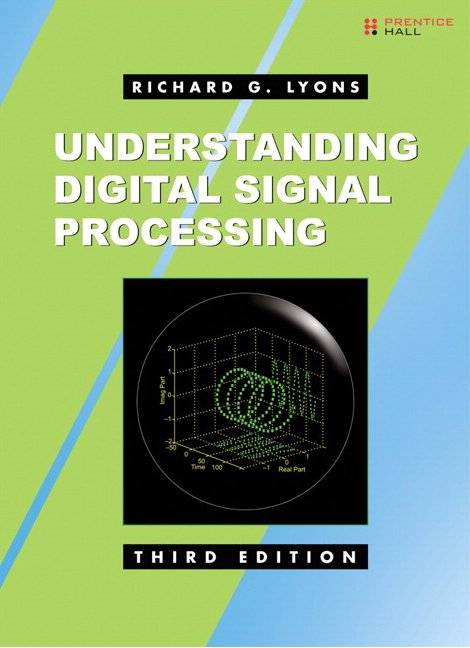 solid understanding of DSP principles and how they’re implemented, giving you the confidence to apply what you’ve learned or move on to more advanced topics.
A hands-on lab session helps you reinforce the material. Using specially developed software, you’ll simulate signals and systems in both the time and frequency domains, and explore key DSP functions such as sampling, filtering and transformation.
You’ll also receive an e-book copy of the latest edition of Understanding Digital Signal Processing by Richard Lyons (Pearson Education).
Learning Outcomes
This course will provide you with a comprehensive grounding in DSP concepts and algorithms, plus practical information on the design and implementation of DSP systems. By the end of the course, you will understand the workings of the algorithms we explore in the course and how they can solve specific signal processing problems.
The theoretical knowledge is illustrated by application examples, by demonstrations and by work in the laboratory. Code examples will be provided although no specific coding experience is required.
We keep class sizes small to ensure you receive the full benefits of the guided laboratory practice on this course.
Dates, Times and Delivery
Online tutorials are delivered via live video on Wednesdays each week and practical exercises are set to allow you to practise the theory during the week.
You will also have access to the course VLE (virtual learning environment) to communicate with other students, view and download course materials and tutor support is available throughout.
The live tutorials will be on the following days from 13:00 - 14:30 and 15:00 - 16:30 (UK time) with a 30-minute break in between:
- Wednesday 22 October
- Wednesday 29 October
- Wednesday 5 November
- Wednesday 12 November
- Wednesday 19 November
- Wednesday 26 November
Please note that the first tutorial on 22 October will take place from 13:00 - 16:30 BST (UTC+1), while all subsequent sessions from 29 October onwards will be held at 13:00 - 16:30 GMT (UTC) as a result of the end of Daylight Saving Time in the UK. A world clock and time zone converter can be found here: https://bit.ly/3bSPu6D
You should allow for 10 - 15 hours of study time per week in addition to the weekly tutorials.
Accessing Your Online Course
Details about accessing the private Microsoft Teams course site will be emailed to you during the week prior to the course commencing.
Please get in touch if you have not received this information within three working days of the course start date.
Apply for this course
The next course dates are not yet confirmed. Add your name to the waiting list for a priority update on this course. We also offer this course in person here at Oxford University. You can sign up for course news to receive updates about our Technology and AI programme.
Join the waiting list
Level and demands
This course is ideal for graduate level engineers and computer scientists who have limited experience with, and/or limited knowledge of DSP. Although a reasonable competence in mathematics will be helpful, it is not essential, and all the basic theory will be covered from scratch. This course is also an ideal ‘refresher course’ for those who have previously studied DSP.
If you’re uncertain whether this course is suitable for your requirements, please email us with any questions you may have.
IT requirements
This course is delivered online using Microsoft Teams. You will be required to follow and implement the instructions we send you to fully access Microsoft Teams on the University of Oxford’s secure IT network.
This course is delivered online; to participate you will need regular access to the Internet and a computer meeting our recommended Minimum computer specification.
It is advised to use headphones with working speakers and microphone.
Programme details
Each unit will be covered in two x 1.5 -hour sessions over a period of six weeks.
Unit 1
20 October – 24 October:
- Introduction to DSP
-
signal processing
-
what is DSP?
-
advantages and disadvantages
-
quantisation and sampling
-
aliasing
-
anti-aliasing
-
reconstruction filters
-
- Theoretical foundations
-
difference equations and z transforms
-
finite and infinite impulse response filters (FIRs and IIRs)
-
poles, zeros and frequency response
-
correlation
-
Unit 2
27 October – 31 October:
-
Introduction to digital filters
-
Design of digital filters
-
FIRs and IIRs
-
The Butterworth filter
-
Chebyshev and elliptical filters
-
linear-phase, windowing
-
bilinear transform and frequency warping
-
direct synthesis by CAD
-
hardware and software implementations
-
wordlength
-
precision and stability
-
Unit 3
3 – 7 November:
- Introduction to frequency domain processing
- Frequency domain processing application
- continuous and discrete Fourier transforms
- the fast Fourier transform (FFT)
- applications
- convolution
- correlation
Unit 4
10 – 14 November:
- DSP laboratory
- DSP hardware and systems
- A/Ds, D/As and over-sampling
- microprocessors
- DSP processors
- fixed and floating point comparisons
- programming and debugging techniques
Unit 5
17 – 21 November:
- ASIC implementation technologies
- architectures for high performance
- pipelining and bit-slices
- carry-save and carry-look-ahead
- array multipliers
- Some typical DSP applications
- speech recognition
- control
- image recognition
- radar
- room response analysis
- demonstrations
Unit 6
24 – 28 November:
- Algorithm implementation on programmable DSPs and microcontrollers
- Hands-on exercise review and wrap up
The course VLE will remain open and the materials will be available to you for three additional weeks after the end of the course.
John Edwards – Speaker
Sigma Numerix Ltd
Since obtaining his BEng (Hons) from the University of Bradford in the 1980s, John has worked as a Signal Processing Applications Engineer for companies such as Loughborough Sound Images, Blue Wave Systems, Motorola, Picochip Designs and XMOS Semiconductors.
John now works as a Digital Signal Processing and Embedded Systems Consultant for Sigma Numerix Ltd. He has worked with DSPs in a wide range of applications including wireless (2G, 3G WCDMA and 4G LTE), Voice Over IP, voice band and broadband modems, control, medical instrumentation, and noise and vibration analysis.
John has been a visiting lecturer at the University of Oxford since 1993 and is a member of the IET, IEEE, contributing regular papers at international DSP conferences.
Volker Mauer – Speaker
FPGA System Architect, Intel PSG
Volker has a B.Sc. in Information & Communication Systems from Furtwangen University and an M.Sc. in VLSI Design from Bournemouth University.
He previously worked for GEC Plessey Semiconductors and Siemens Semiconductors in the development of GPS and GSM chip sets.
He currently works for Intel, where he covers DSP design for several application areas, including communication systems, test and measurement systems and radar, and is involved in the definition of DSP features for new device families.
Volker is a member of the IET and IEEE, and a Chartered Engineer. He holds more than 30 patents in the area of efficient hardware implementation of DSP functionality.
Certification
Participants who satisfy the course requirements will receive a University of Oxford digital certificate of completion.
To receive a certificate at the end of the course you will need to:
- Attend a minimum of 75% of the online sessions.
- Submit a completed assignment by the given due date (normally two weeks after the end of the taught sessions). The expectations for the assignment will be fully explained to you during the course, and full guidance and support will be provided both during, and for a short period after the end of, the teaching period.
Participants are also expected to participate actively throughout the course.
The certificate will show your name, the course title and the dates of the course you attended. You will be able to download your certificate, as well as share it on social media if you choose to do so.
Fees
| Description | Costs |
|---|---|
| Course Fee | £1260.00 |
Payment
Fees include electronic copies of course materials.
All courses are VAT exempt.
Register immediately online
Click the ‘Book now’ button on this webpage. Payment by credit or debit card is required.
Request an invoice
If you require an invoice for your company or organisation, please email us to request an online enrolment form. Payment is then accepted online, by credit/debit card, or by bank transfer.
If you would like to discuss your application or any part of the application process before applying, please click on the ‘Ask a question’ button at the top of this page.
The next course dates are not yet confirmed. Add your name to the waiting list for a priority update on this course.
We also offer this course in person here at Oxford University.
You can sign up for course news to receive updates about our Technology and AI programme.