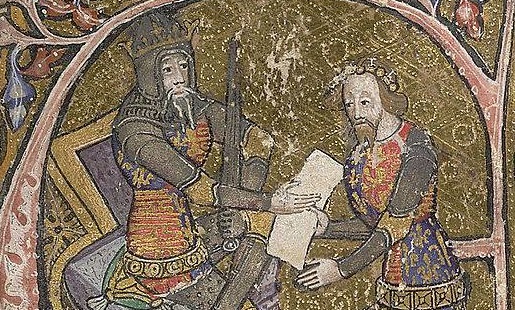
Edward III was widely revered as the pre-eminent chivalric king in Western Christendom. Yet his reign started with the deposition and murder of his father, Edward II. How did Edward III restore the authority of the monarchy so successfully?
Filter by:
Filters
Start month
Day of the week
Time of day
Edward III was widely revered as the pre-eminent chivalric king in Western Christendom. Yet his reign started with the deposition and murder of his father, Edward II. How did Edward III restore the authority of the monarchy so successfully?
We live in a changing world. This course will help you develop an ethical structure for approaching controversial problems of today including assisted dying, war, AI and climate change

Join this interactive course to further develop your basic French language skills and enjoy exploring the culture. For those who have completed Beginners - Part 1 and new students who have studied the language formally for one term.
Do you struggle to grab the reader's attention? Learn the craft of suspense: create compelling characters, make every scene tense, raise the stakes, and plant clues. Whatever your genre, you'll discover how to keep readers turning the page.

Consolidate your proficiency in Italian language and express your opinions on topics which are familiar or of personal interest. New students, who have not completed 'Part 1', whose proficiency in Italian is appropriate for the course level are welcome.

Explore the language and culture of Japan through this interactive class. A Lower Intermediate continuation course providing progression for students who completed Japanese: Lower Intermediate - Part 1.
You will have the opportunity to revise, refine, and arrange your poetry in the workshops of this course, and you will be taught the techniques you need to become a discerning editor of your own and others’ work.

An introduction to programming for data science, with a focus on using Python. This is an in-person course taking place at Rewley House, Oxford.

Explore the language and culture of Spanish-speaking countries through this interactive class. A Lower Intermediate continuation course providing progression for students who completed Spanish: Lower Intermediate - Part 1.
A comprehensive introduction and historical framework to the rich, diverse, artistic, architectural, and cultural legacy of Andalucía, Spain's most southerly region, produced between about 750 and 1550 CE, but with reference to its more ancient history.

Explore black holes, from stellar birth and cosmic collapse to singularities, Hawking radiation, and cutting-edge discoveries at the frontier of physics.

Have you always wanted to know more about archaeology? Get started on the concepts & methods of modern archaeology, including geophysics, excavation, finds analysis & survey. This course offers a comprehensive introduction to archaeology for beginners.