Award courses
Postgraduate Certificate in Ecological Survey Techniques

Course status:
Open

Duration:
12 months

Study format:
Online, with 1 week in Oxford

Level:
Postgraduate
Secure the future of our natural world tomorrow by surveying wildlife today.
The part-time Postgraduate Certificate in Ecological Survey Techniques is a dynamic blend of online modules and hands-on learning tailored for an international audience of professionals and volunteers engaged in monitoring and assessing wildlife and habitats.
Learn to make informed, evidence-based decisions and assess the status of species and ecosystems, whilst expanding your professional and personal network and exchanging ideas with like-minded individuals working in your field.
Benefit from the wealth of experience and expertise of our esteemed Oxford University faculty, comprising academics and practitioners deeply immersed in ecological research and practice. Gain invaluable insights and skills directly from those at the forefront of ecological endeavours.
Customise your learning: the programme can be tailored to suit your field and specific interests through the optional modules you select. Gain in-depth knowledge and expertise in surveying your choice of mammals, birds, fish or invertebrates.
Key information
Upcoming application deadline: Friday 13 November 2026, 12:00 GMT

The course aims to equip students with the techniques to survey, measure, quantify, assess and monitor biodiversity and ecosystems in the field. Conservation practitioners and volunteers worldwide need to make evidence-based decisions about a site or species. Equipping environmental conservation practitioners with the capacity to collect and analyse field survey data to understand, interpret and therefore make informed decisions in environmental conservation is critical to the future of ecosystems and ecosystem services in all biomes.
In particular, the course aims to create a hybrid programme of experiential and online learning in environmental conservation practice for practitioners and volunteers worldwide that will:
- focus on the use of survey techniques for measuring, quantifying and monitoring biodiversity, and develop a critical understanding of how to analyse field survey data to answer particular research or management questions;
- enable conservationists to make informed decisions on, and assess the status of, a species or habitat;
- enable conservationists to evaluate which field techniques to use for measuring and monitoring the impacts of environmental change on biodiversity;
- build capacity and communities of practice among environmental conservationists worldwide;
- prepare students to progress onto a Postgraduate Diploma or Master’s programme.
The course is designed for a wide range of professionals and volunteers looking to develop practical skills to address environmental challenges and anthropogenic changes, including habitat restoration, species reintroduction and the implementation of sustainable practices to mitigate human impact on ecosystems.
Many of our students are professional ecological consultants, environmental managers and rangers, research and postgraduate students, educators, as well as volunteers and those looking to make a career change. The course suits those looking for flexible study combined with expert training.
The techniques covered are universal, using international case studies and examples. Past students have joined from the UK, the USA, Asia, Australia, Africa and Europe.
In-person week in Oxford: Introduction to Ecological Survey Techniques
Spend five days in Oxford and gain a practical introduction to Geographical Information Systems (GIS), an overview of approaches to plant and animal identification, selected surveying techniques, University facilities and resources, and the Field Project.
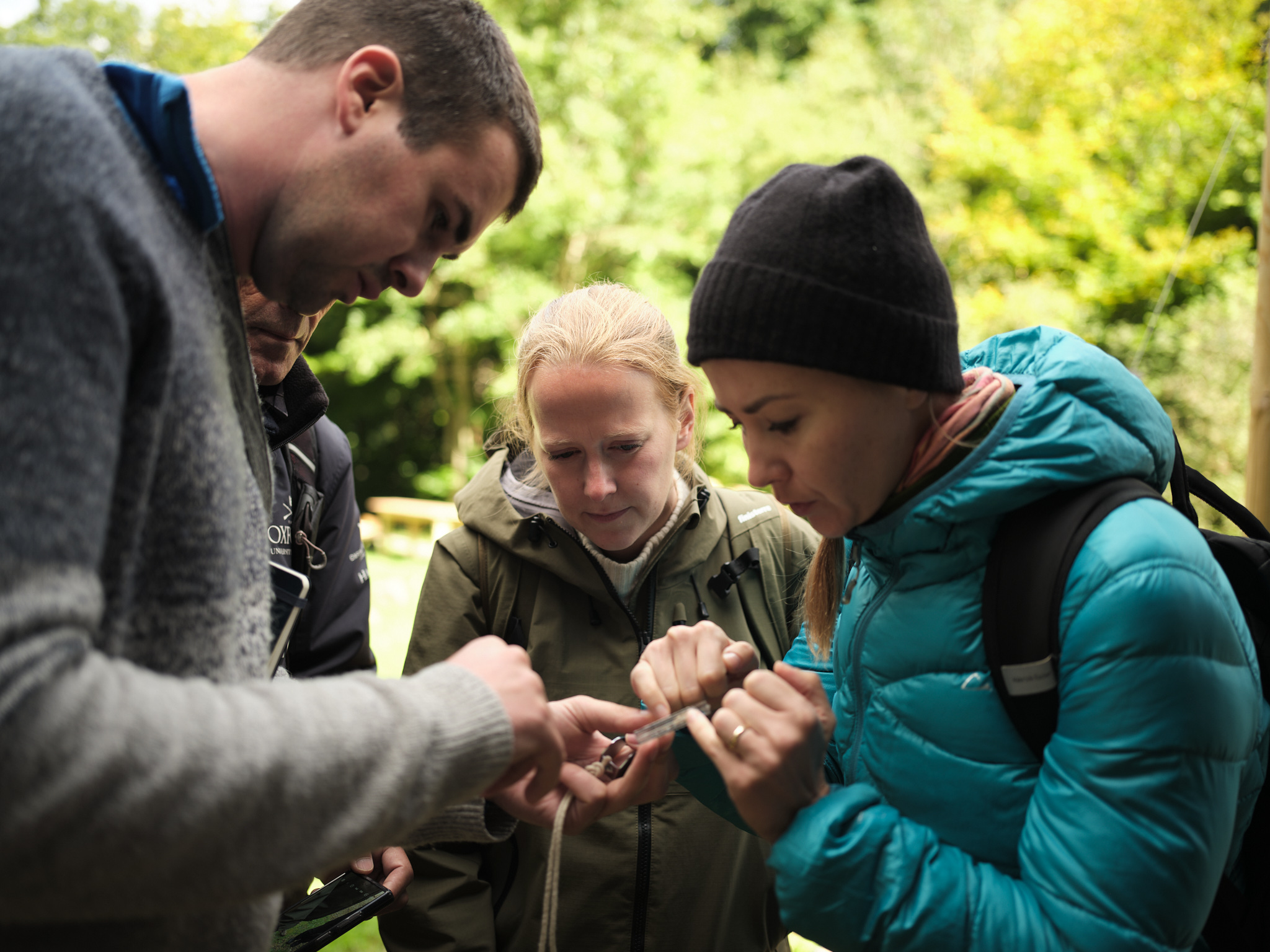
It is a mix of classroom and field-based teaching, with two days spent in the field at Wytham Woods, Oxford’s “living laboratory”. Activities include the use of GPS, bird netting and ringing, and surveying bats and vegetation. Scroll down to browse photos from the most recent in-person weeks.
The week will build towards a formative (non-credit-bearing) assessment.
Online modules
You’ll then embark on four tutor-led online modules, all of five weeks’ duration. Complete two core modules and select two of your choosing, enabling you to explore your own areas of interest relevant to your professional needs.
Core modules:
- Plant biodiversity and habitat assessment methods
- Data Analysis: Statistics for Ecologists and Field Biologists
Elective modules (select two):
- Mammal and reptile survey methods
- Bird biodiversity and population monitoring methods
- Fish and amphibian survey methods
- Invertebrate biodiversity and population monitoring methods
Option modules are subject to availability.
Content is roughly equivalent to one week of full-time study. Modules include research and discussion activities, multimedia tasks, practical exercises, revision activities and an assessment. Class sizes are small, with fewer than 25 students.
Module tutors usually engage online for six hours per week, distributed across each week, and will focus on particular topics, questions and activities. There is no set time to log in, accommodating students in different time zones.
The online modules are also available as standalone modules. Students can therefore expect to share their learning with a wide range of other professionals and researchers looking to develop their skills in a particular area.
Field Project
The Field Project consolidates and further develops the skills gained during taught modules by enabling students to apply them to their own research topic and undertake their own fieldwork.
It consists of one month of preparation time, one to two weeks of full-time (or equivalent) fieldwork, and one month of project writing for submission in September.
Four one-hour online tutorials will be provided to help students design, develop and implement their projects.
Charter Status
The course can help you apply for Chartered Status (such as Chartered Environmentalist and Chartered Ecologist) and meet relevant professional competency thresholds. Further information can be found in our Chartered Status and Essential Skills Guide.
The course can also help suitable students apply for Suitably Qualified Ecologist status with BREEAM.
Dr Thomas Hesselberg, Course Co-Director
Dr Joanna Bagniewska, Course Co-Director
Mr Oliver Burdekin, Departmental Lecturer
Dr Varina Delrieu, Departmental Lecturer
Dr Ada Grabowska-Zhang, Departmental Lecturer
The course is modularly assessed, reflecting the learning objectives of the course.
Students are required to submit:
- One 2,500-word formative assignment (marked with feedback but carrying no credit towards formal course results)
- Four 2,000-word assignments, up to two of which may be submitted as a PowerPoint poster or slide presentation, depending on the option module selected (10 CATS points each)
- One 5,000-word field project and a 1,000-word online journal (20 CATS points)
Degree-level qualifications
As a minimum, applicants should hold or be predicted to achieve the following UK qualifications or their equivalent:
- a first-class or strong upper second-class undergraduate degree with honours. Candidates with a degree in environmental conservation, ecology, biodiversity or other life sciences subjects will be given priority; however, candidates with degrees in other subjects who can demonstrate field experience or science skills will also be considered.
Applicants who do not meet this requirement will also be considered if they are able to demonstrate considerable experience in the field of environmental conservation practice.
For applicants with a bachelor’s degree from the USA, the minimum overall GPA that is normally required to meet the undergraduate-level requirement is 3.6 out of 4.0.
If your degree is not from the UK or another country specified above, visit our International Qualifications page for guidance on the qualifications and grades that would usually be considered to meet the University’s minimum entry requirements.
English language proficiency
This course requires proficiency in English at the University’s higher level. If your first language is not English, you may need to provide evidence that you meet this requirement. Further information on English language requirements can be found here.
IT requirements
As the course is delivered mostly online, students will need access to the internet and a computer meeting our recommended minimum computer specification. Certain modules will also require an assessment produced in Microsoft PowerPoint.
In-person week
Students are required to bring a personal laptop computer.
- The free open source Geographical Information Systems software ‘QGIS’ (installation is simple and guidance will be given during the course).
- QGIS is used by many environmental scientists and employers, and further details are available at the QGIS website.
Further IT Requirements
- Students are required to download and install R and QED Statistics in the Data Analysis course. Full instructions on how to download this software are available from the R website.
- Access to QED Statistics is provided as part of the course; this software is not compatible with Mac or Linux operating systems.
- Alternative software to QED Statistics is currently being researched; where possible, students are encouraged to use R in the Data Analysis course if they are using Mac or Linux systems.
Students wishing to use QED Statistics on Mac or Linux systems are advised by the programme developer, Pisces Conservation Ltd, to consider Windows emulation software, such as Boot Camp, to run a Windows system on their machine. For further information and a full system specification, please visit the Pisces Conservation Ltd website.
Please visit the Postgraduate Certificate in Ecological Survey Techniques page on the University of Oxford Graduate Admissions website for details of course fees and costs.
Please see our funding page for help and information with regard to funding postgraduate studies. We further recommend that applicants search for funding opportunities via the online Fees, Funding and Scholarship search tool.
In order to be considered for many scholarships, applicants are required to apply by the January deadline. However, applicants should note that some scholarships require additional application materials and may have different deadlines, so applicants should make sure they check the application process for each scholarship carefully.
Employer sponsorship
Over 35% of students over the past few years have received significant contributions from a sponsoring employer towards all or part of their fees. Should further information be required from Oxford to support an application for funding from an employer, please email est@conted.ox.ac.uk.
Applications for this course should be made via the University of Oxford Graduate Admissions website. This website provides information on fees and entry requirements, along with help on preparing and submitting your application.
Application deadlines
12:00 midday UK time on:
- Stage 1: Friday 13 November 2026 (Applications more likely to receive earlier decisions)
- Stage 2: Wednesday 27 January 2027 (Latest deadline for most Oxford scholarships)
- Stage 3: Tuesday 2 March 2027
When to apply
Early application for the programme is strongly advised. After the March deadline, the course will only stay open for that year’s entry if places are still available.
Remember that it can take a number of weeks to obtain all of the documents you need and to prepare a competitive application. You should also allow your referees plenty of time to submit your references. We therefore recommend you apply as soon as possible.
Interviews are normally held as part of the admissions process within six weeks of the application deadline.
Contact us
If you have any questions regarding the application process, please email: est@conted.ox.ac.uk.
Browse our upcoming short modules

Students during in-person week, Oxford, 2026

Students during in-person week, Trapping Exercise, Oxford, 2026

Students during in-person week, Oxford, 2026
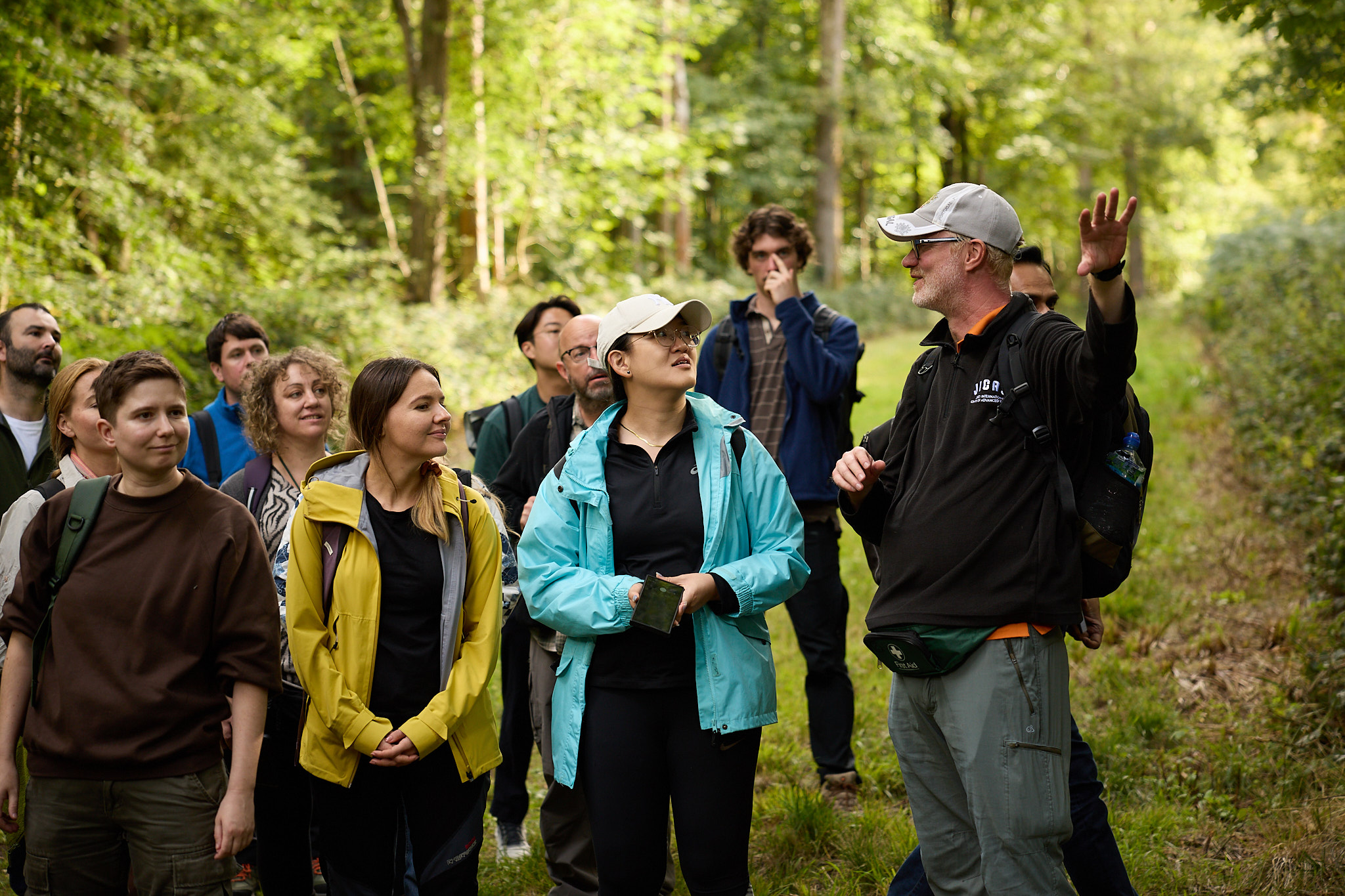
Students during in-person week, Wytham Woods, Oxford, 2025

Students during in-person week, Wytham Woods, Oxford, 2025

Students during in-person week, Wytham Woods, Oxford, 2024

Students during in-person week, Wytham Woods, Oxford, 2024

Students during in-person week, Wytham Woods, Oxford, 2024

Students during in-person week, Wytham Woods, Oxford, 2025

Students during in-person week, Wytham Woods, Oxford, 2024

Students during in-person week, Wytham Woods, Oxford, 2024

Students during in-person week, Wytham Woods, Oxford, 2024

Students during in-person week, Wytham Woods, Oxford, 2025

Students during in-person week, Wytham Woods, Oxford, 2025

Students during in-person week, Wytham Woods, Oxford, 2025
STUDENT SPOTLIGHTS

Wenna felt that her undergraduate degree hadn't fully equipped her with the practical skills she needed for a career in ecology, so enrolled on the…

Transitioning from agribusiness to ecological consultancy, Edward used the Postgraduate Certificate in Ecological Survey Techniques to fill gaps in his knowledge. He is now working…

Before undertaking the Postgraduate Certificate in Ecological Surveying Techniques, Sarah spent eight years as a data analyst in hospitality. Motivated by a long-standing interest in…

A passion for the natural world and a desire to return to science led Rachel to pursue the Postgraduate Certificate in Ecological Survey Techniques and a new career…

Dan, a research associate from New Zealand, decided to enrol on our Postgraduate Certificate in Ecological Survey Techniques to strengthen his work on prosthetic habitats…
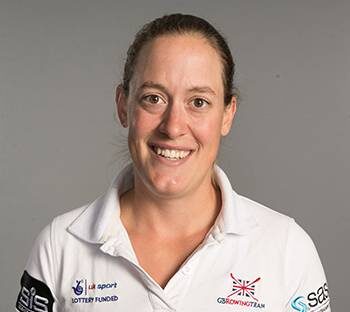
Following a change of career from the Great Britain Rowing Team to an ecology traineeship, Louisa found the part-time Postgraduate Certificate in Ecological Survey Techniques…