

Dr Thomas Hesselberg

Head of Programmes (STEM and Joint Programmes)

Departmental Lecturer in Biological Sciences

Co-Director of the Postgraduate Certificate in Ecological Survey Techniques

Dr Thomas Hesselberg is a behavioural ecologist and invertebrate zoologist with an interdisciplinary approach to both teaching and research. He has an integrated masters in biological sciences from the University of Aarhus and a PhD in biomimetics from the University of Bath. In addition to my current roles at Oxford Lifelong Learning as head of programmes for STEM and Joint Programmes, course co-director for the online PgCert in Ecological Survey Techniques and departmental lecturer in biological sciences, He is a research associate at the Department of Biology, a research associate at Coiba AIP in Panama and a senior research associate at the Jersey International Centre of Advanced Studies.

He is a fellow of the Royal Entomological Society and an associate editor for the scientific journal Ecological Entomology.
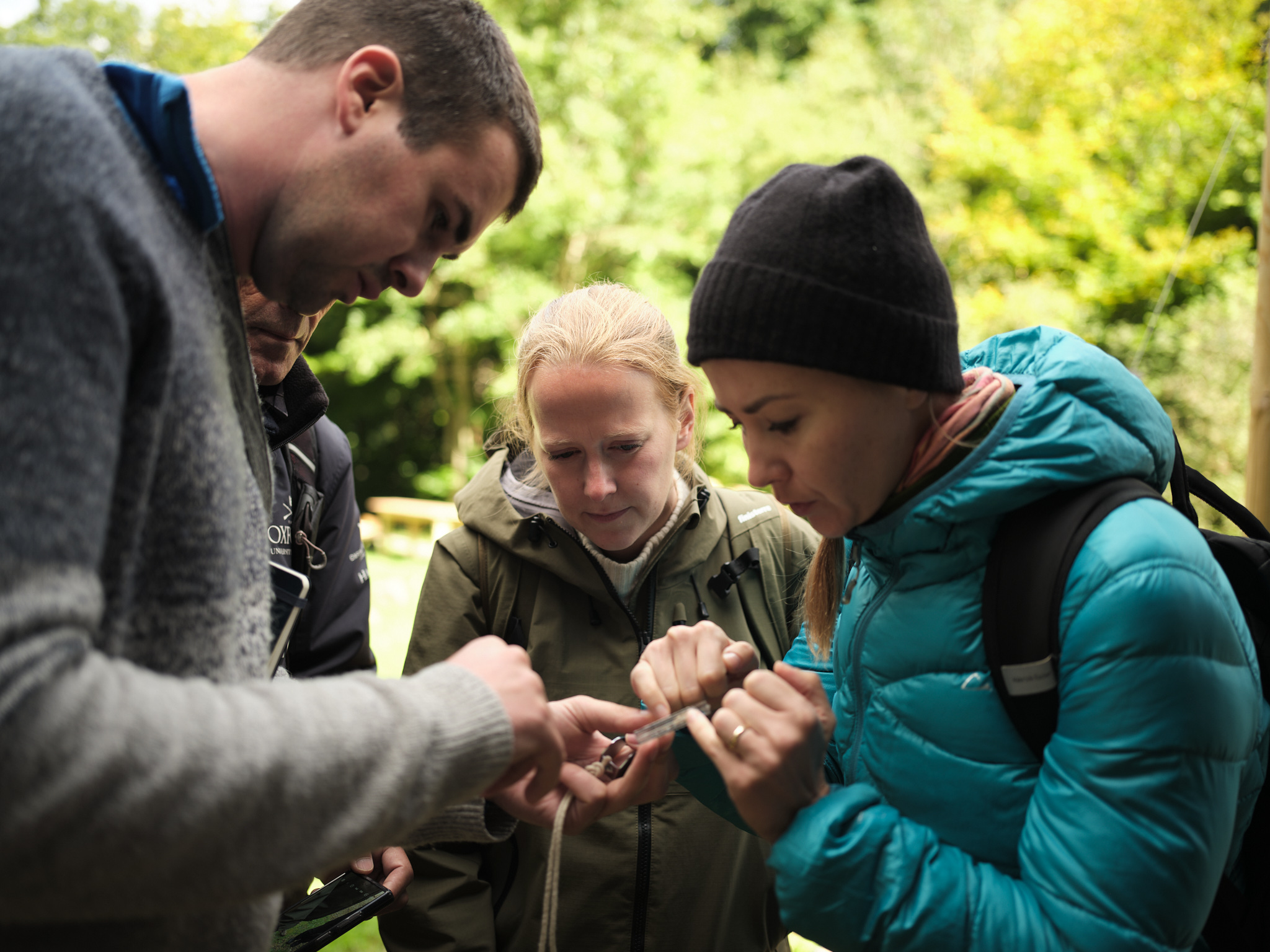
Dr Hesselberg takes a student focussed approach to my teaching, utilising an inclusive and question based teaching style that promotes active learning and give a voice to the variety of experiences and backgrounds that characterise lifelong learners. He enjoys delivering his teaching in a variety of modes including online, field-based, seminars and smaller one to one tutorials spanning both undergraduate and postgraduate courses. He particularly enjoys supervising student research projects. In his previous role as Director of Studies and current role as Head of Programmes, he is keen to expand our STEM provision and work actively to develop new modules and courses with a specific focus on our online provision.

He has been an external examiner for a range of British universities, and he is a fellow of the Higher Education Academy (Advance HE). Finally, he has been involved with evaluating teaching programmes/degrees for accreditation by the Royal Society of Biology.

His main research focus is on the behaviour and ecology of web-building spiders and he is particularly interested in how these cognitively limited animals can nonetheless build complex web that are uniquely adapted to a range of different habitats including caves, islands, tropical and temperate forests and urban environments. A key project including studying cave orb spiders in the genus Meta to understand the degree to which their unique life history and web structure are adaptations to the harsh conditions in caves and cave-like systems. Other active and future projects include investigating acacia associated orb spiders in Panama and using AI to gain a better understanding of the behavioural rules underpinning web construction.

In addition to his spider research, he retains an active interest in general terrestrial invertebrate ecology, biodiversity and conservation with active projects including looking at the biodiversity of urban green spaces and conservation and ecological interactions of cave organisms in caves in Southern Africa.

Finally, he maintains an active interest in applied entomology and biomimetics looking at how the adaptations of insects and other animals can be of societal value ranging from providing biological inspired novel technologies to sustainable food and feed.

  • Hesselberg, T. and Brannigan, E. (2025). Prey capture outside of the web? Observational evidence of a novel form of prey capture in a cave orb web spider. Ethology1 31, e13563.
  • Cardoso, P., Pekár, S., Birkhofer, K., Chuang, A., Fukushima, C. S., Hebets, E. A., Henaut, Y., Hesselberg, T., Malumbres-Olarte, J., Michálek, O., Michalko, R., Scott, C., Wolff, J. and Mammola, S. (2025). Ecosystem services provided by spiders. Biological Review 100, 2217-2236.
  • Mazebedi, R., Majoka, K. and Hesselberg, T. (2025). Comparative Overview of Cave Biodiversity Research Activities in Southern Africa: Insights from Botswana, Namibia and South Africa. Diversity 17, 342.
  • Lunghi, E., Mammola, S., Martinez, A. and Hesselberg, T. (2024). Behavioural adjustments enable the colonization of subterranean environments. Zoological Journal of the Linnean Society 201, 549–559.
  • Hesselberg, T. (2023). The biomimetic potential of novel adaptations in subterranean animals. Frontiers in Ecology and Evolution 11, doi: 10.3389/fevo.2023.1127728.
  • Stanley, C., Bagniewska, J. M., Grabowska-Zhang, A. and Hesselberg, T. (2023). Wooded streets, but not streetlight dimming, favour bat activity in a temperate urban setting, Journal of Urban Ecology 9, juad011.
  • Simonsen, D. and Hesselberg, T. (2021). Unique behavioural modifications in the web structure of the cave orb spider Meta menardi (Araneae, Tetragnathidae). Scientific Reports 11, 92.
  • Hart, A., Hesselberg, T., Nesbit, R. and Goodenough, A. (2018). The spatial distribution and environmental triggers of ant mating flights: using citizen-science data to reveal national patterns. Ecography 41, 877-888
Back to top