Award courses
MSc in Applied Landscape Archaeology

Course status:
Open

Duration:
2 years, part-time

Study format:
In person, Oxford

Level:
Postgraduate
Explore how centuries of human activity have shaped the environment we see today.
From agriculture and settlement to industry, conflict, and belief systems, every landscape tells a story. Through fieldwork and analytical investigation, students on this course have the opportunity to learn to uncover and interpret these traces, building a deeper understanding of our shared past.
While the course draws on rich examples from across the UK, it is not limited by period or geography – allowing students to pursue their own interests and develop their own research direction. At its heart, Landscape Archaeology is a collaborative, hands-on discipline: being out in the field, observing, questioning, and learning together.
The programme is taught in Oxford, a world-leading centre for research, with Archaeology consistently ranking among the very best globally – currently placed No. 2 in the QS World Rankings, having long shared the top positions with Cambridge. The course benefits from Oxford’s exceptional resources and a long-standing reputation for excellence. Running for over twenty years, it has welcomed a diverse community of students, from recent graduates to experienced professionals and those with a strong personal interest in the historic environment.
Key information
Upcoming application deadline: Wednesday 27 January 2027, 12:00 GMT


The course is divided into two one-year modules, Year A and Year B, which are run in alternate academic years (from October to September):
Year A begins in October 2026
Year B begins in October 2027
All students attend both modules, but they may be done in any order depending on year of admission. Because the course is modular there is no advantage to one combination over the other. Students normally study two consecutive modules and this is regarded as the best way to experience the course. However, in exceptional cases, regulations permit a student to intermit between modules (by permission of the Board of Studies only).
Both one-year modules have one core paper and two advanced papers spread over three terms.
Year A:
- Core Paper: Method and Theory in Landscape Archaeology
- Advanced Paper: Artefacts and Ecofacts in the Landscape
- Advanced Paper: Archaeological Prospection
Year B:
- Core Paper: Managing Historic Landscapes in the 21st Century
- Advanced Paper: Digital Landscapes
- Advanced Paper: Reading the Historic Landscape
- Field Training Week: Field Log Book
Instead of one advanced paper, students may choose to opt for a ‘flexi-placement’ comprising at least 14 days spread over approximately one year to be spent working at an organisation which is involved in an aspect of landscape archaeology. The Course Director will supply details of these.
The dissertation (15,000 words) is the student’s own project which develops throughout the course and is submitted at the end of the second module. It can be based on a piece of fieldwork, or a methodological or artefactual study. Each student will be assigned a tutor who will supervise their dissertation. A dissertation workshop is held each year to help students work together on this essential course element.
In addition, once every two years (in Term 3 of Year B) a compulsory field survey training week will take place. Each student will also have a series of tutorials with the course director and tutors; these may take place in person or online.
This course is ideal for those who want to combine academic study with hands-on fieldwork. It is particularly suited to applicants with a background in archaeology or a closely related discipline at undergraduate or postgraduate level, who are looking to deepen their knowledge and develop advanced practical and professional skills in landscape archaeology.
With a strong (but not exclusive) emphasis on the archaeology of Britain in our teaching, the course focuses on the applications of research methods in varying landscape situations. The course format is flexible and enables students to pursue their own research interests leading to a final dissertation. This can be on a theme, area or subject in Britain or elsewhere.
The course is taught using a combination of lectures/seminars in Oxford, field visits and practical work, supported by tutor contact and information supplied via a Virtual Learning Environment (VLE) which can be accessed at any time.
Self-study in libraries or at home will form a major part of your experience on the course. Many students undertake some fieldwork during their time on the course. You will be encouraged, where appropriate, to participate more widely in archaeological fieldwork or research projects, but unless these are part of the course, the department does not normally offer its own resources or facilities for supporting these.
Oxford College affiliation
As a matriculated postgraduate degree student, you will become a member of one of the University’s multidisciplinary colleges, enabling you to encounter new perspectives in your field or learn more about many other subjects from fellow college members.
The collegiate system makes studying at Oxford a truly special experience. Oxford colleges are friendly and diverse communities, where you could find yourself absorbed in fascinating conversations with students and academics from a variety of disciplines at college seminars, dinners, and informal occasions.
For a list of colleges that accept students on the MSc in Applied Landscape Archaeology, please see the ‘college preference’ tab on the Graduate Admissions course page.
To find out more about Oxford University colleges, please consult the University’s Graduate Admissions website.
The Course Director is Professor David Griffiths, Professor of Archaeology at Oxford Lifelong Learning.
Tutors for individual papers and sessions include:
Dr Alison MacDonald, Departmental Lecturer in Archaeology at Oxford Lifelong Learning. Alison’s background is in Roman and Classical archaeology.
Dr Olaf Bayer, expert in landscape prehistory and Research Associate at Oxford Lifelong Learning, and a field investigator working at Historic England.
Roger Thomas, formerly Senior Analyst at Historic England and a leading authority in archaeological resource management.
Dr Amanda Chadburn, researcher and formerly Senior Advisor at Historic England and DCMS.
Dr Mike Allen FSA, one of the UK’s foremost palaeoenvironmental archaeologists, has taught on this course since 2010.
Dr John Pouncett, Research Fellow in Spatial Technology at the School of Archaeology, University of Oxford, teaches the paper on Digital Landscapes.
This course is 100% continuous assessment: there are no written examinations. Each core paper consists of two 2,500-word assignments, each advanced paper consists of one 5,000-word assignment (or, in the case of a placement, an equivalent-sized placement report); the field training week logbook and the 15,000-word dissertation complete the written requirements. At the end of the course, students attend a viva voce (oral) examination.
The total marks over the two-year programme are awarded as follows:
- Core Papers: 20% (10% each year)
- Advanced Papers: 40% (20% each year)
- Field Week Logbook: 5%
- Dissertation: 35%
Degree-level qualifications
As a minimum, applicants should hold or be predicted to achieve the following UK qualifications or their equivalent:
- a first-class or upper second-class undergraduate degree with honours in archaeology or a related subject (typically history, historic environment, geography, environmental science, but for specific or personal advice on related subjects, please contact the course administrator); or
- a FHEQ Level 6 Advanced Diploma in archaeology or a related subject with the equivalent of an upper second-class or above; or
- a postgraduate qualification, normally to the level of distinction, in archaeology or a related subject.
A BA/BSc degree (in combined honours) or a PGCert in a relevant subject may also be acceptable.
For applicants with a bachelor’s degree from the USA, the minimum overall GPA that is normally required to meet the undergraduate-level requirement is 3.6 out of 4.0.
If your degree is not from the UK or another country specified above, visit our International Qualifications page for guidance on the qualifications and grades that would usually be considered to meet the University’s minimum entry requirements.
English language proficiency
This course requires proficiency in English at the University’s higher level. If your first language is not English, you may need to provide evidence that you meet this requirement. Further information on English language requirements can be found here.
Please visit the MSc in Applied Landscape Archaeology course page on the University of Oxford Graduate Admissions website for details of course fees and costs.
Please see our funding page for help and information with regard to funding postgraduate studies. We further recommend that applicants search for funding opportunities via the online Fees, Funding and Scholarship search tool.
In order to be considered for many scholarships, applicants are required to apply by the January deadline. However, applicants should note that some scholarships require additional application materials and may have different deadlines, so applicants should make sure they check the application process for each scholarship carefully.
Applications for this course should be made via the University of Oxford Graduate Admissions website. This website provides information on fees and entry requirements, along with help on preparing and submitting your application.
Application deadlines
12:00 midday UK time on:
- Stage 1: Wednesday 27 January 2027 (Latest deadline for most Oxford scholarships)
- Stage 2: Tuesday 2 March 2027
When to apply
Early application for the programme is strongly advised. After the March deadline, the course will only stay open for that year’s entry if places are still available.
Remember that it can take a number of weeks to obtain all of the documents you need and to prepare a competitive application. You should also allow your referees plenty of time to submit your references. We therefore recommend you apply as soon as possible.
Interviews are normally held as part of the admissions process within six weeks of the application deadline.
Contact us
If you have any questions about the progress of your application, please contact the Course Administrator, tel: 01865 286945; email: pgt@conted.ox.ac.uk
or the Graduate Admissions Office, tel: 01865 270059; email: graduate.admissions@admin.ox.ac.uk
STUDENT SPOTLIGHTS

The Undergraduate Certificate in Archaeology opened the door to an exciting academic journey in archaeology for Neil, culminating with a Clarendon Scholarship to further his research…

After spending several years studying archaeology, Bastiaan wanted to break away from the discipline’s traditional focus, instead applying lessons from the past to present-day challenges,…
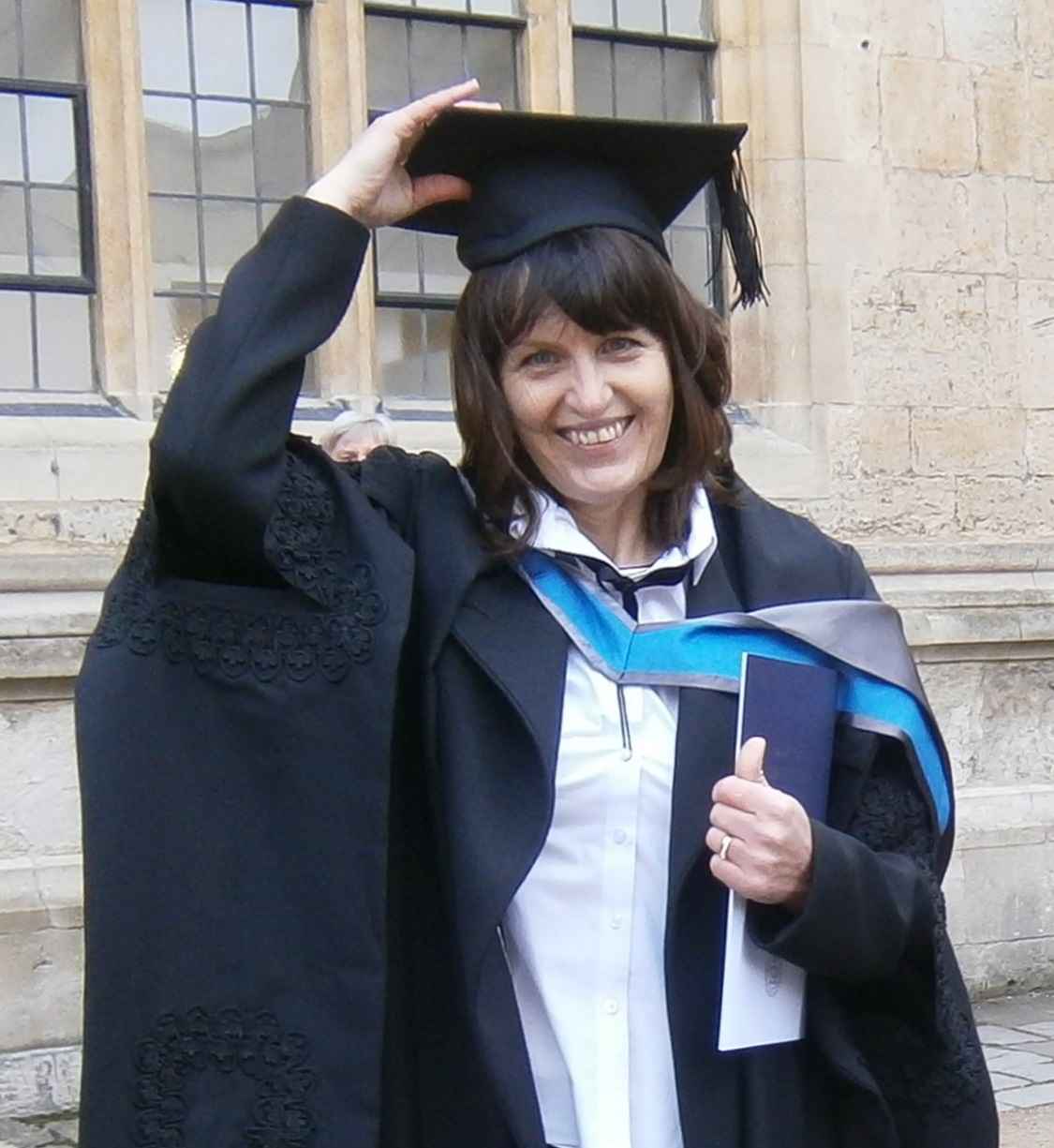
A chance conversation with friends pushed Sally into taking the first step to become an archaeologist. Sally has since progressed from the MSc in Applied Landscape Archaeology to…