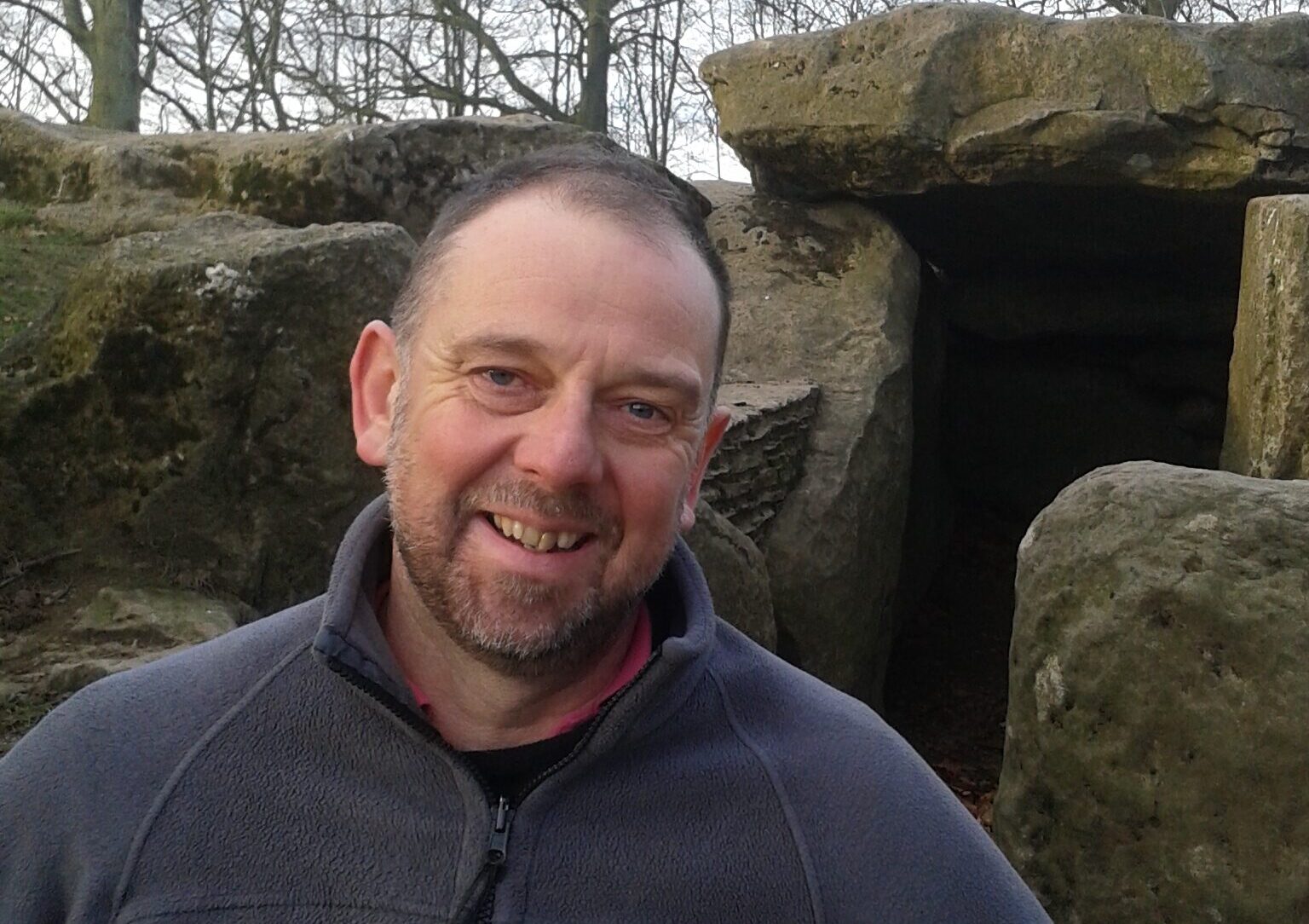
David Griffiths is Professor of Archaeology and Director of Studies at Oxford Lifelong Learning. View his academic profile and full list of publications.
Tell us a little about your role and what you’re responsible for?
‘Currently I am responsible for the part-time D.Phil programme and the MSc in Applied Landscape Archaeology. I joined the department as a member of the teaching staff in 1999, having taught weekly classes as a part-time tutor since 1996, so I have a 30-year connection. A lot has changed in that time, but the essentials haven’t: we are here to offer the opportunity to study and participate in Archaeology to people from as wide a cross-section of society as possible, locally and internationally. I have seen countless students come and go over the years, many remain good friends and have returned to study with us again and again.’
How did you first become interested in archaeology?
‘I was taken on day trips to places like Chester (Romans) and the medieval castles of North Wales by my parents and schoolteachers. I also read avidly. I did my history O-level project on mapping the defences of Beaumaris Castle. I found out that studying history could be more fun if done outside in a practical way: this led me as a teenager to participate in an excavation of a hillfort at Crickley Hill, Gloucestershire, and then to study history and archaeology at Durham University. I never really wanted to do anything else, and a few early half-hearted attempts to explore the possibility of ‘proper jobs’ in law or the civil service thankfully fell away in favour of archaeology. I believe that getting paid to do what really interests you, and you would be doing anyway, is the key to a happy career.’
What are your main archaeological interests or areas of expertise?
‘I see myself as a landscape archaeologist, looking at the ‘bigger picture’ of land-use, settlement and society over time. I have done a lot of work on coastal environments, including publishing a major collection of material from a multi-period beach trading site in north-west England (Meols) and surveying and excavating on the west Mainland of Orkney (see below). I am generally known as a Viking/ early medieval specialist in period terms.’
What are you most looking forward to in the 2026–27 academic year?
‘I always enjoy meeting new and returning students. Field trips are always my favourite way of teaching, we have upcoming ones to White Horse Hill, Danebury, Stonehenge and Verulamium this year for various courses, exploring structures and landscape from the ancient past and how they are presented to the public.’
What’s the most memorable experience archaeology has given you?
‘In terms of pure and original discovery, it would be uncovering a remarkably intact Viking longhouse settlement under deep windblown sand in Orkney. After an initial period of fairly fruitless digging in the sand, when the tops of the walls started to appear it was incredible to see the buildings taking shape. As the finds emerged we began to realise what we were onto, not some broken down old shepherd’s hut from the last century, but a genuine human settlement and somebody’s home of a thousand years ago, probably quite an important central place in its time. Fifteen years after the first hints emerged, it was published in an Oxbow monograph called Beside the Ocean.
‘However more riches were to follow in the form of a lottery and John Fell-funded community archaeology project called ‘Archeox’ which investigated the archaeology of East Oxford. Hundreds of local people participated, and we studied the landscape of the area intensively. Three excavations were undertaken, two on medieval religious sites and one on a prehistoric pit group on the Thames gravels. This project was transformative in many ways, and attracted a high degree of public attention. The publication is open-access and free to download: https://doi.org/10.5284/1081257 (go to ‘downloads’).’
What’s one thing about archaeology you wish more people knew?
‘Firstly, that anyone can become an archaeologist with the right amount of passion, learning and training. Secondly, to know that routes towards a proper professional and academic level of education are available and people are welcome at any age or background. There is no need to depend on social media, fake news, sensationalist literature or conspiracy theory to try to access the very real wonders of the human past.’