
Award courses
MSc in Sustainable Urban Development

Course status:
Open

Duration:
2 years, part-time

Study format:
In person and Online

Level:
Postgraduate
Address the critical, urgent challenges we face to make our cities more liveable, just and sustainable in a challenging global environment.
The MSc in Sustainable Urban Development is a transformative two-year part-time programme for working professionals across the globe. Taught by experienced faculty from Oxford University, known for its research excellence and impact, you will gain a greater understanding of the tools and methods available to develop solutions that address the critical, urgent challenges we face to make the urban environment more liveable, just and sustainable for the future.
With teaching weeks in Oxford and London, the programme covers a wide range of interdisciplinary subjects, ranging from climate change to sustainable mobilities. Urban development in both the global North and the global South is explored with a critical eye on the origins of problems and workable solutions.
The programme runs in partnership with The King’s Foundation and is accredited by the Royal Institution of Chartered Surveyors (RICS).
We offer you the opportunity to join a knowledgeable global community with truly diverse perspectives, embedded in a world-class university, tackling world-scale urban problems which have local impact.
KEY INFORMATION
Upcoming application deadline: Friday 13 November 2026, 12:00 GMT


The course aims to equip graduates to address complex, multi-level challenges, engage effectively in global discourses, and pursue impactful careers in academia, policymaking, and practice. Programme level outcomes include:
- Comprehending urban change processes and formulating actions in light of urban sustainability challenges
- Applying advanced knowledge to cross-sector and multi-level urban sustainability challenges
- Actively participating in and contributing to global discussions on sustainable urban development and governance
- Undertaking independent and ethical research
- Critically evaluating various forms of evidence and sources
- Demonstrating independent critical thinking and effective communication skills for a range of audiences and purposes
Course content and structure
You will attend seven intensive in-person teaching weeks and one online unit during the two years of study. One of these seven in-person teaching weeks held at the offices of The King’s Foundation in London. The remaining six are held in Oxford at Oxford Lifelong Learning. Each week addresses a core theme of the course.
Year 1:
- Introducing Sustainable Urban Development (Oxford)
- Climate Change (Oxford)
- Researching the Urban (Online)
- Financing Sustainability (Oxford)
- Sustainable Mobilities (Oxford)
Year 2:
- Place, Community and Urban Design (London)
- Southern Urbanisms (Oxford)
- Governance, Leadership and Future Cities (Oxford)
The MSc is designed for those working in a range of urban contexts worldwide, whether in public, private or third-sector organisations. Students can combine postgraduate study with their professional lives. The course attracts a lively and engaged group of students who come from a wide range of countries and share a variety of work experiences in urban development and the built environment. The course fosters collaboration, creativity, perspective-sharing and networking skills. There is also an active alumni network.
The MSc is taught through seven intensive in-person teaching weeks and one online unit. Six of the in-person teaching weeks are held in Oxford and one in London. The ‘Researching the Urban’ online unit involves weekly engagement (both synchronous and asynchronous) during the second term of Year 1. The overall schedule encompasses lectures, workshops, presentations, site visits, group projects, seminars, and tutorials. Classes encourage active participation, enabling students to learn from each other. You will prepare for sessions by reading a selection of recommended books, book chapters and articles.
Typically, there are six to eight weeks between each teaching week, and you should expect to spend an average of 20 hours per week on independent study.
You will be allocated a course tutor who will support your academic development and whom you will meet during each teaching week. In the second year, you will be allocated a dissertation supervisor from the course team.
Oxford College affiliation
As a matriculated postgraduate degree student, you will become a member of one of the University’s multidisciplinary colleges, enabling you to encounter new perspectives in your field or learn more about many other subjects from fellow college members.
The collegiate system makes studying at Oxford a truly special experience. Oxford colleges are friendly and diverse communities, where you could find yourself absorbed in fascinating conversations with students and academics from a variety of disciplines at college seminars, dinners, and informal occasions.
For a list of colleges that accept students on the MSc in Sustainable Urban Development, please see the ‘college preference’ tab on the Graduate Admissions course page.
To find out more about Oxford University colleges, please consult the University’s Graduate Admissions website.
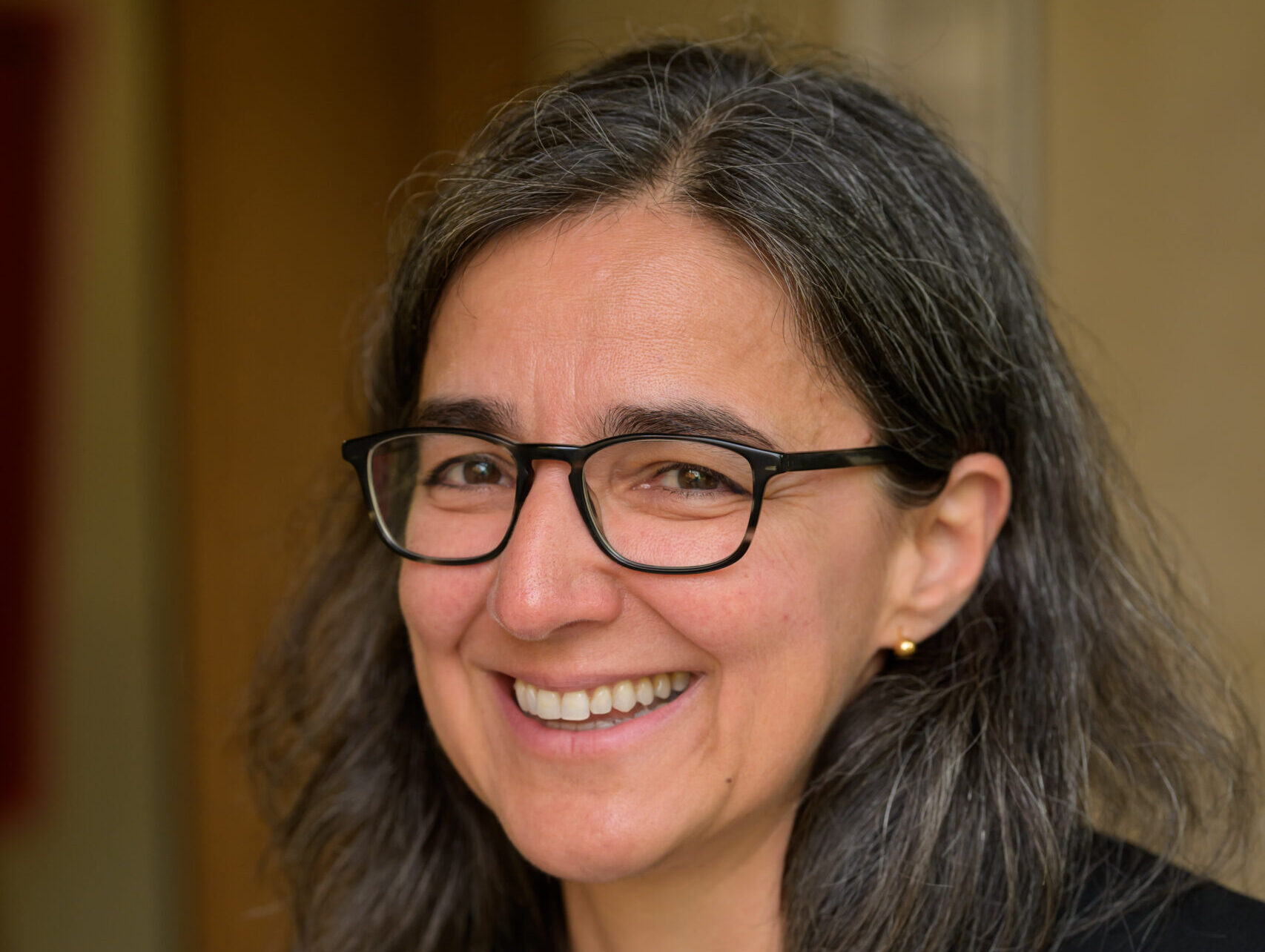
The Course Director is Dr Patricia Canelas.
The MSc is delivered by tutors from institutes and departments across the University of Oxford, and in collaboration with a comprehensive range of commercial, governmental and non-government organisations specialising in sustainable urban development.
Along with Dr Canelas, the teaching panel includes a number of experienced academics and tutors – not only in their subject but in teaching adult students. You can find out more about their backgrounds on our academic staff page.
This course has a diverse assessment method, including essays, theoretically informed critical personal reflections, a funding proposal and critical policy analysis, where you can gain practical skills that are highly valued in the workplace. These include effective communication, problem-solving, and the ability to convey complex ideas to different audiences. The first assignment is formative and will provide you with valuable feedback at the start of your studies. The remaining seven assignments are summative.
You will spend the latter half of the second year working on a 10,000-word dissertation. You will choose the topic with the guidance of your supervisor. Research methods are taught from the start, particularly in the ‘Researching the Urban’ online unit, and give students an understanding of research strategies, fostering the skills needed for designing, conducting, analysing, interpreting and reporting a small-scale research study that is required for the dissertation.
Degree-level qualifications
As a minimum, applicants should hold or be predicted to achieve the following UK qualifications or their equivalent:
- a first-class or strong upper second-class undergraduate degree with honours in a social science or science subject.
For applicants with a bachelor’s degree from the USA, the minimum overall GPA that is normally required to meet the undergraduate-level requirement is 3.6 out of 4.0. However, selection of candidates also depends on other factors in your application and most successful applicants have achieved higher GPA scores.
If your degree is not from the UK or another country specified above, visit our International Qualifications page for guidance on the qualifications and grades that would usually be considered to meet the University’s minimum entry requirements.
English language proficiency
This course requires proficiency in English at the University’s higher level. If your first language is not English, you may need to provide evidence that you meet this requirement. Further information on English language requirements can be found here.
Visas
International applicants, please note that it is not possible to be resident in the UK on the basis of this course. As the MSc is a two-year, part-time course, it does not have the number of teaching hours per week required for a student visa, and international students will not be permitted to live in the UK on the basis of undertaking the course.
International students must research whether they require a visa, and if so, obtain an appropriate visa to cover their time in England before coming to the UK.
If offered a place on the course, please note that your offer is made on the basis of our entry requirements and does not necessarily mean you will be eligible to apply for a visa to study. We can provide a letter in support of Visitor visa applications to students accepted onto this course.
For information on visas, please refer to guidance from the University:
See also guidance from the UK Council for International Student Affairs (UKCISA).
Please visit the MSc in Sustainable Urban Development page on the University of Oxford Graduate Admissions website for more details on course fees and costs.
2027/28 Fees
Annual Award Fee: £13,505
Module Fee: £2,965
Illustration for full programme (completing in two years, with 8 taught modules and a dissertation):
- 2 annual award fees: £27,010
- plus 8 module fees: £23,720
- plus dissertation fee: £8,895
Total: £59,625
Please note: The fee rates listed are for the academic year shown, and you should be aware that these rates will increase annually.
Funding opportunities
The MSc Sustainable Urban Development Programme Scholarship is open to anyone applying for the MSc in Sustainable Urban Development.
You will be automatically considered for a Clarendon Scholarship if you are made a conditional offer following the January deadline. You do not need to submit a separate application. Clarendon scholars are selected for their outstanding academic merit and potential.
Please see our funding page for help and information with regard to funding postgraduate studies. We further recommend that applicants search for funding opportunities via the online Fees, Funding and Scholarship search tool.
In order to be considered for many scholarships, applicants are required to apply by the January deadline. However, applicants should note that some scholarships require additional application materials and may have different deadlines, so applicants should make sure they check the application process for each scholarship carefully.
Applications for this course should be made via the University of Oxford Graduate Admissions website. This website provides information on fees and entry requirements, along with help on preparing and submitting your application.
Application deadlines
12:00 midday UK time on:
- Stage 1: Friday 13 November 2026 (Applications more likely to receive earlier decisions)
- Stage 2: Wednesday 27 January 2027 (Latest deadline for most Oxford scholarships)
- Stage 3: Tuesday 2 March 2027
When to apply
Early application for the programme is strongly advised. After the March deadline, the course will only stay open for that year’s entry if places are still available.
Remember that it can take a number of weeks to obtain all of the documents you need and to prepare a competitive application. You should also allow your referees plenty of time to submit your references. We therefore recommend you apply as soon as possible.
Interviews are normally held as part of the admissions process within six weeks of the application deadline.
If you would like to discuss the programme, please contact:
- Tel: +44 (0)1865 286952
- Email: sud@conted.ox.ac.uk