Award courses
Undergraduate Certificate in Archaeology

Course status:
Closed

Duration:
2 years part-time

Study format:
In person, Oxford

Level:
Undergraduate
Discover people and societies of the past.
Our heritage is rich but fragile, and understanding and protecting it has never been more important. If you are curious about ancient artefacts, historic landscapes and new discoveries about our shared human past, this part-time course offers an accessible and rewarding route into archaeology.
Taught over two years, the Certificate is designed for adults with little or no prior academic background in the subject – just enthusiasm and a passion for the past. Led by expert tutors and professional archaeologists, you’ll benefit from small-group teaching in a supportive and friendly environment.
Through a mix of evening seminars, Saturday workshops and field trips, you’ll have the opportunity to gain hands-on experience examining evidence from Britain and beyond. You’ll also have the chance to pursue your own interests through an extended project.
KEY INFORMATION
Applications for 2027 entry will open in autumn 2026.


Please note: the teaching schedule below is provisional and subject to confirmation.
Course structure
The first year considers the development of the modern discipline and covers the fundamentals of archaeological theory and practice. The second year studies key themes and turning points in archaeology from prehistory to the medieval period, and deals with certain practical and scientific topics in more detail.
Provisional teaching programme for Year 1
Year 1: Introduction to Archaeology: Practice and Purpose
The first year considers the development of the modern discipline and covers the fundamentals of archaeological theory and practice. Workshops will investigate artefacts and environmental evidence, and field trips will investigate sites and landscapes. Classroom sessions include practical workshops studying archaeological evidence and developing fieldwork skills.
Michaelmas term (October – December):
- What is archaeology?
- Study skills and library briefing (online via MS Teams)
- Saturday field visit to White Horse Hill
- The birth of the discipline: key archaeologists
- Archaeological evidence
- Saturday workshop: artefacts (years 1 and 2)
- Archaeological method and theory
- Key site: Armana
- Working with archives: Archaeology and the Antiquarians
- Saturday field visit, Stonehenge
Hilary term (January – March):
- Introduction to Environmental Archaeology
- Saturday practical (TBC)
- Excavation in Practice
- Relative dating and stratigraphy in archaeology
- Saturday workshop: Ancient technologies (years 1 and 2)
- Archaeology in the field
- Artefacts in archaeology
- Saturday field visit (TBC)
Trinity term (April – June):
- Landscape Archaeology in the field
- Urban archaeology
- Saturday workshop: Bones (years 1 and 2)
- Finding sites from the air
- Saturday practical (TBC)
- Key sites: Palmyra and Petra
- Saturday field visit (TBC)
- Examination
Provisional teaching programme for Year 2
Year 2: Key Themes in Archaeology
The second year covers key themes and turning points introduced in Year 1 in more detail: for example, science in archaeology and excavation report writing. Practical workshops studying archaeological evidence and fieldwork elements build on the foundations covered in Year 1. Students from both years join together for the practical sessions.
Michaelmas term (October – December):
- Introduction to prehistoric periods: farming in prehistory
- Prehistoric Monumentality
- Saturday field trip (TBC)
- Isotopes and Ancient DNA
- Saturday workshop: Artefacts (years 1 and 2)
- Scientific Dating Techniques
- Tour of Oxford Research Laboratory
- Saturday practical (TBC)
- Key Site: Göbekli Tepe
Hilary term (January – March):
- Extended Project briefing
- Archaeology and Heritage
- Archaeology and Ethics: Sites and Monuments
- Saturday practical (TBC)
- Archaeology and Ethics: Museums and Collections
- Saturday workshop: Ancient Technologies (years 1 and 2)
- Roman material culture
- Saturday session, Ethics in Context: The British Museum
- Key Sites: Pompeii and Herculaneum
Trinity term (April – June):
- Medieval sites and landscapes
- Archaeology of buildings
- Site visit to Oxford Archaeology
- Saturday workshop: Bones (years 1 & 2)
- Post-excavation processes and reporting
- Saturday field visit (TBC)
- Student presentations of extended assignments
- Saturday field visit, Avebury
This course is designed for adults who are curious about the past but may have little or no previous academic experience in archaeology. It will suit those completely new to the subject, as well as people who have already attended local talks, taken a short course, or gained some practical experience and now wish to work towards a recognised qualification.
You do not need formal academic qualifications – just enthusiasm, commitment, and the motivation to engage with the subject at university level. After you apply, the Course Director will invite you to discuss your interests and readiness for the course, to ensure it is the right fit. Places are offered on the basis of motivation, understanding of the time commitment, and preparedness for study.
If you have never studied archaeology before, you may find it helpful to take a weekly or online class first, to build confidence in how the subject is taught and assessed.
This is a two-year course. Each year has three terms, and in each of these you will attend alternate weekly Tuesday evening classes and some Saturday field trips, fieldwork and workshops.
The classroom sessions provide the foundation for the practical elements of the course, which are:
- Lectures and seminars, in which you will investigate artefacts and environmental evidence.
- Field and workshop sessions, in which you start to learn methods and practical skills.
- Field trips, on which you will investigate sites and landscapes.
Weekday evening sessions are based at Rewley House, 1 Wellington Square, Oxford, on alternate Tuesdays (7pm–9pm).
There are usually three Saturday sessions per term (10am–4pm), held at Rewley House, the Ashmolean Museum, and various fieldwork sites near Oxford.
In addition to the teaching sessions, we expect you to spend an average of 12 hours each week on activities such as reading, preparing coursework, and visiting museums, libraries, and archaeological sites. You can undertake the necessary background reading and research for the coursework using the facilities of the Continuing Education Library at Rewley House and other libraries.
Teaching delivery
This course is expected to be taught in person at Rewley House, 1 Wellington Square, Oxford, OX1 2JA. Should circumstances dictate, the teaching can be moved online (either fully or partly).
Award and credit transfer
An Undergraduate Certificate will be awarded on completion of the course. You will be invited to celebrate at the annual Awards Ceremony, held at Oxford’s Sheldonian Theatre.
The syllabus and teaching of the course are aimed at first-year undergraduate level (FHEQ Level 4). Students who successfully complete this two-year course will be awarded an Oxford University Undergraduate Certificate in Archaeology, equivalent to 120 CATS points at first-year undergraduate level (FHEQ Level 4) in the Department’s Qualifications and Credit Framework. Outstanding performance will qualify for a Distinction.
Opportunities vary for the transfer of credit, so students who are considering taking this course in order to transfer credit are advised to discuss the possibilities with the Course Administrator on undergraduate@conted.ox.ac.uk.
Learn more about the Credit Accumulation and Transfer Scheme (CATS points).
Along with Fay Stevens, the teaching panel includes a number of experienced tutors – not only in their subject but in teaching adult students. They understand the learning needs of students returning to education and will be able to advise you on subject-based study skills throughout the course.
The Course Director and tutors will be able to help you with academic advice and support. In addition, there are academic literacy and academic English courses available to help you develop and improve the academic skills needed for effective study.
Assessment is based on:
- Four written assignments per year of up to 2,000 words in length.
- A two-hour written examination in the first year.
- Two practical learning portfolios, one in each year, of up to 2,000 words each.
- An extended project of up to 5,000 words in the second year.
A progress review of each student’s performance is carried out at the end of the first year. Your performance and attendance must be considered satisfactory if you are to continue to the second year.
There are no formal entry requirements for this course. In your application and interview, we will look for evidence of a keen interest in archaeology and your motivation to study at undergraduate level.
IT requirements
Students are expected to have some IT skills and access to a computer and the internet. You will engage with the Virtual Learning Environment for course materials and use our online assignment submission system. The computer you use should meet our recommended minimum computer specification.
English language requirements
Please check the information on the specific English language requirements for this course. Applicants are required to have the higher-level scores.
Fees for 2027-28 will be available from September 2026.
Please be aware that fees will usually increase annually.
Information for applicants from the EU, EEA and Switzerland
On 11 May 2021 the UK Council for International Student Affairs published new regulations and guidance to be used in assessing the fee status of students commencing courses in August 2021 and later. We will be using this guidance to carry out fee status assessments for students commencing courses in 2026/27 and later, including students from the EU, EEA and Switzerland.
If you are an EU national and do not live in the UK then you are likely to be charged Overseas fees. Students with settled and pre-settled status in the UK and some other categories of students who work in the UK can qualify for Home fee status as long as they meet the residence criteria.
Students from outside the UK/Republic of Ireland
If you are from outside the UK/Republic of Ireland, you will be classed either as an ‘Overseas’ or ‘Islands’ student.
Information on financial support can be found on our website here.
Financial Declaration
All undergraduate offer-holders are required to complete a Financial Declaration Form (FDF) to demonstrate how they will meet the financial conditions of admission. If you are offered a place on this course, you will then be asked to submit a completed Financial Declaration Form. The form demonstrates that you can, or are likely to be able to, afford the course and it is necessary for this to be accepted before you can be considered to have met the conditions of your offer.
Click the ‘Apply’ button to request the online application link. We will email you the form and application guidance, usually by the next working day.
You should allow plenty of time to complete the application form and upload any supporting documents required. You should also allow sufficient time for your referee(s) to submit their reference by the application deadline.
You will need to upload the following documents as part of your application:
- A statement of 300 words outlining your previous experience of the subject (if any) and your reasons for wishing to enrol on the course.
- Proof of English language ability if you are a non-native English speaker. Further information on English language requirements can be found here. Please note that candidates are required to have the higher-level score.
- Contact details for one referee.
Application deadlines
- 12 February 2026, 12:00 GMT
- 28 May 2026, 12:00 BST
Early application is advised. The sooner you submit your application, the sooner your place will be considered.
Referees
If possible, your referee should be able to comment on your academic ability and background, but where this is not appropriate, please choose a referee who can vouch for your motivation, commitment and potential. References from friends or family members cannot be accepted.
Admissions decisions will be based on an assessment of knowledge, relevant experience, academic ability, potential and suitability for a course of study. We welcome applicants who may not hold traditional qualifications but can demonstrate relevant career experience or life skills.
Selection criteria
Even if a course has no specific academic entry requirements then: (a) assessment of an applicant’s academic ability and suitability for the course of study will still take place and (b) since applications for many courses often significantly exceed places available, each application will be judged against the gathered field of applicants for each course, each year.
The University is committed to promoting diversity, equality, inclusion, and widening access, including during the admissions process. We fully endorse the Equality Policy and our admissions procedures are kept under regular review to ensure compliance with this policy.
Shortlisted applicants will be invited for an online interview.
The final decision on admission to the course rests with the Department.
Contact us
If you have unanswered questions or would like an informal discussion on academic matters before applying, you may contact:
- Fay Stevens: fay.stevens@conted.ox.ac.uk +44 (0)1865 270360 (main desk)
- For general guidance, application and admissions advice, course specific information, or credit transfer: undergraduate@conted.ox.ac.uk, +44 (0)1865 280882.
- For information about disability support or sources of funding: student.support@conted.ox.ac.uk, +44 (0)1865 280355.

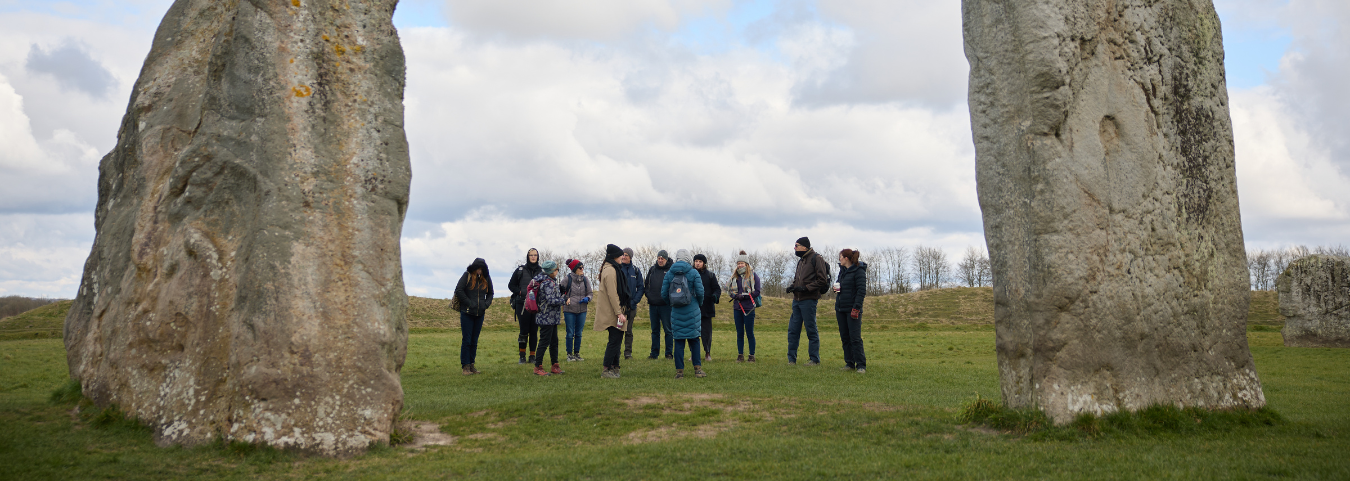
A field trip to Avebury, Wiltshire, March 2025.

A field trip to the Ashmolean Museum, February 2026.

A pottery workshop at Rewley House, May 2025.

A field trip to Avebury, Wiltshire, March 2025.

A pottery workshop at Rewley House, May 2025.

A field trip to the Ashmolean Museum, February 2026.

A field trip to Avebury, Wiltshire, March 2025.

A field trip to the Ashmolean Museum, February 2026.