
Short course
Tolkien: The Great War and the Beginnings of Middle-Earth

Course status:
Applications being accepted


Dates:
19/07/2026 - 25/07/2026

Study format:
Summer schools

Level:
Beginner

Fees:
From £1,855.00 to £2,625.00
Like the modern era itself, Tolkien’s Middle-earth has its foundations in the First World War and is profoundly shaped by it.
How did the war change him and how did his first 'fellowship' of friends influence his first attempt at the Silmarillion mythology? What does his newly published verse of 1914–18 tell us about him as a soldier-writer? How does his experience in the Battle of the Somme underpin his lifelong concepts of despair and hope, fear and courage, power and sacrifice?
John Garth, author of an award-winning biography, Tolkien and the Great War, invites you on a surprisingly uplifting journey into history and fantasy, drawing from his ongoing research.
The course includes a walking tour of Exeter College, offering a chance to explore Tolkien’s undergraduate environment between 1911 and 1915.
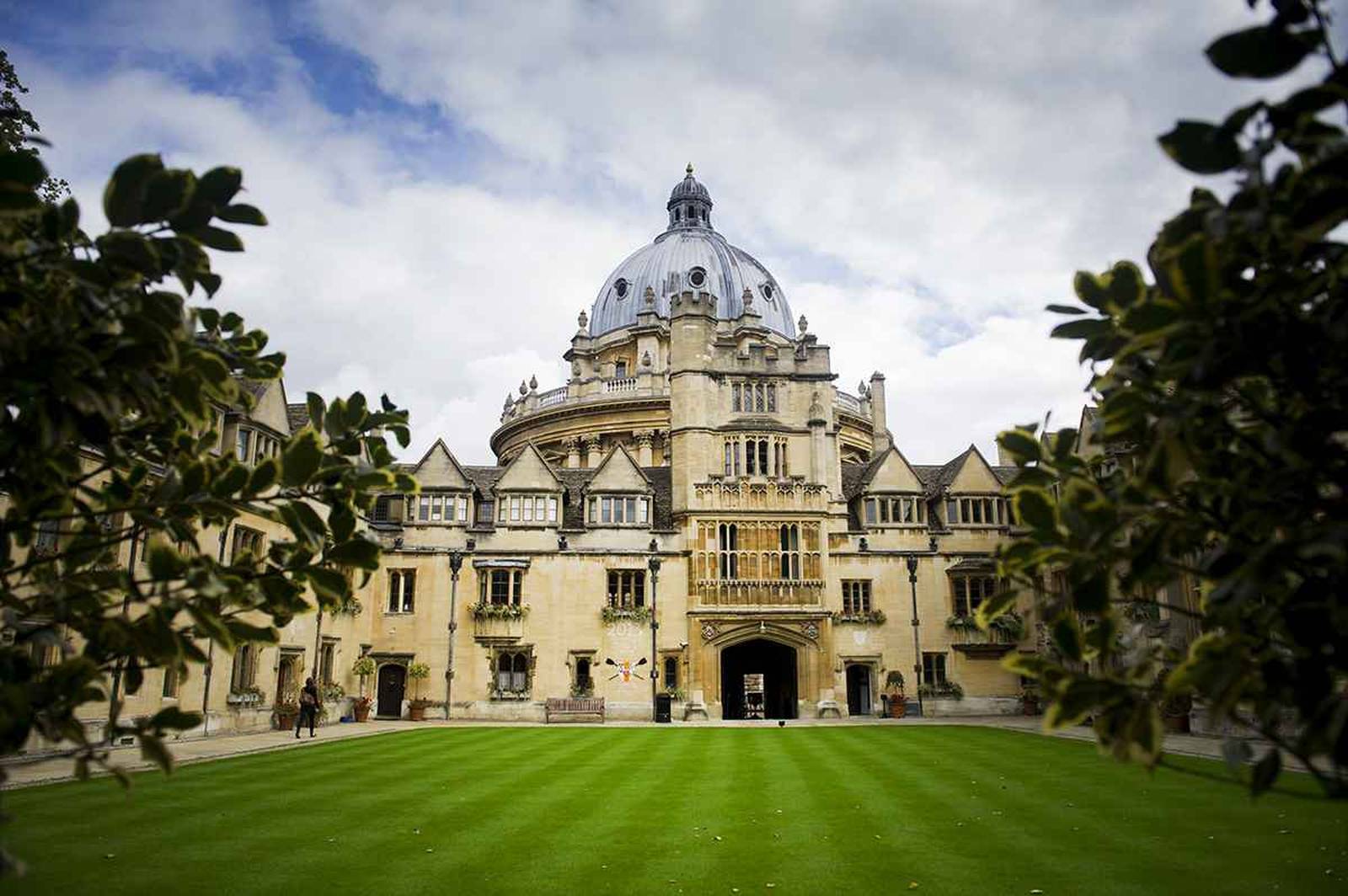
This course is part of the Inspiring Oxford summer school programme, held at Brasenose College.
Book this course
Book your place online using the button below.
Programme details
Daily schedule
After registration on Sunday afternoon, we invite you to a welcome meeting in the Amersi Lecture Theatre in New Quad, where you will meet your tutors. Join us in Deer Park afterwards for our opening drinks reception, followed by dinner in Brasenose’s historic dining hall (informal dress).
Seminars take place on weekday mornings. Most afternoons are free, allowing you time to explore Oxford, enjoy a variety of optional social events (see details below), or to sit back and relax in one of the college’s atmospheric quads.
Your course culminates on Friday evening with a closing drinks reception and gala farewell dinner at which Certificates of Attendance are awarded. For this special occasion smart dress is encouraged (no requirement to wear dinner suits or gowns).
Level and demands
The Inspiring Oxford programme is aimed at non-specialists: no prior knowledge is required, and classes are pitched at an introductory level. Courses are designed for an international audience aged 18 and over.
There are no assessments for this course.
Accommodation
Residential options are outlined below.
Please see the ‘application’ section above for guidance on how to book or request the right accommodation for you, including how to request a lower/ground floor room.
The course fee includes breakfasts Monday-Saturday (residential guests only), five weekday lunches, and dinners Sunday-Friday. All meals included are served in Brasenose College’s dining hall. If your course includes a full-day field trip, a packed lunch is normally provided.
Accommodation options at Brasenose
During your course, for an authentic Oxford University experience you can stay in typical student accommodation at Brasenose College, in the heart of the city in buildings overlooked by the iconic Radcliffe Camera.
Please note that bedrooms are student rooms. They are simply and modestly-furnished and do not have air-conditioning. You can find out more about Brasenose and its facilities by visiting their website.
The following types of accommodation are available.
- Single en suite: private bathroom facilities (shower, washbasin and toilet).
- Twin en suite: shared between participants that apply to the programme together, with private bathroom facilities.
- Standard single: private bedroom with shared bathroom facilities (typically shared among four participants).
Non-residential option
Prefer not to stay on site? We also offer places on a non-residential basis, whereby participants can take classes, have lunch and dinner, and join the welcome and farewell dinners at Brasenose College, having arranged their own accommodation elsewhere. Breakfast is not included.
Non-residential participants are warmly encouraged to take part in every aspect of the academic and social programme and enjoy the same access to Brasenose facilities as residential participants.
Participants attending multiple weeks
We welcome students who want to attend multiple Inspiring Oxford courses. Residential participants staying at Brasenose College for consecutive weeks may arrange an additional Saturday night bed-and-breakfast between courses, available for an additional fee. This option ensures a seamless and enjoyable stay in Oxford.
Accommodation before/after your course
We are unable to arrange accommodation at Brasenose College prior to or following your course. Please visit universityrooms.com if you require additional nights of bed and breakfast accommodation, and they may be able to assist.
Additionally, family or friends who are not enrolled in the programme cannot be accommodated in college.
Location: Brasenose College Brasenose College, Oxford, OX1 4AJ
Programme details
Daily schedule
After registration on Sunday afternoon, we invite you to a welcome meeting in the Amersi Lecture Theatre in New Quad, where you will meet your tutors. Join us in Deer Park afterwards for our opening drinks reception, followed by dinner in Brasenose’s historic dining hall (informal dress).
Seminars take place on weekday mornings. Most afternoons are free, allowing you time to explore Oxford, enjoy a variety of optional social events (see details below), or to sit back and relax in one of the college’s atmospheric quads.
Your course culminates on Friday evening with a closing drinks reception and gala farewell dinner at which Certificates of Attendance are awarded. For this special occasion smart dress is encouraged (no requirement to wear dinner suits or gowns).
Programme details
Daily schedule
After registration on Sunday afternoon, we invite you to a welcome meeting in the Amersi Lecture Theatre in New Quad, where you will meet your tutors. Join us in Deer Park afterwards for our opening drinks reception, followed by dinner in Brasenose’s historic dining hall (informal dress).
Seminars take place on weekday mornings. Most afternoons are free, allowing you time to explore Oxford, enjoy a variety of optional social events (see details below), or to sit back and relax in one of the college’s atmospheric quads.
Your course culminates on Friday evening with a closing drinks reception and gala farewell dinner at which Certificates of Attendance are awarded. For this special occasion smart dress is encouraged (no requirement to wear dinner suits or gowns).
Social programme
We warmly invite all Inspiring Oxford students to take part in our optional social programme, with all events provided at no additional cost. Events are likely to include:
- Croquet on the quad
- Chauffeured punting from Magdalen Bridge
- Expert-led walking tours of Oxford
- Optional visit to an Oxford Library or the Ashmolean Museum
- River Thames afternoon cruise
- Quiz night in the college bar
- Scottish country dance evening (where you do the dancing!)
Seminars and field trip
This course explores how Tolkien’s early life, friendships and wartime experiences shaped the beginnings of Middle-earth. Rather than treating his legendarium as separate from history, the programme connects his creative work to the cultural background of the First World War and to the literary responses that followed it. Each day builds a fuller picture of how biography, creativity and conflict influenced Tolkien’s ideas and stories.
Monday
Life, Legendarium and History
The week begins with an overview of Tolkien’s life and early creative work. We consider what biographical criticism can contribute to our understanding of his writing and look at Tolkien as a young language creator, parodist and friend. The session concludes with the wider context of the First World War and its cultural impact, preparing us to understand how this period shaped his imagination.
Tuesday
The Birth of Middle-earth
This day focuses on Tolkien’s creative breakthrough in 1914, including the invention of Eärendil, and his experimental adaptation of the Finnish Kullervo story. We examine his army training and how the war deepened his appreciation for fairy stories. The programme also introduces the TCBS fellowship, a group of close friends whose shared artistic ambitions helped inspire Tolkien’s early myth making.
Wednesday
The Battle of the Somme and the Breaking of the Fellowship
We then explore the Battle of the Somme, one of the most devastating military events in history. The session looks at what happened to Tolkien’s friends and at his own role as a battalion signal officer, and at his war poetry. Our discussion also considers the circumstances that led to Tolkien’s survival and how illness brought him out of active service.
Thursday
War Writing, Disenchantment and Re-Enchantment
Today we examine the cultural background to war writing, including propaganda, patriotism and poetry. We consider Arthur Machen’s The Bowmen (1914) and its influence on supernatural responses to the war, as well as the voices of the Great War poets. We conclude by looking at Tolkien’s work in terms of his own theory of escape, enchantment and recovery through fairy story.
An afternoon walking tour of Exeter College offers a chance to explore Tolkien’s undergraduate environment between 1911 and 1915.
Friday
The Book of Lost Tales and After
The final day turns to The Book of Lost Tales, the earliest form of The Silmarillion and investigates when Tolkien wrote The Book of Lost Tales. We consider how his creation myth can be read as a wartime manifesto for Middle-earth, and how the tales of Túrin and Tinúviel. Our week concludes by examining The Hobbit as a literary analogue to the British soldier.
Teaching methods
Participants will be taught in seminar groups of up to 16 people.
Teaching methods used during this course may include:
- Short lectures/presentations
- Physical handouts
- Seminars/group discussions
- Field trip
Mr John Garth – Tutor
John Garth is known worldwide for his award-winning writing on Tolkien’s life and work. His books Tolkien and the Great War and The Worlds of J.R.R. Tolkien are available in 18 languages in all. He is also a contributor to the Blackwell Companion to J.R.R. Tolkien, the Bodleian Library exhibition book Tolkien: Maker of Middle-earth, and The Great Tales Never End: Essays in Memory of Christopher Tolkien.
John read English at St Anne’s College, Oxford, was a newspaper journalist for many years, and is a member of the Oxford Tolkien Network. He talks and teaches internationally, especially on the inspirations and creative evolution of Middle-earth in the context of Tolkien’s own time and intellectual background.
Certification
Certificate of Attendance
At the end of the course you will receive a Certificate of Attendance.
Digital badge
You will also be issued with an official digital badge of attendance. After the course, you will receive an email with a link and instructions on how to download this. You will be able to share this on social media and add to your email signature if you wish to do so.
Accommodation
Residential options are outlined below.
Please see the ‘application’ section above for guidance on how to book or request the right accommodation for you, including how to request a lower/ground floor room.
The course fee includes breakfasts Monday-Saturday (residential guests only), five weekday lunches, and dinners Sunday-Friday. All meals included are served in Brasenose College’s dining hall. If your course includes a full-day field trip, a packed lunch is normally provided.
Level and demands
The Inspiring Oxford programme is aimed at non-specialists: no prior knowledge is required, and classes are pitched at an introductory level. Courses are designed for an international audience aged 18 and over.
There are no assessments for this course.
Fees
| Description | Costs |
|---|---|
| Fee option 1 (single en suite accom and meals per person) | £2625.00 |
| Fee option 2 (single standard accom and meals per person) | £2275.00 |
| Fee option 3 (twin en suite accom and meals per person) | £2435.00 |
| Fee option 4 (no accom; incl lunch and dinner per person) | £1855.00 |
Module code: O25I304IOR
Registration closes on 12 June 2026 at 2pm BST (UK time).
If your preferred course is fully booked, you may wish to add yourself to the waiting list and the Programme Administrator will contact you should a place become available.
Online enrolment (single person accommodation and non-residential)
Single person accommodation and non-residential places should be booked online by clicking on the ‘Book now’ button at the top of this page. Please do not complete an enrolment form for these.
If you have any trouble booking online, please contact the Programme Administrator by emailing inspiringoxford@conted.ox.ac.uk.
Online enrolments require payment in full at the time of registering.
Single bedroom options:
- Single en suite: private bathroom facilities (shower, washbasin and toilet).
- Standard single: private bedroom with shared bathroom facilities (typically shared among four participants).
Enrolment form (multi-occupancy or accessible accommodation)
Twin bedrooms
Those requiring a twin en-suite room (for two people) should complete an enrolment form as these rooms cannot be booked or requested online. Please note these rooms have limited availability.
If requesting a twin room, each person should complete an enrolment form and name the other person who they wish to share a room with.
Ground/lower floor accommodation
Brasenose rooms do not have lift access, and the higher rooms can be located up a few flights of stairs. If you need a room on a ground or lower floor please complete an enrolment form and indicate your requirements, or contact the Programme Administrator directly at inspiringoxford@conted.ox.ac.uk as soon as possible.
Enrolment form
The enrolment form is an editable PDF and can be completed electronically, so you should not need to print and scan it.
Completed forms should be sent:
-
by email to inspiringoxford@conted.ox.ac.uk, or
-
by post to Inspiring Oxford, Oxford Lifelong Learning, University of Oxford Department for Continuing Education, 1 Wellington Square, OXFORD, OX1 2JA, UK.
Inspiring Oxford Summer School