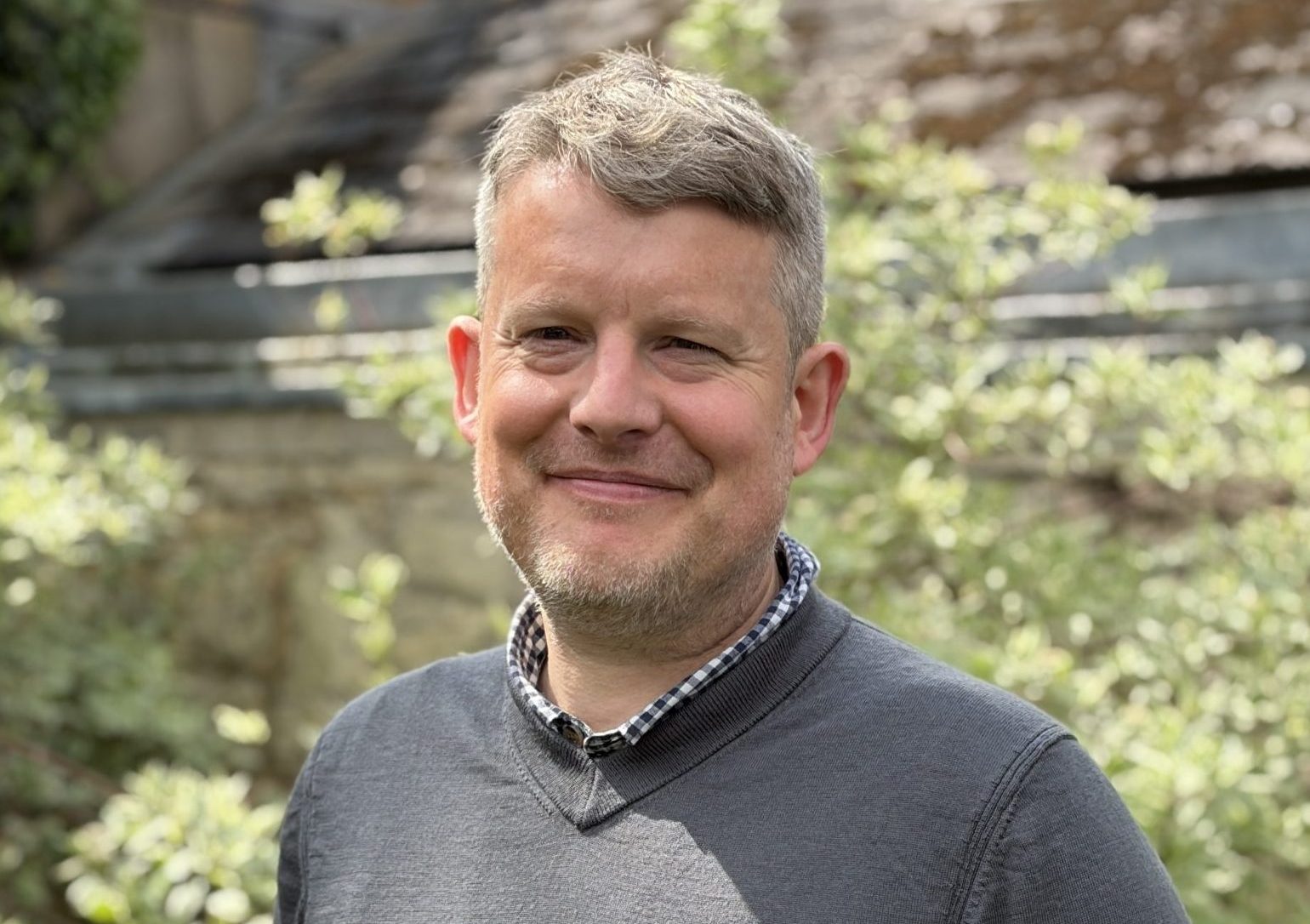
Dr Jamie Wood
Profile details
Director of Short Online Courses
Departmental Lecturer
Biography
Dr Jamie Wood, PhD, SFHEA, FRHistS, FSA, gained his doctorate in Classics and Ancient History at the University of Manchester in 2007. He subsequently worked at the Universities of Liverpool, Manchester, Sheffield and Warwick, before moving to the University of Lincoln in 2013, where he was Professor of History and Education before moving to Oxford in 2026. He is a historian of the society, religion and culture of the post-Roman world, and has published widely on late antique and early medieval Iberia.
From 2018-2022 Jamie was co-convenor of History UK, the independent national body promoting and monitoring History in UK Higher Education. He is currently co-chair of the Council of University Classics Department’s Education Committee. In 2021 he received the Royal Historical Society's Innovation in Teaching Award and has disseminated his pedagogic scholarship widely via a range of projects and publications, with a particular focus on inquiry-based and digital pedagogies, including on the educational uses of video games.
Research interests
Jamie has worked on Isidore of Seville, bishops in Visigothic Hispania, and the social functions of violence in late antiquity, publishing a monograph with Brill, The Politics of Identity in Visigothic Spain: Religion and Power in the Histories of Isidore of Seville (2012), and the co-edited volumes Rome and Byzantium in the Visigothic Kingdom: Beyond Imitatio Imperii (Amsterdam University Press, 2023), Social Control in Late Antiquity: The Violence of Small Worlds (Cambridge University Press, 2020), A Companion to Isidore of Seville (Brill, 2019), Isidore of Seville and his reception in the early middle ages: Transmitting and transforming knowledge (Amsterdam University Press, 2016). He has held visiting fellowships at the Universities of Mainz, Tuebingen and Bonn in Germany, and at the NOVA University Lisbon and the University of Lisbon in Portugal. His research has been supported by, among others, the Arts and Humanities Research Council, the Leverhulme Trust and the British Academy. His current project, The Nameless in History, is funded by an "Open-Up" grant from the Volkswagen Stiftung and is carried out in collaboration with Professor Julia Hillner and Professor Pia Wiegmink at the University of Bonn (2026-2027).
Jamie is working with Dr Graham Barrett (Durham University) on the Concilia Hispanica, a collaborative project involving a team of colleagues in Spain, Portugal, the UK, and North America to translate, annotate, and interpret the Church councils of the Iberian Peninsula in Late Antiquity (ca. 300-700). To date they have received funding from the Royal Historical Society, and presented their research at the 17th International Congress of Medieval Canon Law (University of Kent, 2024), the IX Congresso Internacional de Latim Medieval Hispânico (Universidade de Lisboa, 2025), and the Ecclesiastical History Society Winter Meeting on 'Creeds, Councils, and Canons' (online, 2026). They are in the process of publishing a special issue on 'Present and Precedent in the Church Councils of Late Antique Iberia' forthcoming with Gerión: Revista de Historia Antigua. If you are interested in joining their team, please email Jamie directly.
Publications
Jamie Wood, Hope Williard, Máirín MacCarron, Julia Hillner and James R. Burns (2025), “Problems and Possibilities of Namelessness in Late Antiquity and the Early Middle Ages”, Medieval People 40, 101-125.
Jamie Wood (2025), “Threshold Spaces: Making Female Ascetics in Visigothic-Era Baetica”, É. Fournier and M. Kahlos, eds., Women in Late Antiquity and the Early Middle Ages: Studies from Western Europe and North Africa (Turnhout), 235-260.
Jamie Wood (2025), “Creativity and Historical Inquiry in Digital Spaces: Perspectives from the Practice of Online Making”, History 110.393, 702-712.
Jamie Wood and Marcus Collins (2025), “Post-pandemic pedagogy: experiences of learning and teaching history before, during and after Covid-19”, History Education Research Journal 22.1.
Jamie Wood, Damián Fernández and Molly Lester, eds. (2023), Rome, Byzantium, and the Visigothic Kingdom of Toledo: Imitation, Reinvention, and Strategic Adoption (Amsterdam).
Jamie Wood and Marta Szada (2024), “Succession Crises in Sixth-Century Iberia: Dead Bishops, Greedy Clerics, and the Council of Valencia in 546”, Lincoln Readings of Texts, Materials, and Contexts: Supplementum to Studies in Medieval and Renaissance Sources, 29-62.
Jamie Wood (2023), “The View from the Edge: Gallaecia and the Byzantine Mediterranean in the Sixth and Seventh Centuries”, A. Liuzzo Scorpo, ed., A Plural Peninsula: Studies in Honour of Professor Simon Barton (Leiden), 215-238.
Jamie Wood (2023), “The agents and mechanics of connectivity: The Mediterranean world and the cities of the Guadiana valley in the sixth century”, D. Fernández, M. Lester and J. Wood, eds., Rome and Byzantium in the Visigothic Kingdom: Beyond Imitatio Imperii (Amsterdam), 317-344.
Jamie Wood and Merle Eisenberg (2023), “The Business of Bishops: The Ecclesiastical Economy of Visigothic Iberia” (with M. Eisenberg), Al-Masāq: Journal of the Medieval Mediterranean 35.3, 388-408.
Jamie Wood (2023), “Narrating religious processions in Visigothic Iberia: a sociology of saintly power”, Journal of Medieval Iberian Studies, 15.2, 217-239.
Jamie Wood, Merle Eisenberg and Paolo Tedesco (2023), “Approaching the Early Medieval Iberian Economy from the Ground Up” (with M. Eisenberg and P. Tedesco), Al-Masāq: Journal of the Medieval Mediterranean 35.3, 247-270.
Jamie Wood, Graham Barrett, Matt East, Jon Fitzgibbons and Michele Vescovi (2023), “Reading through the Pandemic: Promoting Active Digital Engagement with Text-Based Resources”, IMPact: e-Journal of Higher Education Research, 6.2, 1-30.
Jamie Wood (2022), “Bishops and their Biographers: The Praxis of History Writing in Visigothic Iberia”, P. Ubric, ed., Writing History in Late Antique Iberia: Historiography in Theory and Practice from the 4th to the 7th Century (Amsterdam), 155-179.
Jamie Wood, Jon Chandler, Graham Barrett and Matt East (2022), “Promoting active engagement with text-based resources in large first-year modules in History”, in A. Logan & A. M. Farrell, eds., Pedagogy for Higher Education Large Classes (PHELC) - Proceedings of the Fourth PHELC Symposium Hybrid Event, 10th June 2022 (Dublin), 40-44.
Jamie Wood and Eve Stirling (2022), “Learning About the Past Through Digital Play: History Students and Video Games” (with E. Stirling), in R. Houghton, ed. Teaching the Middle Ages through Modern Games: Using, Modding and Creating Games for Education and Impact (Berlin), 29-46.
Jamie Wood, Matt East and Hope Williard (2022), “Collaborative Annotation to Support Students’ Online Reading Skills” (with M. East & H. Williard), in S. Hrastinski, ed., Designing Courses with Digital Technologies: Insights and Examples from History Education (New York), 66-71.
Jamie Wood, Matt East and Leah Warriner-Wood (2022), “Reading online during lockdown: insights from History and Heritage”, in M. G. Jamil and D. Morley, eds., Agile Learning Environments amid Disruption: Evaluating Academic innovations in Higher Education during Covid-19 (London), 461-478.
Jamie Wood and Eve Stirling (2021), “‘Actual history doesn't take place’: Digital Gaming, Accuracy and Authenticity”, Games Studies 21.1.
Jamie Wood (2021), “Military manuals, masculinity and the making of Christian soldiers in late antiquity”, Journal of Early Christian History 11.1, 88-128.
Jamie Wood and Kate Cooper, eds. (2020), Social Control in Late Antiquity: The Violence of Small Worlds (co-edited with K. Cooper) (Cambridge).
Jamie Wood (2020), “The Fear of Belonging: The Violent Training of Elite Males in the Late Fourth Century”, in K. Cooper and J. Wood, eds., Social Control in Late Antiquity: The Violence of Small Worlds (Cambridge), 188-212.
Jamie Wood (2020), “Conflicts over Episcopal Office in Southern Hispania: Comparative Perspectives from Visigothic and Byzantine Territories”, S. Panzram and P. Pacha, eds., The Visigothic Kingdom: The Negotiation of Power in Post-Roman Iberia (Amsterdam), 353-372.
Jamie Wood and Victoria Leonard (2020), “History-writing and Education in Late Antique and Early Medieval Iberia”, in W. Pohl and H. Reimitz, eds., Historiographies of Identity – Social Functions of Historical Writing from Classical Antiquity to the Middle Ages (Turnhout: Brepols), 237-267.
Jamie Wood and Andrew Fear, eds. (2019), A Companion to Isidore of Seville (Leiden).
Jamie Wood and Andrew Fear, eds. (2016), Isidore of Seville and his reception in the early middle ages: Transmitting and transforming knowledge (Amsterdam).
Jamie Wood and Tamara Hervey (2016), “‘Now I understand what you were trying to do, I see that this was the best module I had at University’: Student Learning Expectations Reviewed Eight Years Later”, European Journal of Current Legal Issues 22.3
Jamie Wood (2012), The Politics of Identity in Visigothic Spain: Religion and Power in the Histories of Isidore of Seville (Leiden).
Jamie Wood (2012), “Playing the Fame Game: Bibliography, Celebrity and Primacy in Late Antique Spain”, Journal of Early Christian Studies 20.4, 613-640.
Jamie Wood (2011), “Helping students to become disciplinary researchers using questioning, social bookmarking and inquiry-based learning”, Practice and Evidence of the Scholarship of Teaching and Learning in Higher Education, 6.1.
Jamie Wood (2010), “Defending Byzantine Spain: Frontiers and Diplomacy”, Early Medieval Europe 18.3, 292-319.
Jamie Wood and Sam Koon (2009), “Unity from Disunity: Law, Rhetoric and Power in the Visigothic Kingdom”, European Review of History, 16.6, 793-808.